Cabot Trail in Nova Scotia: 10 Things You Need to Do
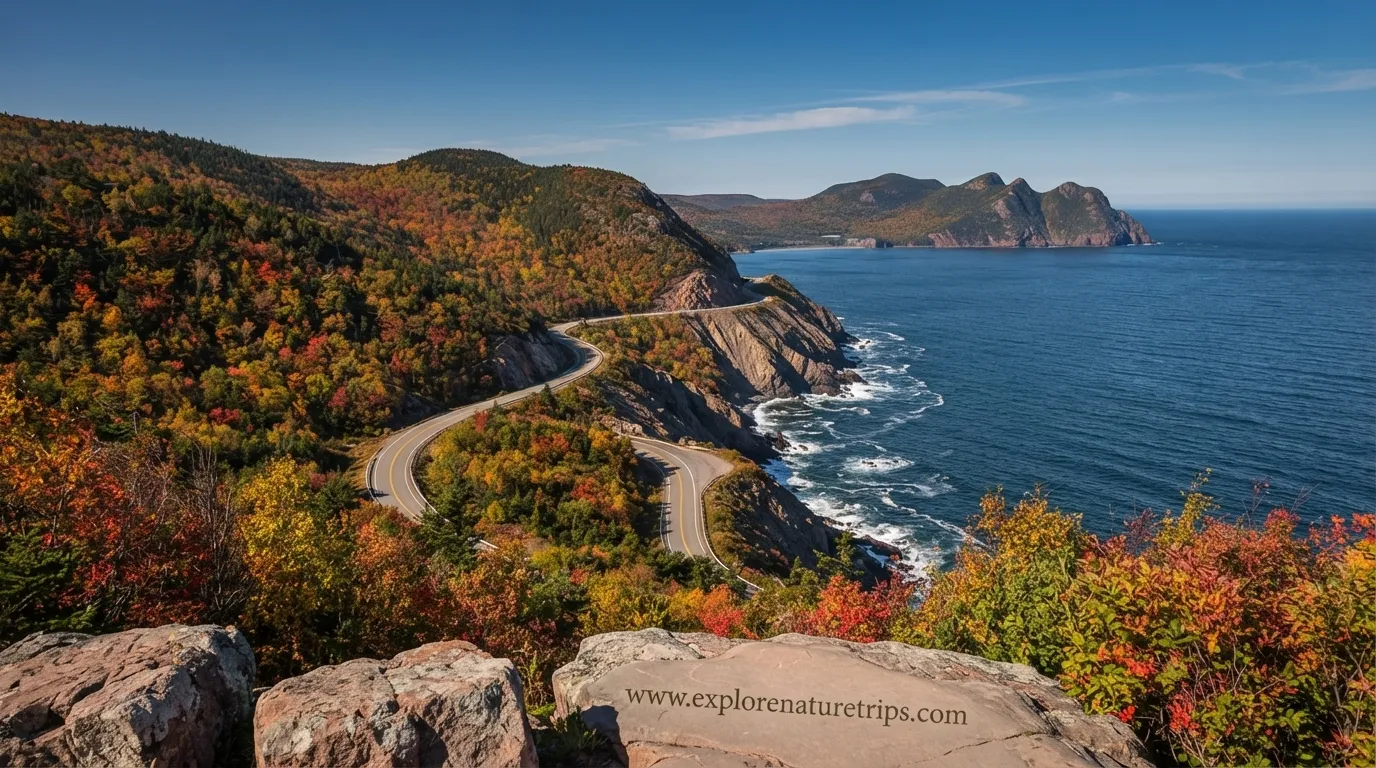
The Cabot Trail is one of the best road-trip routes in Nova Scotia, winding through 298 km (185 miles) of Cape Breton Island. The loop combines ocean scenery, mountain landscapes, small communities, hiking trails, wildlife experiences, seafood, and cultural attractions.
Although you can technically drive the route in around 5 hours without major stops, that is not the best way to experience it. A 3-day trip gives you time for several major sights, while 4 days allows a more relaxed pace with additional hikes, meals, viewpoints, and local attractions.
The most useful way to plan the trip is to think beyond the road itself. Your experience depends on where you stop, which trails you choose, how much time you allow for driving, and when you visit.
Here are 10 worthwhile things to do along the Cabot Trail, followed by a practical itinerary and planning guide.
1. Hike the Skyline Trail
The Skyline Trail is one of the signature experiences of the Cabot Trail. The trail provides elevated views toward the coast and is particularly memorable around sunset.
Depending on the route and walking pace, allow roughly 2–3 hours for the experience. If you want to be at a viewpoint for sunset, do not calculate your arrival time based only on the walking distance.
A better approach is to arrive early enough to:
- Find parking.
- Prepare your hiking gear.
- Walk at a comfortable pace.
- Spend time at the viewpoints.
- Return before darkness if you are not prepared for a night hike.
Some visitors plan to begin approximately 1.5–2 hours before sunset when using the trail for sunset viewing.
Why it is worth your time
The Skyline combines three things that make the Cabot Trail special: mountains, coastline, and open viewpoints. It is also one of the easiest places on the route to understand why the drive is about more than simply getting from one town to another.
Planning tip: Check current trail conditions and park guidance before setting out. Weather can change quickly in exposed areas.
2. Explore Chéticamp and Acadian Culture
Chéticamp is more than a convenient overnight stop. It is an important place to experience the Acadian culture associated with this part of Cape Breton.
Give yourself time to walk around the community, eat locally, visit cultural attractions, and learn about its history rather than treating it as a fuel stop.
Places and experiences connected with the area include:
- Les Trois Pignons
- Acadian cultural attractions
- Local cafés and restaurants
- Galleries and craft shops
- Nearby coastal viewpoints
The community is also strategically located for exploring the western side of the Cabot Trail.
How long should you stay?
A few hours can cover a basic visit, but staying overnight makes the itinerary less rushed. This is especially useful if you want to combine Chéticamp with the Skyline Trail or other nearby attractions.
3. Take in the Views Around Cape Breton Highlands National Park
A major portion of the Cabot Trail experience comes from simply stopping and looking around.
Cape Breton Highlands National Park contains many of the route’s best-known hiking and scenic areas. Rather than trying to photograph every viewpoint, choose several stops that fit your schedule.
Useful areas to consider include:
- Cape Breton Highlands
- Cape Smokey
- French Mountain
- coastal viewpoints
- Black Brook Cove
- areas around Pleasant Bay
Don’t underestimate stopping time
A common mistake is to calculate the Cabot Trail using only driving time.
If the route takes around 5 hours to drive without lengthy stops, adding hikes, meals, viewpoints, photographs, and wildlife watching can easily turn the journey into a full-day activity.
For a more comfortable trip, plan your driving around your stops, not the other way around.
4. Ride the Cape Smokey Gondola
The Cape Smokey area provides another way to appreciate the landscape without committing to a long hike.
A gondola experience can be particularly useful for travelers who want panoramic views but have limited hiking time.
It also fits naturally into a road-trip itinerary because you can combine it with other stops in the Ingonish area.
Best for
- Families
- Travelers with limited hiking time
- Scenic photography
- Visitors who want mountain views
- A slower day between longer hikes
Because operating schedules can change seasonally, check the current opening information before making the gondola a fixed part of your itinerary.
5. Hike Franey or Middle Head
If you want something more active than a scenic stop, Franey Trail and Middle Head Trail are two useful options.
Franey is the more demanding choice. The hike is approximately 7.4 km (4.6 miles) and can take around 2.5–3.5 hours, depending on conditions and pace.
Middle Head offers a different experience, with a route of approximately 3.8 km and a shorter overall commitment.
Franey vs. Middle Head
| Trail | Approx. distance | Time to allow | Best for |
|---|---|---|---|
| Franey Trail | 7.4 km / 4.6 miles | 2.5–3.5 hours | A more demanding hike |
| Middle Head | 3.8 km | 1.5+ hours | Scenic coastal walking |
| Broad Cove Mountain | 2.3 km | About 1 hour | A shorter hike |
You do not need to complete every trail on the Cabot Trail. Pick one major hike per day and leave enough time for driving and other attractions.
6. Visit Pleasant Bay for Whale Watching
Pleasant Bay is one of the main places to consider if whale watching is high on your itinerary.
Whale-watching excursions generally take around 2–3 hours, so this activity needs more planning than simply pulling into a viewpoint.
Before booking a tour
Allow additional time for:
- Getting to the departure point
- Parking
- Check-in
- Boarding
- The actual tour
- Returning to your vehicle
Weather can also affect marine activities, so avoid building an overly tight itinerary around a boat departure.
Helpful rule: If whale watching is one of your top priorities, make it a fixed activity and organize the rest of that day’s stops around it.
7. Make Time for Meat Cove
Meat Cove is a worthwhile detour for travelers who want dramatic coastal scenery and a quieter road-trip experience.
The detour requires additional driving, so it should be treated as a destination rather than a quick roadside stop.
From the Dingwall area, the drive can take approximately 45 minutes each way, meaning the out-and-back journey alone may use around 1.5 hours before you add sightseeing.
Why visit Meat Cove?
It offers:
- Coastal scenery
- Open viewpoints
- A more remote atmosphere
- Photography opportunities
- A different perspective from the main Cabot Trail
If you only have 2 days, you may need to choose between Meat Cove and other longer activities. With 4–5 days, fitting it into the trip becomes much easier.
8. Stop for Seafood and Local Food
Food is part of the Cabot Trail experience, especially if you want your road trip to feel connected to the communities you are visiting.
The research highlights several food stops and local dining options around Chéticamp, Ingonish, Baddeck, and other communities.
Commonly mentioned food experiences include:
- Seafood
- Lobster
- Chowder
- Local cafés
- Bakeries
- Acadian-inspired food
Some notable entities appearing in the content include L’Abri, Rusty Anchor, Baddeck Lobster Suppers, Aucoin Bakery, Clucking Hen Cafe, and Frog Pond Cafe.
Don’t schedule every meal too tightly
Smaller communities may not operate on the same schedule as major cities. If a particular restaurant is important to your trip, verify its current hours and seasonal opening dates before traveling.
This is especially important outside the busiest summer period.
9. Experience Baddeck and Its Attractions
Baddeck is an excellent base or starting point for a Cabot Trail trip.
The community sits near Bras d’Or Lake and provides access to several attractions, restaurants, accommodations, and services.
One of the most important attractions is the Alexander Graham Bell National Historic Site, which provides a cultural and historical dimension to a trip otherwise dominated by landscapes and outdoor activities.
Baddeck also works well as the beginning or end of a loop.
Why Baddeck works well as a base
From here, you can organize:
- The beginning of the Cabot Trail
- A final overnight before departure
- Alexander Graham Bell National Historic Site
- Local restaurants
- Lake scenery
- Access toward Ingonish and the eastern side of the route
For travelers who prefer not to change hotels every night, Baddeck can also be used as a strategic base for selected day trips.
10. Drive the Cabot Trail Slowly and Choose Your Direction
The final thing to do is also the most important: actually enjoy the drive.
The Cabot Trail forms a loop of approximately 298 km (185 miles). You can drive it clockwise or counterclockwise, and both directions provide access to the major communities and attractions.
The better choice depends on your itinerary rather than a universal rule.
Clockwise vs. counterclockwise
| Approach | Potential advantage |
|---|---|
| Clockwise | Can make certain coastal sections and stops flow naturally |
| Counterclockwise | May fit better with your arrival point and overnight plans |
| 3-day loop | Good balance of driving and sightseeing |
| 4-day loop | More relaxed with additional activities |
| 5-day trip | Best for slower travel and extra detours |
Instead of choosing a direction because someone says it is always better, map your overnight stops and priority activities first.
A Practical 3-Day Cabot Trail Itinerary
For many first-time visitors, 3 days is a useful middle ground.
Day 1: Baddeck to Chéticamp
Start in Baddeck and travel toward the western side of the loop.
Possible stops:
- Baddeck
- Alexander Graham Bell National Historic Site
- Scenic viewpoints
- Cape Breton Highlands National Park
- Skyline Trail
- Chéticamp
Allow enough time for the Skyline Trail rather than squeezing it between several other major activities.
Overnight: Chéticamp
Day 2: Chéticamp to Ingonish
Begin with Chéticamp and continue through the northern portion of the route.
Possible activities include:
- Coastal viewpoints
- Pleasant Bay
- Whale watching
- Cape Breton Highlands National Park
- Franey Trail or Middle Head
- Cape Smokey
- Ingonish
Do not combine every hike and whale tour on the same day. A 2–3-hour whale tour plus a 2.5–3.5-hour hike can make the day unnecessarily demanding.
Overnight: Ingonish
Day 3: Ingonish to Baddeck
Use the final day for the eastern section and return toward Baddeck.
Possible stops:
- Ingonish
- Ingonish Beach
- Cape Smokey
- Scenic viewpoints
- Baddeck
If you have extra time, consider adding a cultural or food stop rather than another long hike.
Overnight: Baddeck or continue to your next destination.
Can You Do the Cabot Trail in 2 Days?
Yes, but you will need to prioritize.
A 2-day itinerary is more suitable for travelers who want a scenic road trip with selected stops rather than multiple hikes and cultural attractions.
A sensible approach is:
Day 1: Baddeck → Chéticamp
Day 2: Chéticamp → Ingonish → Baddeck
Choose perhaps one major hike, a few viewpoints, and one significant attraction per day.
Trying to include Skyline, Franey, Middle Head, whale watching, Meat Cove, multiple museums, and numerous restaurants in only 2 days would make the trip unnecessarily rushed.
Is 4 Days Better?
For travelers who have the time, 4 days can be considerably more comfortable.
A fourth day gives you space for:
- Meat Cove
- Whale watching
- A longer hike
- Cultural attractions
- Extra time in Chéticamp
- More relaxed meals
- Weather flexibility
This is particularly useful because outdoor plans can be affected by fog, rain, wind, trail conditions, or marine conditions.
When Is the Best Time to Drive the Cabot Trail?
The main travel season runs from late spring into fall, with July and August generally being the busiest summer period.
May and June
These months can provide a quieter experience, but weather and seasonal operating schedules need consideration.
July and August
These are popular months for:
- Hiking
- Whale watching
- Road trips
- Outdoor attractions
- Restaurants and tourism services
The trade-off is greater visitor activity.
September and October
Fall can be an especially attractive time for scenery, with early October often highlighted for autumn colour.
Temperatures can also be cooler, so pack accordingly.
November through April
Winter is a very different travel experience. Road and attraction conditions can vary substantially, and some seasonal businesses may not operate normally.
Always verify current road, park, trail, and attraction conditions before traveling.
How Long Does It Take to Drive the Cabot Trail?
The route itself is approximately 298 km (185 miles).
A non-stop drive can take around 5 hours, while other planning estimates put a complete drive at roughly 5–7 hours without sightseeing stops, depending on the route and conditions.
But that number should not be used as your actual vacation schedule.
A realistic road-trip day also includes:
- Parking
- Viewpoints
- Hiking
- Food
- Fuel
- Photography
- Wildlife sightings
- Weather delays
- Traffic
- Rest breaks
That’s why 3 days is a much more useful planning benchmark than simply calculating the driving distance.
Where Should You Stay?
The most practical overnight communities are Baddeck, Chéticamp, and Ingonish.
Chéticamp
Best for travelers exploring the western side of the trail and nearby national park attractions.
Ingonish
Useful for eastern and northern attractions, hiking, beaches, and Cape Smokey.
Baddeck
Convenient for starting or ending the loop and for attractions around Bras d’Or Lake.
A 3-day itinerary can use 2–3 overnight locations, while a slower 4-day trip can give you more flexibility.
What Should You Pack?
Your packing list should reflect the fact that the Cabot Trail is both a road trip and an outdoor destination.
Basic essentials
- Comfortable walking shoes
- Weather-resistant outer layer
- Extra clothing layers
- Water
- Snacks
- Phone and charger
- Portable battery
- Navigation backup
- Sunglasses
- Camera
- Small daypack
For hiking
Add:
- Proper hiking footwear
- Extra water
- Weather protection
- Basic first-aid supplies
- Trail navigation information
Do not rely entirely on a mobile signal or a single weather forecast when entering remote outdoor areas.
Wildlife and Weather: What Travelers Should Know
The scenery is one of the Cabot Trail’s biggest attractions, but the same natural environment means conditions can change quickly.
You may encounter:
- Fog
- Strong coastal wind
- Rain
- Rapid temperature changes
- Wildlife near roads
- Changing trail conditions
Moose are among the wildlife concerns mentioned in Cabot Trail travel content. Drive carefully and never assume a road is clear simply because traffic is light.
Give yourself more time than your navigation app suggests when weather conditions deteriorate.
Cabot Trail Trip Planning at a Glance
| Planning question | Practical answer |
|---|---|
| Total route | 298 km / 185 miles |
| Non-stop driving | About 5 hours |
| More realistic drive estimate | 5–7 hours without major sightseeing |
| Recommended first trip | 3 days |
| More relaxed trip | 4 days |
| Slow road trip | 5 days |
| Major hiking option | Skyline Trail |
| Longer hike | Franey Trail — 7.4 km / 4.6 miles |
| Shorter hike | Middle Head — 3.8 km |
| Waterfall option | Egypt Falls — about 1.8 km round trip |
| Whale-watching period | June–early October |
| Whale tour duration | 2–3 hours |
| Popular summer period | July–August |
| Fall scenery | September–October |
| Major cultural base | Chéticamp |
| Eastern base | Ingonish |
| Western/start-end base | Baddeck |
Frequently Asked Questions
How many days do you need for the Cabot Trail?
Three days is a practical starting point for a first visit. It provides enough time for major viewpoints, at least one significant hike, communities such as Chéticamp and Ingonish, and a reasonable amount of driving.
Is the Cabot Trail really 298 km long?
Yes. The commonly cited full loop is approximately 298 km (185 miles).
Can you drive the Cabot Trail in one day?
Technically, yes. A non-stop drive can take around 5 hours, but a one-day trip leaves very little time for hiking, food, photography, cultural attractions, or unexpected delays.
Is 2 days enough for the Cabot Trail?
Two days can work if you prioritize. Choose one or two major activities and avoid trying to complete every hike and detour.
What is the best hike on the Cabot Trail?
The Skyline Trail is one of the most recognizable choices for first-time visitors. Travelers looking for a more demanding hike can consider Franey Trail, while Middle Head provides another scenic option.
When is whale watching available?
Whale-watching tours are generally associated with the June to early October period in the content. Exact availability depends on operators, weather, and seasonal schedules.
What is the best month for fall colours?
October is a strong choice for autumn scenery, with early October specifically highlighted in the material.
Should you drive clockwise or counterclockwise?
Either direction can work. Your choice should depend on your arrival point, overnight locations, and priority activities rather than following a universal rule.
Is Chéticamp worth visiting?
Yes. Chéticamp adds an important Acadian cultural element to the trip and is also a convenient base for exploring the western portion of the route.
How long should you allow for Franey Trail?
Plan approximately 2.5–3.5 hours for Franey, depending on hiking pace, trail conditions, and how much time you spend at viewpoints.
How long does a whale-watching tour take?
A typical tour discussed in the material takes around 2–3 hours, but you should allow additional time for check-in and boarding.
Should you visit Meat Cove on a short trip?
If you have only 2 days, Meat Cove may compete for time with other major attractions. On a 4–5-day trip, the detour is easier to accommodate.
A Better Way to Plan Your Cabot Trail Trip
The biggest mistake is treating the Cabot Trail as a simple 298-km drive.
Instead, build your itinerary around your priorities.
If you love hiking, give yourself more time around Skyline, Franey, Middle Head, and other trails. If culture matters more, spend additional time in Chéticamp and Baddeck. If wildlife is your priority, build the schedule around whale watching. If photography is your main goal, leave space for viewpoints and changing weather.
A good first-time plan is:
3 days + 1 major hike + several scenic stops + 1 cultural experience + flexible meal and weather time.
If you can spare 4 days, the trip becomes significantly easier to pace.
Most importantly, do not measure the success of your Cabot Trail trip by how quickly you complete the loop. The value is in the landscape, communities, trails, food, wildlife, and time spent exploring along the way.

Hi, I’m Marcus! I love exploring the outdoors and discovering incredible places. Through ExploreNatureTrips blog, I share my travel experiences, useful tips, and recommendations for the best sights, trails, and destinations to visit.