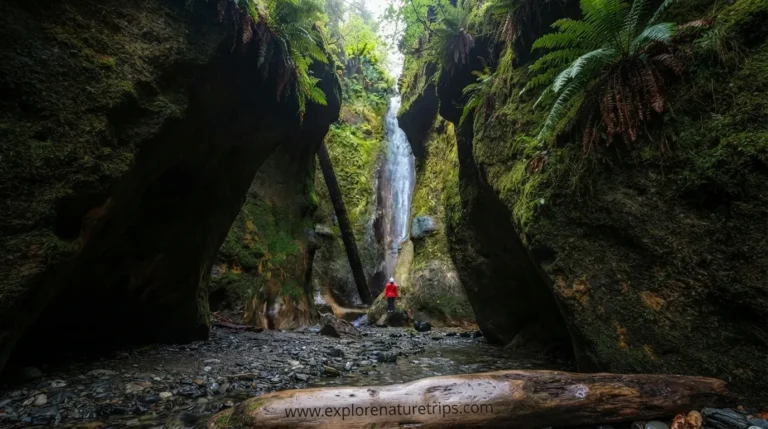
These Photos Show How Epic Watkins Glen State Park Is: 19 Waterfalls, Gorge Trail & Visitor Guide

Watkins Glen State Park is the kind of place that can look almost unreal in photographs—and then feel even more impressive when you walk through the gorge yourself. The park’s main attraction is the Gorge Trail, where waterfalls, stone bridges, tunnels, staircases, and towering rock walls are packed into a relatively short hiking experience.
Across the five travel and photography sources reviewed for this guide, the same features repeatedly stand out: 19 waterfalls, a gorge reaching roughly 400 feet deep, a trail described as about 1.5 miles long by some sources, and more than 800 steps along the Gorge Trail according to one firsthand account.
That combination makes Watkins Glen particularly appealing to travelers who want a dramatic landscape without committing to an extremely long hike.
Why Watkins Glen State Park Looks So Different
The biggest attraction isn’t simply the number of waterfalls. It is the way the water, rock, trail, bridges, and gorge interact.
Glen Creek runs through the gorge, creating a sequence of cascades rather than one isolated waterfall. The Gorge Trail repeatedly changes position, taking hikers alongside the creek, around rock formations, beneath cliffs, behind waterfalls, and across stone bridges.
The result is a trail where the scenery keeps changing.
One moment you’re walking through a shaded section of the gorge. A few minutes later, you’re beside a cascade, entering a tunnel, climbing stone stairs, or looking through a bridge toward the creek below.
The gorge also contains layers of shale, limestone, and sandstone, with cliffs rising dramatically above portions of the trail.
The 19 Waterfalls Are the Main Event
Watkins Glen is repeatedly described in the supplied sources as having 19 waterfalls.
You don’t need to hike for hours between them. Waterfalls and smaller cascades appear throughout the gorge, which is one reason the short trail can take considerably longer than its mileage might suggest.
Some of the most recognizable names mentioned across the sources include:
- Rainbow Falls
- Cavern Cascade
- Central Cascade
- Minnehaha Falls
- Smaller unnamed cascades along Glen Creek
The Nature Seeker also describes an additional waterfall beyond the main 19-waterfall Gorge Trail area and calls it a “20th” hidden waterfall. It is presented as an optional additional hike rather than part of the standard Gorge Trail experience.
Rainbow Falls: The Photo Everyone Wants
If you have seen photographs of Watkins Glen State Park, there’s a good chance you’ve seen Rainbow Falls.
It is one of the most photographed sections of the park because the trail passes behind the waterfall. Instead of simply viewing the cascade from a distance, hikers can experience the water from within the gorge.
This is also why waterproof protection and sensible footwear matter. The trail around waterfalls can become damp, and visitors can be lightly sprayed by falling water.
For photographers, Rainbow Falls is particularly valuable because you can capture several different perspectives:
- The waterfall from the approach
- The waterfall with the gorge walls
- The trail passing behind the water
- The stone bridge and waterfall combination
- The waterfall from farther along the trail
The Nature Seeker identifies Rainbow Falls as the park’s most photographed spot, while No Home Just Roam describes it as one of the highlights of the entire trail.
Cavern Cascade Is Another Must-See
Cavern Cascade offers a different experience from Rainbow Falls.
The trail passes behind the falling water and beneath the surrounding rock overhang. No Home Just Roam specifically notes that the ground becomes damp in this section and visitors can get lightly sprayed.
The surrounding stone staircases also provide changing views of Cavern Cascade and Minnehaha Falls.
If you’re visiting for the first time and have limited time, Cavern Cascade deserves a place near the top of your list.
Central Cascade and the Southern Gorge
Central Cascade is another prominent waterfall mentioned by the sources.
The Nature Seeker places it near the southern entrance of the gorge and recommends the area as an early highlight of the hike. The source also notes that early morning can be a particularly good time for photography before crowds become heavier.
The combination of water, rock ledges, trees, and the narrow gorge makes this section especially attractive for photographs.
The Gorge Trail: What the Hike Is Actually Like
The Gorge Trail is the heart of the Watkins Glen experience.
One source describes it as approximately 1.5 miles, while another visitor guide describes a roughly 2-mile experience. Rather than treating these figures as contradictory, the difference is best understood as a reminder that descriptions can vary depending on exactly which portion or route is being measured.
The important point for visitors is that the trail is short but not effortless.
It includes:
- Stone staircases
- Uneven and wet surfaces
- Narrow gorge sections
- Bridges
- Waterfalls
- Tunnels
- Ascents and descents
- More than 800 steps according to the Travels with Birdy account
The same account says the trail is mostly paved in places but remains rocky and uneven, making sturdy footwear a sensible choice.
Expect More Than 800 Steps
This is one of the most important numbers to remember before visiting.
Travels with Birdy reports upwards of 800 steps along the Gorge Trail. If you walk the trail and return by the same route, the source warns that the stair effort can effectively double.
No Home Just Roam separately identifies a final section containing 180 steps leading toward the West Entrance and an active railway bridge.
So don’t judge the hike purely by mileage.
A better way to think about Watkins Glen is:
Short distance + lots of visual stops + significant stairs = a hike that can take longer than expected.
A Simple First-Time Route
If you only have a few hours, the supplied suggests focusing on the main Gorge Trail rather than trying to cover every possible corner of the park.
A practical priority order is:
| Priority | Stop | Why it matters |
|---|---|---|
| 1 | Gorge Trail | The central Watkins Glen experience |
| 2 | Rainbow Falls | Iconic waterfall and trail-behind-water experience |
| 3 | Cavern Cascade | Walk behind the falling water |
| 4 | Suspension Bridge | Elevated gorge views |
| 5 | Central Cascade | Strong early waterfall/photo stop |
| 6 | Sentry Bridge | Stone bridge and creek views |
| 7 | Mile Point Bridge | Another recognizable gorge landmark |
| 8 | Frowning Cliff | Narrow rock formation and shaded section |
The Nature Seeker’s suggested first-time route specifically prioritizes the Gorge Trail, Cavern Cascade, Rainbow Falls, Central Cascade, and Suspension Bridge.
Suspension Bridge and Sentry Bridge
The bridges are not simply ways to cross the gorge. They are part of the park’s visual identity.
The Suspension Bridge provides an elevated view into the gorge and is positioned as an early landmark for visitors approaching from one entrance.
Sentry Bridge, meanwhile, provides views toward Glen Creek and the village of Watkins Glen. The area also contains an interesting historical feature: a flume hole associated with diverting water to power a mill in the 1800s.
Many of the stone bridges blend naturally with the surrounding rock, which is one reason they photograph so well.
Frowning Cliff and Mile Point Bridge
Frowning Cliff is notable because the gorge walls come unusually close together.
No Home Just Roam notes that the narrowness limits sunlight in this area, allowing ice to remain into late spring. Their visit was in August, when this wasn’t an issue.
Nearby, Mile Point Bridge is another recognizable location along the Gorge Trail.
Travels with Birdy describes walking approximately 1 mile from the bottom entrance to Mile Point Bridge before turning around.
When Is the Best Time to Visit?
There isn’t one perfect season for everyone.
It identifies three particularly interesting periods:
| Season | What to expect |
|---|---|
| May–June | Strong spring water flow and lush scenery |
| July–August | Peak-season atmosphere but potentially more people |
| Late September–October | Fall color and strong photography opportunities |
| Winter | Gorge Trail closure/safety concerns are reported |
The Nature Seeker specifically identifies May–June for spring runoff, July–August as peak visitation, and late September–October for fall foliage. It also says the Gorge Trail closes during winter because of ice and safety concerns.
No Home Just Roam’s firsthand visit took place in August, while its article was published on September 2, 2023.
Travels with Birdy’s account, published in February 2019, also emphasizes the seasonal nature of the Gorge Trail and recommends planning around conditions.
What Time of Day Is Best?
For a quieter and more photographic experience, early morning is the strongest recommendation appearing in the supplied content.
The Nature Seeker also suggests late afternoon as another favorable period. Greg Matchick’s photography account provides a useful firsthand example: he visited shortly after the park opened on a cloudy, cool day and initially encountered very few hikers.
If photography is your priority, early arrival can offer:
- Fewer people in photographs
- Softer light in shaded sections
- More time to stop at waterfalls
- A calmer experience on narrow sections
How Long Should You Allow?
For a first visit, the Nature Seeker suggests 2–4 hours.
That is a useful planning window because Watkins Glen is not simply a trail where you walk from Point A to Point B.
You’ll likely stop for:
- Waterfall photographs
- Bridge views
- Short breaks
- Stair sections
- Looking through tunnels
- Watching Glen Creek
- Exploring viewpoints
Travels with Birdy walked only 1 mile before turning around but said the route took much longer than expected because of frequent photography stops.
So if you want to enjoy the gorge rather than rush through it, allow several hours.
What Should You Wear?
The trail environment makes footwear one of the most important preparation decisions.
The supplied sources repeatedly mention wet, slippery ,or uneven conditions.
Recommended packing list
- Sturdy hiking shoes with good grip
- Waterproof jacket or poncho
- Reusable water bottle
- Snacks or a packed lunch
- Camera or smartphone
- Small daypack
- Sunscreen
- Bug spray
- Headlamp or flashlight if staying later
- Map or downloaded trail information
The Nature Seeker specifically recommends footwear with good grip because of wet stone steps and suggests waterproof protection.
Travels with Birdy similarly recommends sturdy outdoor footwear and warns that waterfalls can drip directly onto the trail, creating puddles and mud.
Best rule: Don’t wear footwear you would hate to get wet or muddy.
Is Watkins Glen State Park Difficult?
The Nature Seeker rates the main hike as moderate, but the experience can feel harder for visitors who aren’t comfortable with stairs.
The biggest challenge isn’t the distance. It’s the combination of:
800+ steps + wet surfaces + uneven terrain + elevation changes.
The trail is therefore worth approaching as a genuine hike rather than a flat sightseeing walkway.
Visitors with mobility limitations should plan carefully. Travels with Birdy specifically says the trail is not suitable for strollers or wheelchairs and recommends considering the physical demands before visiting.
Can You Bring a Dog?
The supplied accounts specifically state that dogs are not allowed on the Gorge Trail.
No Home Just Roam explains that its dog, Truffles, had to stay at their Airbnb because the gorge can become narrow and slippery.
The Nature Seeker similarly notes that dogs may be allowed elsewhere on leash but not on the Gorge Trail.
If you’re traveling with a dog, don’t assume that being in a state park means the dog can accompany you on the main gorge route.
Can You Swim in the Gorge?
The supplied sources are clear on this point: swimming in the gorge is not allowed according to the Travels with Birdy account.
The Nature Seeker separately mentions a swimming-hole area as an additional feature but does not establish that swimming there is permitted.
For a visitor-focused guide, the safest takeaway is simple: do not enter the gorge pools or creek based on assumptions about swimming access.
Watkins Glen’s History Adds Another Layer
The park isn’t only about waterfalls.
Travels with Birdy notes that visitors were invited to purchase tickets to see the scenery as early as 1863, and the area became a public park in 1906.
No Home Just Roam also mentions the Glen Mountain House, which first opened in 1872, and the remaining lily pond associated with the former property.
The built environment is also part of the attraction. Travels with Birdy says many of the bridges and pathways were constructed using local stone during the 1930s by the CCC, helping the structures blend with the gorge.
That explains why the bridges and stairways feel integrated into the landscape instead of looking like modern additions.
Watkins Glen Through a Photographer’s Eyes
The five supplied sources aren’t all traditional travel guides.
Greg Matchick Photography provides a particularly useful visual perspective. The photographer describes a 400-foot-deep gorge, a 1.5-mile trail, 19 waterfalls, and cliffs reaching about 200 feet, with shale, limestone, and sandstone visible along the route.
His experience also highlights an important photography lesson: timing matters.
He visited shortly after opening on a cloudy, cool day and initially found the gorge relatively quiet. Later, a steady stream of hikers appeared.
Getty Images reinforces just how visually varied the location is, with a collection showing waterfalls, bridges, gorge views, autumn scenery, aerial perspectives, and even historical imagery. Its Watkins Glen State Park search page currently lists 319 photos and images.
For photographers, the location offers far more than one famous waterfall.
Best Photo Opportunities
If your goal is to come home with memorable Watkins Glen photos, prioritize:
- Rainbow Falls
- Cavern Cascade
- Central Cascade
- Suspension Bridge
- Mile Point Bridge
- Sentry Bridge
- Narrow gorge sections
- Stone staircases
- Waterfalls framed by rock walls
- Trail views through the gorge
The supplied sources repeatedly emphasize the relationship between waterfalls + bridges + rock walls + staircases, so composing those elements together can create stronger images than photographing a waterfall by itself.
The 5 Hidden Gems Worth Looking For
The Nature Seeker highlights 5 less-obvious locations or experiences:
| Hidden spot | Why look for it? |
|---|---|
| Suspension Bridge | Elevated gorge views |
| Frowning Cliff | Dramatic narrow rock formation |
| Secret Pool at Mile Point Bridge | Reflective photography opportunity |
| Glen Creek Tunnel | Quieter, moss-covered section |
| Upper/Back Entrance | Potentially quieter approach |
These are useful additions if you’ve already seen the headline attractions and want to slow down and explore.
Is the “20th Waterfall” Worth Adding?
The Nature Seeker describes a 20th, secret waterfall beyond the main Gorge Trail and its 19 waterfalls.
According to that source, reaching it requires continuing onto an additional trail beyond the main Gorge Trail, with access mentioned from the campground or western side of the park. It is presented as a more traditional hike and potentially quieter than the main route.
This should be treated as an optional extension, not something to assume is included in the standard 19-waterfall Gorge Trail.
Shuttle and Entrance Information
No Home Just Roam reports that Watkins Glen had a shuttle connecting 3 park entrances during its 2023 visit.
The reported 2023 fare was:
- $6 per adult
- Free for children 10 and under
Because that price is explicitly tied to the writers’ 2023 visit, it should not be treated as a current guaranteed fare.
The shuttle can be useful when you want to hike in one direction and avoid retracing the entire route.
Travels with Birdy also mentions a trolley for returning to the car, although it notes that the service operates during limited hours and charges per person.
A Better Way to Plan Your Visit
For the best experience, think about Watkins Glen in three stages.
Before you arrive
Check the current trail conditions and seasonal access information.
Then prepare:
- Grippy footwear
- Water
- Weather protection
- Phone/camera
- Downloaded map
- Snacks
- Extra time for photographs
While hiking
Don’t rush from waterfall to waterfall.
Stop at the major viewpoints, but also look for smaller cascades and changes in the rock formations. They collectively show that some of Watkins Glen’s most memorable details are easy to miss when you focus only on the famous waterfalls.
Before leaving
Give yourself enough time to complete the stairs and return safely.
If you are using a shuttle or trolley, don’t assume it will operate indefinitely. The supplied sources describe these services as seasonal or limited.
Watkins Glen State Park Numbers You Should Remember
For a quick pre-trip reference, these are the most useful numbers from the supplied material:
19 — waterfalls along the main gorge experience.
400 feet — approximate gorge depth reported by Greg Matchick Photography.
400+ feet — elevation over which Glen Creek drops and cascades, according to Travels with Birdy.
1.5 miles — Gorge Trail distance reported by No Home Just Roam and Greg Matchick Photography.
2–4 hours — suggested visit time from The Nature Seeker.
800+ steps — stair count reported by Travels with Birdy.
180 steps — final stair section described by No Home Just Roam.
3 entrances — connected by shuttle in the 2023 firsthand account.
$6 — adult shuttle fare reported for the 2023 visit.
10 and under — children reported as riding free on that 2023 shuttle.
1863 — first ticketed visitors mentioned by Travels with Birdy.
1906 — year the area became a public park.
1872 — opening year of the Glen Mountain House mentioned by No Home Just Roam.
1930s — period when many stone structures were built by the CCC, according to Travels with Birdy.
Frequently Asked Questions
How many waterfalls are in Watkins Glen State Park?
The suppliedsources consistently identify 19 waterfalls in the main Watkins Glen State Park gorge experience. The Nature Seeker additionally describes a possible 20th waterfall beyond the main Gorge Trail as an optional extension.
How long is the Watkins Glen Gorge Trail?
Two of the supplied sources describe the Gorge Trail as approximately 1.5 miles, while another guide presents a 2-mile figure. The exact number can depend on how the route is measured or described.
How many steps are at Watkins Glen?
Travels with Birdy reports more than 800 steps along the Gorge Trail. No Home Just Roam separately reports a final section of 180 steps leading toward the West Entrance.
How long does it take to visit Watkins Glen State Park?
The Nature Seeker recommends allowing about 2–4 hours for a first visit. Photography and frequent stops can make the experience take longer than the trail distance suggests.
What is the most famous waterfall at Watkins Glen?
Rainbow Falls is repeatedly highlighted as one of the park’s most impressive and photographed locations. The trail passes behind the waterfall, creating the classic Watkins Glen experience seen in many photographs.
Can you walk behind the waterfalls?
Yes. The supplied sources specifically describe the trail passing behind Rainbow Falls and Cavern Cascade. Expect damp conditions and water spray in these sections.
Is Watkins Glen State Park difficult?
The Nature Seeker describes the hike as moderate, but the 800+ steps, uneven surfaces, wet areas, and elevation changes can make it demanding for some visitors.
Can dogs go on the Gorge Trail?
The supplied sources state that dogs are not allowed on the Gorge Trail.
Can you swim in Watkins Glen Gorge?
Travels with Birdy states that swimming is not allowed in the gorge pools.
What should I wear to Watkins Glen State Park?
Wear sturdy footwear with good grip and expect water, puddles, mud and uneven surfaces. A waterproof jacket or poncho is also useful around the waterfalls.
What is the best time to photograph Watkins Glen?
The strongest recommendation from the supplied sources is early morning, when crowds may be lighter. Late afternoon is also suggested as a good period, while Greg Matchick’s firsthand account demonstrates that visiting shortly after opening can provide quieter photographic conditions.
When is Watkins Glen best for fall photography?
The Nature Seeker identifies late September through October as a strong period for fall foliage and photography.
Final Takeaway
Watkins Glen State Park earns its reputation because it delivers an unusually concentrated combination of scenery.
Within a relatively short gorge hike, you can encounter 19 waterfalls, stone bridges, tunnels, steep staircases, dramatic rock walls, Glen Creek, and famous locations such as Rainbow Falls and Cavern Cascade.
But the numbers tell only part of the story.
The real experience comes from walking through the gorge and seeing the landscape change around every bend. A 1.5-mile trail can become a 2–4 hour adventure when you stop for photographs, explore waterfalls, cross bridges, climb hundreds of steps, and take time to appreciate the rock formations.
For a first visit, arrive early, wear grippy footwear, allow several hours, and prioritize the Gorge Trail, Rainbow Falls, Cavern Cascade, Central Cascade, and Suspension Bridge.
And most importantly, don’t rush.
At Watkins Glen, the best parts are often the details you notice when you slow down.

Hi, I’m Marcus! I love exploring the outdoors and discovering incredible places. Through ExploreNatureTrips blog, I share my travel experiences, useful tips, and recommendations for the best sights, trails, and destinations to visit.