17 Best Adirondack Waterfall Hikes to Go On in New York
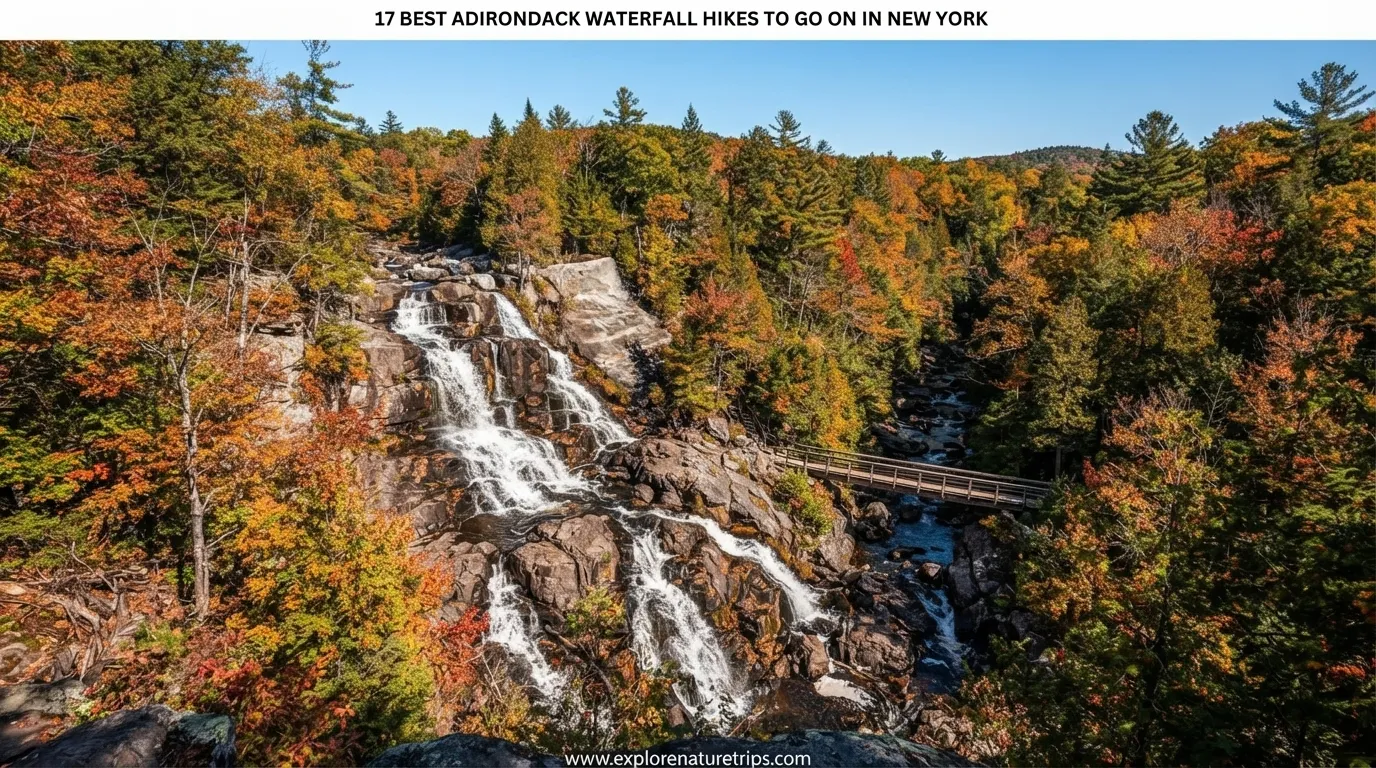
The Adirondack Mountains are home to an impressive collection of waterfalls, from short roadside cascades to remote falls requiring 10+ miles of hiking. The four guides reviewed for this list highlight everything from easy viewpoints to challenging backcountry routes, making it possible to choose a waterfall based on your time, fitness level, and preferred experience.
This guide brings those ideas together into 17 standout Adirondack waterfall hikes, with practical details such as waterfall height, hiking distance, difficulty, seasonal considerations, and access notes. Some waterfalls have similar names, so checking the exact location before leaving is especially important.
Quick tip: A waterfall that looks close on a map may still require a long trail, while some impressive falls are only a few minutes or a few hundred feet from the access point.
1. Rainbow Falls
Rainbow Falls is one of the most demanding entries on this list, but its combination of height and scenery makes the effort worthwhile. The Nature Seeker describes the waterfall as approximately 150 feet high, with roughly 5 miles of hiking one way, meaning the out-and-back distance approaches 10 miles.
The route is associated with the Indian Head Adirondacks trail near Keene Valley, New York. Access involves the Indian Head Mountain parking area and a permit reservation. The source recommends making that reservation at least 1 month in advance because of the waterfall’s popularity.
Best for: Experienced hikers looking for a full-day adventure.
2. Rock Garden Falls
For the opposite type of experience, Rock Garden Falls provides a very short approach. The Nature Seeker lists the waterfall at approximately 50 feet with only about 50 feet of hiking from the road.
BivWack Outdoors describes a smaller 20-foot Rock Garden Falls near Giant Mountain. The sources therefore indicate that the name can refer to different waterfall descriptions, making exact navigation important.
Near Chapel Pond, the waterfall can be a convenient scenic stop rather than an all-day hike.
Best for: Short stops, casual exploration, and hikers who do not want a long trail.
3. T Lake Falls
T Lake Falls stands out because of its size. The Nature Seeker lists it at 300+ feet and places the hike at approximately 5 miles to the falls.
Another describes a substantially larger measurement of approximately 500–600 feet and a 10-mile round-trip hike. Because the sources disagree on the exact measurement, visitors should treat the height as a source-dependent figure rather than a precise surveyed number.
The trail is described as relatively straightforward to follow despite its length.
Best for: Strong hikers who want a long route to a very tall waterfall.
4. OK Slip Falls
OK Slip Falls is one of the strongest choices for hikers who want a large waterfall without committing to a 10-mile route. The sources consistently describe it as approximately 200 feet high.
The Nature Seeker gives a distance of 3–4 miles one way, while BivWack Outdoors describes a 3-mile hike from the parking lot. The trail is described as wide, spacious, and marked, although the beginning can become slippery.
The waterfall also has scenic overlooks, while an additional strenuous route leads toward Hudson Gorge.
One notes that the public trail opened in 2014, while another recommends visiting from March through October.
Best for: Hikers seeking a large waterfall with a substantial but manageable approach.
5. Split Rock Falls
Split Rock Falls is a relatively small waterfall compared with T Lake Falls or OK Slip Falls, but its roadside accessibility makes it attractive.
The sources place it around 20–30 feet high and describe access involving a roadside pull-off followed by a short approach of roughly 100–200 feet.
The area also contains swimming holes, making it more than simply a viewpoint. However, the lack of a conventional formal trail means visitors need to pay attention to the approach and terrain.
Best for: Short adventures and visitors interested in combining waterfall scenery with swimming.
6. High Falls Gorge
High Falls Gorge provides a different experience from remote hiking trails. The Adirondack.net source describes 4 waterfalls and approximately a 30-minute walk through the gorge.
The Nature Seeker also presents it as a short waterfall experience, making this a useful option for visitors who want dramatic water scenery without committing to a long backcountry hike.
Best for: Families, casual walkers, and travelers with limited hiking time.
7. Shelving Rock Falls
Shelving Rock Falls is associated with Lake George and offers a moderate hiking option. The Nature Seeker lists the approach at about 1.5 miles one way and describes the waterfall at approximately 50 feet.
Adirondack.net also highlights access by water, noting the possibility of reaching the area by boat through Log Bay.
This gives visitors more than one way to structure the outing.
Best for: Lake George visitors who want a waterfall hike or water-access adventure.
8. Beaver Meadow Falls
Beaver Meadow Falls offers a longer trail experience. The Nature Seeker describes the waterfall as 50+ feet high and places the hike around 3–4 miles one way.
Adirondack.net gives a 60-foot waterfall and a 7.4-mile round-trip hike. These measurements generally point to a moderately demanding outing rather than a quick roadside stop.
The source also notes restrictions involving dogs in the relevant Adirondack Mountain Reserve area.
Best for: Hikers wanting a moderate-distance trail and a quieter waterfall experience.
9. Buttermilk Falls
The name Buttermilk Falls appears with different measurements in the material, so location awareness matters.
The Nature Seeker describes one Buttermilk Falls at approximately 25 feet with less than 1 mile of hiking. BivWack Outdoors separately describes a 165-foot Buttermilk Falls located about 2 miles from downtown Ithaca, with a natural swimming pool at the base.
That second location also includes picnic areas, restrooms, wildlife viewing, and a pavilion that accommodates 73 people.
Best for: Families and visitors looking for a waterfall experience with swimming and picnic facilities.
10. Flume Falls
Flume Falls is another relatively accessible waterfall. The Nature Seeker places it at around 30 feet and says the route is slightly more than 1 mile.
The surrounding experience includes a gorge, bridge, and swimming area, giving the outing more variety than simply viewing a waterfall from one point.
Best for: Hikers looking for an easy-to-moderate scenic outing.
11. Wanika Falls
Wanika Falls is for hikers who prefer a more remote experience.
The Nature Seeker describes it as more than 100 feet high and requiring approximately 7–8 miles one way. Adirondack.net gives a 150-foot height and nearly 14 miles round trip.
That makes it one of the most demanding waterfall choices in this collection.
Best for: Experienced hikers prepared for a long backcountry day.
12. Alice Falls
Alice Falls is one of the easiest options. The Nature Seeker lists the waterfall at approximately 30–40 feet with an approach of roughly 100 feet.
The extremely short access makes it useful when you want to see a waterfall without spending hours on a trail.
Best for: Quick sightseeing and low-mileage outings.
13. Rocky Falls
Rocky Falls offers a more traditional hiking experience without reaching the distances associated with Wanika Falls or Rainbow Falls.
The Nature Seeker describes it as approximately 25 feet high and around 2–2.5 miles one way. A swimming hole is also associated with the route.
Best for: Hikers wanting a moderate outing with the possibility of enjoying water scenery.
14. Roaring Brook Falls
Roaring Brook Falls is notable because its height is large compared with the short approach.
The Nature Seeker gives the waterfall a height of approximately 300 feet, while the hiking distance is only about ¼ mile.
That combination makes it one of the most attractive options for visitors who want an impressive waterfall without a long hike.
Best for: Travelers with limited time who still want a dramatic waterfall.
15. High Falls
High Falls is another example of why exact location information matters. The Nature Seeker specifically warns that waterfalls in the Adirondacks can share names, including High Falls and Rainbow Falls.
The waterfall listed in the article is more than 100 feet high and requires only about 500 feet of approach.
Best for: Visitors looking for a short walk to a substantial waterfall.
16. Hanging Spear Falls
Hanging Spear Falls is another challenging choice. The Nature Seeker describes it as more than 70 feet high and approximately 5–6 miles one way.
That means hikers should plan for a significant out-and-back journey rather than treating it as a quick sightseeing stop.
Best for: Experienced hikers seeking a longer and more remote waterfall adventure.
17. Death Falls
Despite its intimidating name, Death Falls is presented by Experience Our Adirondacks as a relatively approachable waterfall.
The walk takes only about 5 minutes, while the falls drop approximately 70 feet over a series of rock ledges.
This makes it an excellent contrast to the long routes on this list.
Best for: Families and visitors looking for a short waterfall walk.
Waterfall Hikes by Difficulty
Choosing a waterfall based only on height can lead to a poor hiking experience. Distance and terrain matter just as much.
| Hiking Style | Good Options |
|---|---|
| Very Easy | Alice Falls, Death Falls |
| Easy | Rock Garden Falls, High Falls Gorge, Roaring Brook Falls, High Falls |
| Easy–Moderate | Split Rock Falls, Rocky Falls, Flume Falls |
| Moderate | OK Slip Falls, Shelving Rock Falls, Beaver Meadow Falls |
| Moderate–Hard | T Lake Falls |
| Hard | Rainbow Falls, Wanika Falls, Hanging Spear Falls |
The exact difficulty can depend on conditions, route choice, weather, and the individual’s experience.
Shortest Waterfall Experiences
If you are trying to fit a waterfall into a busy Adirondack itinerary, the shortest approaches stand out.
- Death Falls: about 5 minutes
- Rock Garden Falls: about 50 feet
- Alice Falls: about 100 feet
- Roaring Brook Falls: about ¼ mile
- High Falls: about 500 feet
- High Falls Gorge: approximately 30 minutes
These options can provide substantial scenery without requiring a full-day commitment.
Longest Hikes on the List
For experienced hikers, the longer routes offer a very different experience.
Wanika Falls can approach 14 miles round trip, while Rainbow Falls is nearly 10 miles out and back. T Lake Falls is also around 10 miles round trip according to the distance provided by Adirondack.net.
These hikes require more planning than a short roadside waterfall visit.
Before choosing one, consider:
- Your expected walking pace
- Total daylight available
- Weather conditions
- Water and food requirements
- Navigation
- Return distance
- Terrain and footwear
When Is the Best Time to See Adirondack Waterfalls?
Waterfalls change dramatically throughout the year.
Spring can provide stronger water flow. BivWack Outdoors specifically identifies spring as an excellent period for Cohoes Falls and Cascade Falls.
For OK Slip Falls, BivWack Outdoors recommends March through October.
The Nature Seeker highlights mid-October through mid-November as a period for fall foliage, which can add another visual element to waterfall hikes.
Winter requires extra caution. Experience Our Adirondacks warns that waterfalls can become dangerous in winter and recommends proper traction and gear.
How to Choose the Right Waterfall Hike
A simple way to narrow the list is to decide what type of experience you want first.
For a Short Walk
Choose Death Falls, Alice Falls, Rock Garden Falls, or Roaring Brook Falls.
These options require dramatically less walking than the major backcountry routes.
For a Moderate Adventure
Consider OK Slip Falls, Shelving Rock Falls, Beaver Meadow Falls, or Rocky Falls.
These provide more of a hiking experience without automatically requiring the longest distances on the list.
For a Serious Hiking Day
Look toward Rainbow Falls, T Lake Falls, Wanika Falls, or Hanging Spear Falls.
The distances can reach several miles each way, so these should be planned as complete hiking outings rather than casual stops.
For Families
Shorter options such as Death Falls and High Falls Gorge can be easier to manage. BivWack Outdoors also describes the Buttermilk Falls location it covers as suitable for family and friend outings because of its swimming, picnic, and restroom facilities.
Waterfall Safety Tips
Waterfalls are beautiful, but wet rock, steep terrain, cold water, and changing conditions can make them hazardous.
Watch Wet Rocks
BivWack Outdoors specifically warns about slippery rocks around OK Slip Falls and Death Brook Falls, especially around wet conditions.
Bring Proper Footwear
Experience Our Adirondacks recommends proper traction and gear, particularly for winter waterfall visits.
Do Not Assume a Short Trail Is Risk-Free
A 5-minute walk can still involve wet rocks or steep terrain. Short distance does not automatically mean zero risk.
Check the Exact Waterfall
Several waterfalls have duplicate or similar names. High Falls, Rainbow Falls, Rock Garden Falls, and Buttermilk Falls demonstrate why checking the exact location is important.
Plan for Long Routes
A 5-mile one-way hike is a completely different commitment from a 50-foot approach. Check your turnaround point and allow enough time to return.
Leave No Trace
Responsible waterfall travel is part of enjoying the Adirondacks.
The emphasize Leave No Trace, particularly when visiting forests, waterways, parks, and remote waterfall areas.
A responsible visitor should:
- Pack out everything brought in.
- Avoid damaging plants or surrounding terrain.
- Stay aware of slippery and sensitive areas.
- Respect other hikers.
- Follow posted access restrictions.
- Avoid leaving food or waste behind.
- Keep natural waterfall areas as undisturbed as possible.
The goal is simple: enjoy the waterfall without reducing the experience for the next visitor.
Adirondack Waterfall Challenge
Experience Our Adirondacks adds an interesting way to explore the region through its Waterfall Challenge.
Waterfalls receive point ratings, and visitors who collect 12 points can register their visits and receive a commemorative Hamilton County waterfall patch.
This turns waterfall hiking into a progressive goal rather than a single-day activity.
For hikers who enjoy collecting experiences, it can also provide a reason to explore both easily accessible roadside cascades and more remote backcountry waterfalls.
Frequently Asked Questions
How many Adirondack waterfall hikes are on this list?
This guide features 17 waterfall hikes, combining the most useful waterfall destinations and details found across the four reviewed.
Which waterfall has one of the longest hikes?
Wanika Falls can require nearly 14 miles round trip, while Rainbow Falls and T Lake Falls can also involve approximately 10 miles of total hiking.
Which Adirondack waterfall is easiest to reach?
Death Falls is among the easiest, with Experience Our Adirondacks describing a walk of only about 5 minutes.
Which waterfall is about 300 feet high?
Both T Lake Falls and Roaring Brook Falls are described around the 300-foot range in the material. T Lake Falls is listed at 300+ feet, while Roaring Brook Falls is listed at 300 feet.
How tall is OK Slip Falls?
The describe OK Slip Falls at approximately 200 feet or 200+ feet.
How far is the hike to OK Slip Falls?
The sources describe the route as approximately 3 miles from the parking area or around 3–4 miles one way, depending on the route description.
Are Adirondack waterfalls safe in winter?
Not automatically. Experience Our Adirondacks specifically warns that waterfalls can be dangerous in winter and recommends proper traction and gear.
What is the Waterfall Challenge?
The Experience Our Adirondacks challenge assigns points to waterfalls. Visitors who accumulate 12 points can register their visits and receive a commemorative Hamilton County waterfall patch.
When are waterfall flows strongest?
The material emphasizes spring for some waterfalls, while specific destinations have their own recommended periods. For example, BivWack Outdoors recommends March through October for OK Slip Falls and identifies spring as the strongest-flow period for Cascade Falls.
Why should I check the exact waterfall location?
Several Adirondack waterfalls have identical or similar names. The Nature Seeker specifically points out duplicate names such as High Falls and Rainbow Falls, so checking the precise location can prevent an unnecessary trip to the wrong waterfall.
Final Takeaway
The best Adirondack waterfall hike depends less on choosing the tallest waterfall and more on choosing the right experience.
For a quick outing, Death Falls, Alice Falls, Rock Garden Falls, or Roaring Brook Falls can provide impressive scenery with very little walking. For a moderate adventure, OK Slip Falls, Shelving Rock Falls, and Beaver Meadow Falls offer a stronger hiking component. If you want a demanding day in the mountains, Rainbow Falls, T Lake Falls, Wanika Falls, and Hanging Spear Falls require substantially more time and preparation.
The most important numbers tell the story: approaches range from roughly 50 feet to nearly 14 miles round trip, while waterfall heights range from small cascades to falls described at 300+ feet or more. That variety is what makes the Adirondack waterfall experience so appealing.
Before setting out, check the exact location, understand the trail distance, prepare for current conditions, and choose a route that matches your ability. With thoughtful planning and Leave No Trace practices, a waterfall hike can become one of the most memorable ways to explore the Adirondacks.

Hi, I’m Marcus! I love exploring the outdoors and discovering incredible places. Through ExploreNatureTrips blog, I share my travel experiences, useful tips, and recommendations for the best sights, trails, and destinations to visit.