Best Waterproof Socks for Hiking Adventures: 7 Top Picks Compared
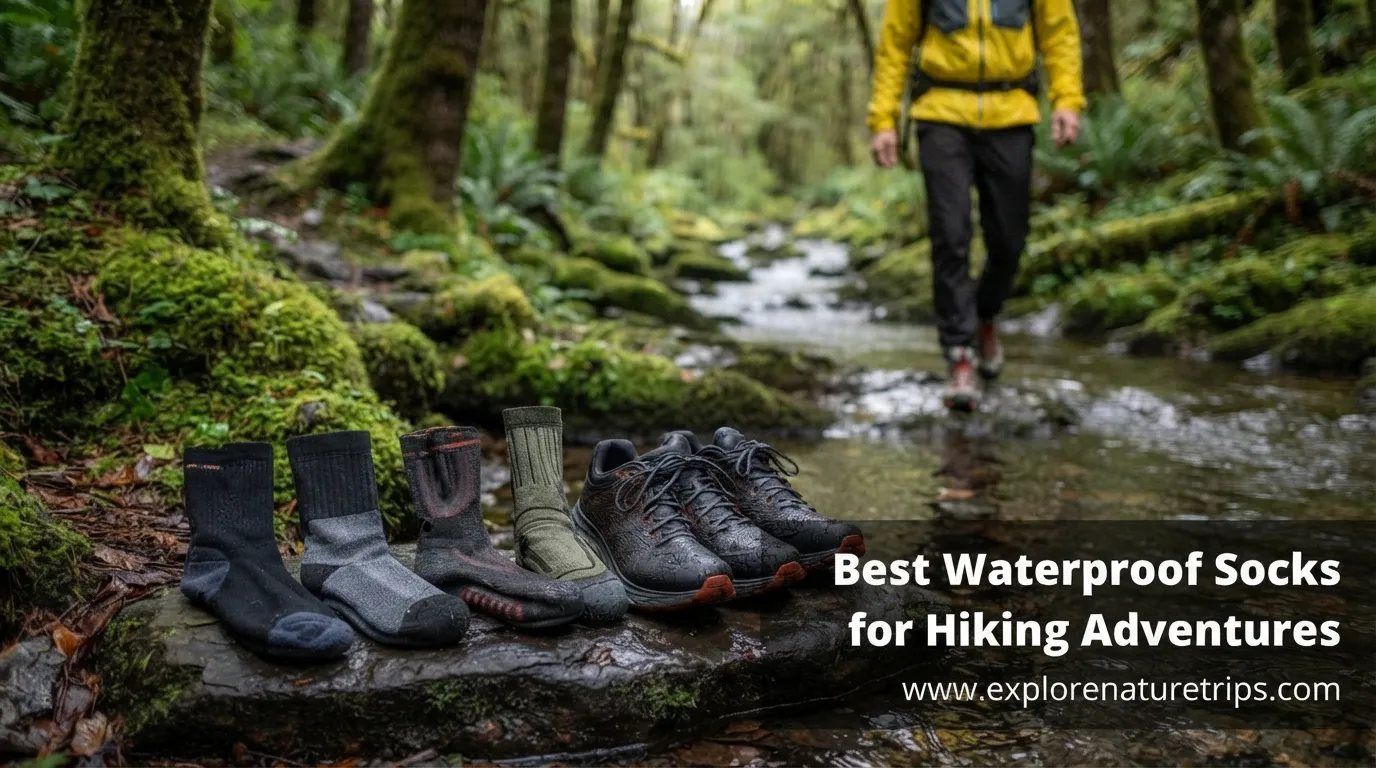
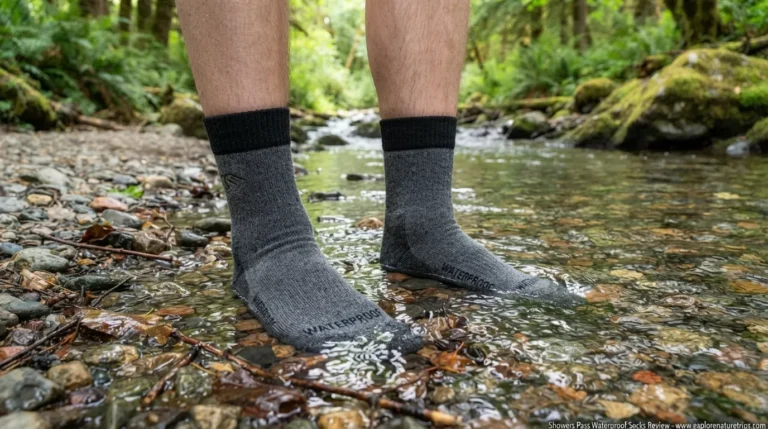
Wet feet can quickly turn an enjoyable hike into an uncomfortable one. Rain, muddy trails, puddles, melting snow, and stream crossings can all expose your feet to moisture, especially when ordinary hiking socks are not enough. Waterproof socks are designed as an additional barrier between your feet and wet conditions.
But not every waterproof sock is built for the same conditions. Some are thin and lightweight for trail running, while others are thicker and warmer for snow and cold-weather hiking. Some work particularly well with tight-fitting shoes, while others provide more calf coverage for deeper puddles and wet trails.
To make the choice easier, this guide brings together the strongest findings from 5 detailed waterproof-sock reviews, including products tested while hiking, running, biking, walking through puddles, crossing streams, and dealing with prolonged rain.
What Makes a Good Waterproof Hiking Sock?
A waterproof sock is more than simply a thicker version of a normal hiking sock. The repeatedly focus on several factors that affect how well a sock performs outdoors.
Waterproof construction
Many of the reviewed socks use multi-layer construction. Three-layer designs appear repeatedly in the comparisons, with a waterproof membrane positioned between outer and inner materials.
This construction helps create a barrier against rain and external moisture while allowing the sock to remain flexible enough for walking and other activities.
However, waterproof does not mean that water can never enter under every circumstance. One of the most important limitations highlighted across the reviews is the top opening. If water reaches the cuff or flows down your leg, it can enter from above even when the lower part of the sock remains waterproof.
Sock height
Height matters when hiking through wet terrain.
Ankle socks can be lighter and less restrictive, making them useful for running and shorter activities. Crew and mid-calf socks provide more coverage and can be preferable when hiking through puddles, mud, rain, or wet vegetation.
The Nature Seeker specifically favors calf-length coverage because it provides greater protection from water.
Thickness and shoe fit
More insulation is not automatically better.
A thick waterproof sock can become uncomfortable if your hiking shoe already fits closely. Gear & Home repeatedly emphasizes the relationship between sock thickness and available shoe volume.
For warm or humid conditions, a thinner model may make more sense. For cold rain and snow, a thicker merino-lined option can provide more warmth.
Breathability
Waterproof socks can be warmer and less airy than ordinary hiking socks. This makes breathability particularly important for trail running, fast hiking, and warmer weather.
The best choice therefore depends on whether your priority is maximum warmth, minimum bulk, or a balance between waterproofing and ventilation.
1. Sealskinz Dunton — Best Overall for Hiking
The Sealskinz Dunton stands out in the testing as a strong all-around hiking choice.
Treeline Review lists it as its Best Overall waterproof sock, while Solatatech places the Dunton among its leading hiking/backpacking options.
The sock uses a 90% nylon / 10% elastane outer composition and an Aquasealz waterproof membrane. Its ankle height makes it less bulky than some mid-calf alternatives.
One of its most notable features is the Hydrostop cuff technology, designed to help reduce water entering through the top of the sock.
Key specifications
- Price: $42
- Material: 90% Nylon / 10% Elastane
- Height: Ankle
- Membrane: Aquasealz
- Sizes: S–XL
- Hydrostop cuff
- Merino-containing inner construction
Its inner composition listed by Treeline includes 36% Merino Wool, along with acrylic, polyester, elastane, nylon, and TPU.
For hikers who want a balance of waterproof protection, fit, and cuff security, this is one of the most compelling options from the reviewed products.
2. RANDY SUN Ultra Thin — Best Lightweight Option
If you dislike the bulk of traditional waterproof socks, the RANDY SUN Ultra Thin deserves attention.
Both Solatatech and Treeline identify this model as an ultralight option. Solatatech reports a weight of just 2.12 ounces, making it the lightest model in its testing group.
Its outer material is listed as 96% polyester / 4% elastane, with a 100% PU waterproof/breathable membrane.
Key specifications
- Price: $28–$37
- Weight: 2.12 oz
- Outer: 96% polyester / 4% elastane
- Membrane: 100% PU
- Sizes: XS–L
- Height: Crew or mid length depending on version
This model is particularly attractive for warm-weather hiking, humid conditions, occasional rain, mud, and stream crossings where keeping weight and bulk low is important.
The Nature Seeker also reports purchasing three pairs and testing them on hikes in locations including North Shore, Minnesota, Harriman State Park, the Hudson River Valley, and an ice-water hike at Kanarra Falls.
3. Drymile ACTIVE — Best for Running and Trail Running
The Drymile ACTIVE is designed around a different priority: keeping waterproof protection while remaining suitable for active movement.
Solatatech and Treeline both identify it as a strong option for running and trail running.
Its outer construction is listed as:
- 96% Nylon
- 3% Spandex
- 1% Reflective Yarn
The inner construction contains 75% Bamboo Charcoal, plus polyester and spandex.
Key specifications
- Price: $30
- Height: Ankle
- Sizes: XS–XL
- Outer: 96% Nylon / 3% Spandex / 1% Reflective Yarn
- Inner: 75% Bamboo Charcoal / 21% Polyester / 4% Spandex
Solatatech reports testing the sock during hikes of 5+ miles in humid and rainy conditions without excessive sweat.
That makes it especially interesting for hikers who also use their waterproof socks for running, fast hiking, or other high-output activities.
4. Endura Hummvee Waterproof Socks II — Best for Biking
The Endura Hummvee Waterproof Socks II are particularly suited to cyclists and mountain bikers.
Treeline lists them as its Best for Mountain Biking & Biking, while Solatatech also highlights the model for biking.
The sock is designed to remain relatively thin and elastic so it can fit inside cycling footwear without excessive bulk.
Key specifications
- Price: $50–$60
- Height: Crew
- Sizes: S–XL
- Outer: 13% Elastane / 42% Polyester / 45% Nylon
Its combination of stretch and relatively thin construction makes it a useful choice when footwear space is limited.
For hikers who also participate in bikepacking, mountain biking, or mixed outdoor activities, this is one of the more versatile choices in the comparison.
5. Sealskinz Trekking Mid Length Merino — Best for Cold Weather
When warmth becomes more important than minimum weight, the Sealskinz Trekking Mid Length Merino moves toward the top of the list.
Solatatech identifies this model as its Best for Cold Weather and Snow.
It is described as the heaviest and thickest model among that testing group, which explains its focus on colder conditions.
Key specifications
- Price: $60
- Material: 90% Nylon / 10% Elastane
- Sizes: S–XL
- Height: Crew
- Designed for cold and wet conditions
This is the type of waterproof sock to consider for snow, winter trails, and cold-weather adventures, particularly when warmth is more important than having the thinnest possible layer.
Because of its greater thickness, make sure your footwear has enough room before choosing it.
6. Showers Pass Cross Point — Best for Active Wet-Weather Hiking
Showers Pass appears repeatedly throughout the testing, with several Cross Point versions reviewed.
The Cross Point Sport is aimed at high-output activities such as fast hiking and trail running. It uses an Artex3D membrane, a CoolMax FX liner, and full-foot terry cushioning.
Cross Point Sport highlights
- Height: Crew
- Membrane: Artex3D
- Liner: CoolMax FX
- Full-foot terry cushioning
- Reinforced heel and toe
- Designed for fast hiking and wet-weather training
The Cross Point Superlight takes a different approach. It is described as the lightest and thinnest Cross Point version and is intended for warmer weather and close-fitting shoes.
The Nature Seeker also reports using two pairs of Showers Pass socks for at least 2 years, including trips to the Canadian Rockies, trails around New York City, and Olympic National Park.
That long-term use is useful context when durability matters alongside waterproofing.
7. DexShell Waterproof Socks — Best for Technical Waterproof Protection
DexShell appears in multiple comparisons, including the Terrain Walking 2.0 and Waterproof Ultrathin.
The DexShell Terrain Walking 2.0 is positioned toward cold, wet hiking. It has a mid-calf height, Porelle membrane, and merino-blend construction.
The DexShell Waterproof Ultrathin, meanwhile, is a lighter option.
One of the most useful technical figures in the comes from Treeline:
10,000 mm hydrostatic head and 70% breathability are listed for the DexShell Waterproof Ultrathin.
DexShell Terrain Walking 2.0
- Height: Mid calf
- Membrane: Porelle
- Construction: Dual merino blend
- Thermal classification: Warm
- SKU: DS62406
The Terrain Walking 2.0 makes more sense for cold and saturated trails, while the Ultrathin version is better suited to hikers prioritizing lower bulk.
What Did the Waterproof Sock Tests Actually Show?
The most useful part of the is the amount of real-world testing reported.
Instead of relying only on product specifications, the reviews describe hiking, running, biking, puddle walking, mud, rain, creek crossings, and bucket-submersion tests.
Testing at a glance
| Testing Detail | Reported Number |
|---|---|
| testing groups | 5 |
| Socks tested by Solatatech | 8 pairs |
| Socks tested by Treeline | 6 |
| Longest wet ride | 70 miles |
| General testing temperature | 45–65°F |
| Specific cold test | Around 50°F |
| Drymile hiking test | 5+ miles |
| DexShell Ultralite test | 100-mile trail race |
| Continuous rain in DexShell test | 36 hours |
| RANDY SUN extended ride result | Around 3 hours before water soaked through in one test |
| Weatherproof sock expected lifespan | 8 months under regular use, according to the cited review |
How Waterproof Are Waterproof Socks?
A waterproof sock can provide impressive protection, but there is an important distinction between water resistance in normal hiking conditions and complete immersion.
The reviews repeatedly highlight the cuff as a potential weak point.
If water rises above the waterproof portion of the sock or flows inside from the opening, your feet can still become wet.
This is especially important during:
- Deep stream crossings
- Standing water
- Heavy rain running down your legs
- Snow conditions
- Deep puddles
- Water activities involving immersion
Backpacking Guys specifically notes that one RANDY SUN model is not recommended for full immersion, while another review reports the Gash Hao model providing waterproof protection mainly around the lower-foot area.
What this means on the trail
If you expect water to reach above your ankle or calf, sock height becomes just as important as membrane performance.
For ordinary wet trails and puddles, an ankle or crew sock may be sufficient. For wetter terrain, mid-calf coverage can offer additional protection.
Waterproof Socks vs Regular Hiking Socks
Waterproof socks are not automatically an upgrade for every hike.
Regular hiking socks can be preferable when conditions are dry, warm, and relatively predictable. Waterproof socks become more useful when your route has a realistic chance of exposing your feet to rain, puddles, mud, snow, or water crossings.
Choose waterproof socks when:
- Rain is expected
- Trails are muddy
- You expect puddles
- Snow or ice is present
- You will cross streams
- You are hiking in persistently wet conditions
- Dry footwear is difficult to maintain
Regular hiking socks may be enough when:
- The forecast is dry
- The trail is well-drained
- You are hiking in hot conditions
- Your shoes already provide sufficient protection
- You prioritize maximum ventilation
Remember that waterproof construction can make a sock warmer and less breathable than a conventional hiking sock.
Which Waterproof Sock Should You Choose?
The best option depends on your specific adventure rather than simply choosing the most expensive model.
| Your Main Need | Strongest Option From the Reviews | Why |
|---|---|---|
| General hiking | Sealskinz Dunton | Balanced construction and Hydrostop cuff |
| Lightweight hiking | RANDY SUN Ultra Thin | Only 2.12 oz |
| Trail running | Drymile ACTIVE | Lightweight, stretchy construction |
| Mountain biking | Endura Hummvee II | Thin and flexible |
| Cold weather | Sealskinz Trekking Mid Length Merino | Thick and warm |
| Fast wet-weather hiking | Showers Pass Cross Point Sport | Athletic construction and cushioning |
| Tight-fitting footwear | Showers Pass Superlight | Lower-bulk design |
| Cold wet hiking | DexShell Terrain Walking 2.0 | Warm merino-blend construction |
| Technical lightweight protection | DexShell Waterproof Ultrathin | 10,000 mm hydrostatic head |
How to Get the Best Fit
Fit is particularly important with waterproof socks because adding a thick sock to an already snug hiking shoe can create problems.
Check your footwear volume
Before buying a thick waterproof sock, consider how much space is available inside your hiking shoes or boots.
The Sealskinz Trekking Mid Length Merino and DexShell Terrain Walking 2.0 are warmer, more substantial choices, while the RANDY SUN Ultra Thin and Showers Pass Superlight are better suited to situations where reducing bulk matters.
Pay attention to the calf
If your hiking route includes wet vegetation, puddles, or shallow crossings, a higher sock can provide more useful coverage.
However, the cuff still needs to fit comfortably. Too loose and water can potentially enter; too tight and the sock may become uncomfortable during long hikes.
Consider sizing carefully
Backpacking Guys recommends considering 1–2 sizes up where necessary, particularly when fit around the calf or overall sock volume is an issue.
Always compare the manufacturer’s sizing information with your actual foot and calf measurements before ordering.
How to Care for Waterproof Hiking Socks
Proper care can help preserve the construction of waterproof socks.
The guidance emphasizes relatively simple maintenance:
- Hand wash when recommended.
- Air dry rather than exposing the socks to unnecessary heat.
- Avoid treating waterproof socks like ordinary cotton socks.
- Inspect the membrane and fabric for damage.
- Check the cuff regularly for wear.
- Follow the manufacturer’s washing instructions.
The importance of care becomes especially clear when comparing durability reports. For example, Backpacking Guys reports an expected 8-month lifespan for one newer Weatherproof construction under regular use, while earlier versions reportedly developed holes after around 2 months.
That comparison shows why construction quality and maintenance can matter as much as the initial waterproof rating.
How Long Can Waterproof Socks Stay Dry?
There is no single number that applies to every waterproof sock.
The testing shows considerable variation. In one reported extended ride, the Bridgedale StormSock remained effective for around 3 hours before water eventually soaked through. Another test involved a 70-mile bike ride in continuous downpour.
The DexShell Ultralite was reportedly tested during a 100-mile trail race with 36 hours of continuous rain and mud, with the review reporting dry feet during that test.
These are demanding test conditions, but they should not be interpreted as a guarantee that every pair will perform identically.
Your results can vary depending on:
- Water depth
- Duration of exposure
- Sock condition
- Cuff position
- Footwear
- Temperature
- Activity level
- How much water reaches the upper opening
Can You Use Waterproof Socks for Activities Other Than Hiking?
Yes. The reviews show that waterproof socks are used across several outdoor activities.
Skiing and snowboarding
Thicker waterproof socks can be useful in cold and snowy environments, particularly models designed around warmth.
Trail running
Lightweight ankle-height models such as the Drymile ACTIVE are specifically positioned for running and trail running.
Mountain biking
The Endura Hummvee II is designed for biking, while Showers Pass and other models are also used in cycling conditions.
Camping
Waterproof socks can be useful around wet campsites, particularly after rain or during muddy conditions.
Stream crossings
Waterproof socks can help when crossing shallow streams, but deeper water can still enter from above the cuff.
Rainy travel and outdoor trips
The Nature Seeker reports using waterproof socks across locations including the Canadian Rockies, Olympic National Park, Minnesota, New York-area trails, and the Hudson River Valley.
What Are the Biggest Limitations?
Despite their advantages, waterproof socks have several trade-offs.
They can be warmer
A waterproof membrane adds another layer between your foot and the outside environment. This can make some models warmer than ordinary hiking socks.
They can reduce ventilation
For high-output hiking in warm weather, a thick waterproof sock may feel less breathable.
Water can enter from the top
This is arguably the most important limitation. A waterproof lower section cannot stop water that flows directly over the cuff.
Thick socks need more shoe space
A warm waterproof sock can change the way your footwear fits.
Waterproofing can decline with wear
Long-term use, washing, abrasion, and physical damage can eventually affect performance.
Final Recommendation
The best waterproof socks for hiking adventures depend on where and how you hike.
For an all-around hiking option, the Sealskinz Dunton stands out because of its Aquasealz membrane and Hydrostop cuff. If low weight is your priority, the RANDY SUN Ultra Thin is particularly attractive at just 2.12 ounces. Trail runners may prefer the Drymile ACTIVE, while cyclists have a strong option in the Endura Hummvee Waterproof Socks II.
For cold conditions, the Sealskinz Trekking Mid Length Merino and DexShell Terrain Walking 2.0 offer warmer constructions. Meanwhile, Showers Pass provides several options for active hiking and close-fitting footwear.
Most importantly, don’t judge a waterproof sock by its membrane alone. Height, fit, thickness, breathability, footwear compatibility, and the type of water exposure you expect all play a role in keeping your feet comfortable on the trail.
FAQs
Are waterproof socks good for hiking?
Yes. Waterproof socks can be particularly useful for hiking in rain, mud, puddles, snow, and wet trails. They are most valuable when your feet are likely to encounter moisture that ordinary hiking socks cannot handle.
What are the best waterproof socks for hiking?
Among the products covered in the reviews, Sealskinz Dunton is a strong overall hiking choice, while RANDY SUN Ultra Thin is better for lightweight use, Drymile ACTIVE for trail running, and Sealskinz Trekking Mid Length Merino for colder conditions.
Are waterproof socks completely waterproof?
Not necessarily under every condition. The sock membrane can prevent water from entering through the protected portion, but water can still enter through the top opening if it reaches or flows over the cuff.
Are waterproof socks breathable?
Some are designed with breathable membranes and moisture-managing liners, but waterproof socks can still feel warmer and less airy than conventional hiking socks. Lightweight models are generally more suitable for warmer, high-output activities.
Are waterproof socks good for winter hiking?
Yes. Thicker models such as the Sealskinz Trekking Mid Length Merino are specifically positioned for cold weather and snow. Warm merino-blend models can be more appropriate when temperatures are low and wet conditions are expected.
How much do waterproof hiking socks cost?
The reviews show prices ranging from roughly $28 to $60 for many of the leading models. Some options from the broader comparisons fall outside this range, so price depends on the brand, construction, and intended activity.
What waterproof socks are best for trail running?
The Drymile ACTIVE is specifically identified as a running and trail-running option. It has an ankle height, stretch construction, and a bamboo-charcoal inner layer.
Are thicker waterproof socks better?
Not necessarily. Thick socks can provide more warmth but also require more room inside your footwear. For warm weather or tight-fitting shoes, a thinner model such as the RANDY SUN Ultra Thin or Showers Pass Superlight may be more practical.
How do you stop water from entering waterproof socks?
Choose an appropriate sock height, make sure the cuff fits properly, and avoid allowing water to rise above the sock opening. For deeper crossings, waterproof socks alone may not be enough.
Can waterproof socks be used for stream crossings?
Yes, they can be useful for shallow crossings, but they should not be treated as completely immersion-proof. If water reaches above the cuff, it can enter from the top.
How long do waterproof socks last?
There is no universal lifespan. One review reports an expected 8-month lifespan for a particular Weatherproof construction under regular use, while older versions reportedly developed holes after approximately 2 months. Actual durability depends on use, care, abrasion, and construction.
What temperature is best for waterproof socks?
The reviewed testing was commonly conducted around 45–65°F, while some cold-weather models are specifically designed for snow and lower temperatures. Your ideal sock thickness should depend on both temperature and activity level.
Do waterproof socks make your feet sweat?
They can feel warmer and less breathable than regular socks, particularly when worn during high-output activities. For warm or humid hiking, choosing a thinner and more breathable construction can help reduce this issue.
Hi, I’m Marcus! I love exploring the outdoors and discovering incredible places. Through ExploreNatureTrips blog, I share my travel experiences, useful tips, and recommendations for the best sights, trails, and destinations to visit.
One Comment