10 Best Things to Do in Big South Fork Tennessee

Big South Fork National River and Recreation Area spreads across 125,000 acres of the Cumberland Plateau in Tennessee and Kentucky. The landscape combines deep gorges, sandstone cliffs, natural arches, waterfalls, forests, historic sites, and the free-flowing Big South Fork of the Cumberland River. The area was established on March 7, 1974.
For travelers, the biggest advantage is variety. You can spend a morning hiking to a natural arch, visit a historic mining community in the afternoon, and finish the day at a scenic overlook. There are also opportunities for horseback riding, paddling, mountain biking, camping, fishing, and scenic train travel.
If this is your first visit, the following 10 experiences provide a practical way to organize your trip.
1. Hike to Twin Arches
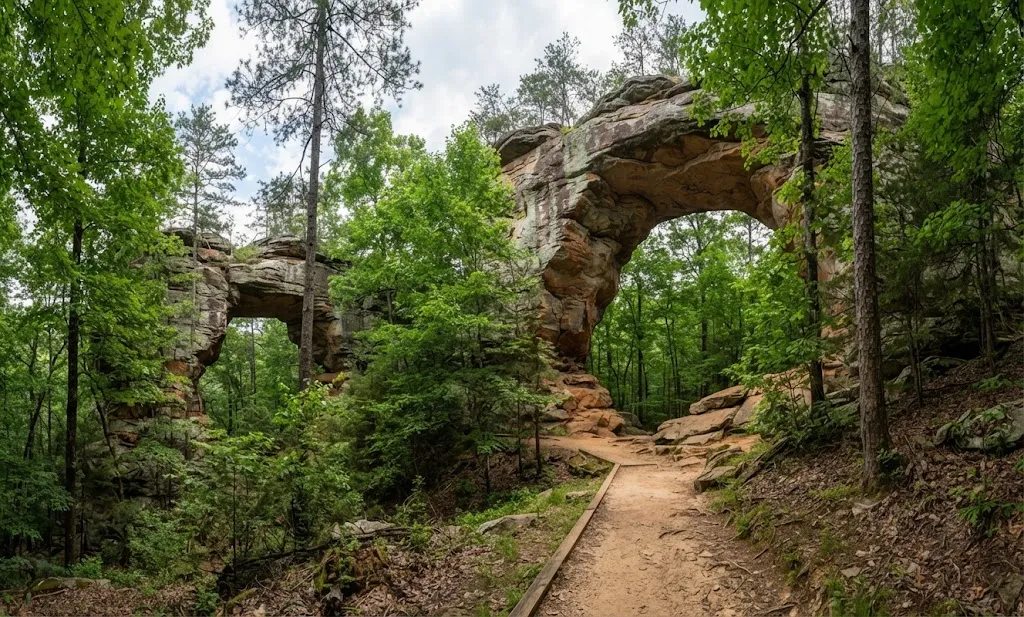
Twin Arches is one of the defining geological attractions in Big South Fork. The formation consists of North Arch and South Arch, created through long-term erosion of the sandstone landscape.
The shortest approach from the Twin Arches Trailhead is about 0.7 mile, according to the National Park Service. The South Arch reaches approximately 103 feet high with about 70 feet of clearance, while North Arch is about 62 feet high with approximately 51 feet of clearance.
The broader hiking information includes an upper loop of roughly 1.2 miles and a lower loop of about 4 miles, giving visitors options depending on how much time they have.
Why go: It combines a manageable hike with one of the area’s most impressive natural formations.
Useful tip: Wear shoes with dependable traction, especially if you plan to explore beyond the shortest route.
2. See Yahoo Falls
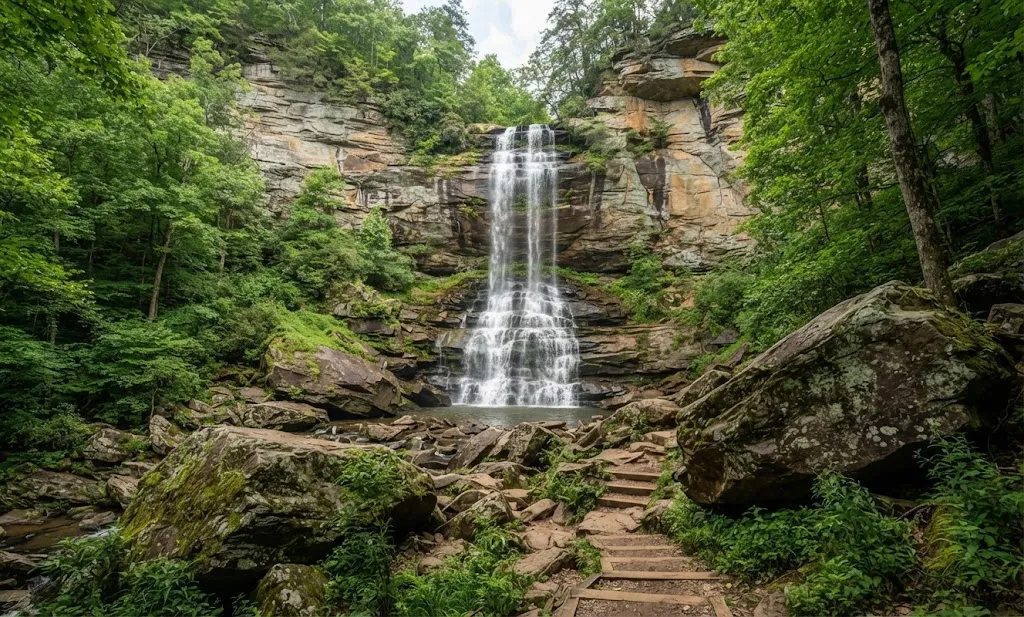
Yahoo Falls is another major stop. The waterfall drops 113 feet, making it Kentucky’s highest waterfall. The area can be reached through a short loop of approximately 1 mile, with views of the waterfall and surrounding gorge.
A separate route description gives the walk to the falls as approximately 1.2 miles, while a Yahoo Arch spur adds around 0.8 mile.
The surrounding area also provides picnic facilities and scenic views, so you do not need to treat the waterfall as a quick stop only.
Best for: Waterfall photography, a relatively short hike, and combining natural scenery with a picnic.
3. Take the Honey Creek Loop
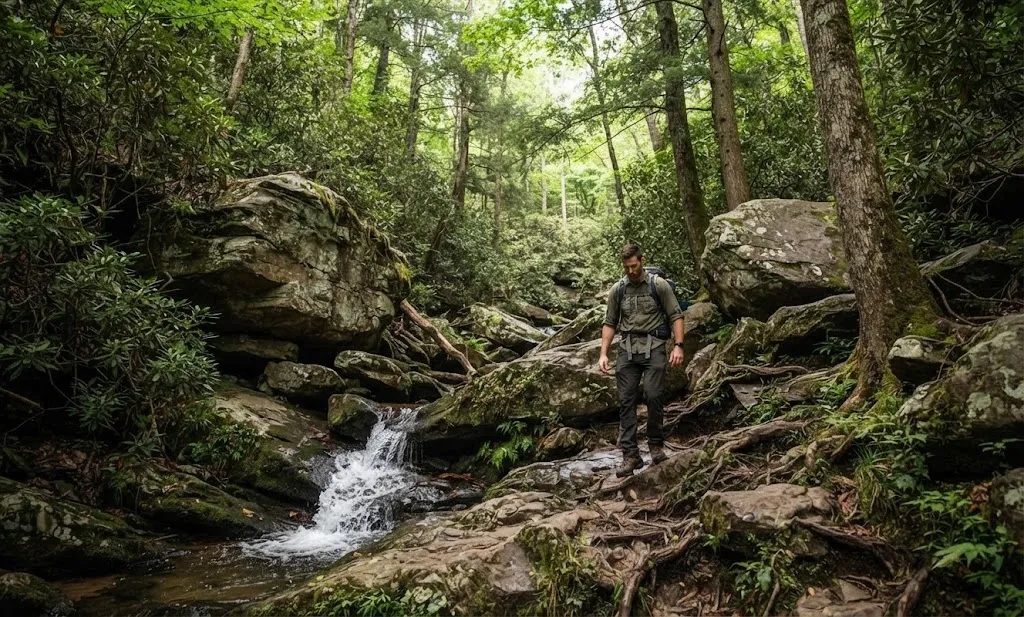
The Honey Creek Loop is one of the more demanding hiking experiences covered in the guides. Depending on the route description, expect roughly 5–6 miles, with some hikers potentially covering 6–7 miles when navigation or backtracking adds distance.
The route includes:
- Forested terrain
- Streams
- Waterfalls
- Rock shelters
- Gorge scenery
- Rocky sections
- Navigation challenges
This is not the place to rush. The route’s rugged character means your actual hiking time can vary considerably from the mileage alone.
Important: Carry a map, allow extra time, and avoid treating the mileage as a guaranteed travel time.
4. Explore Needle Arch and Slave Falls
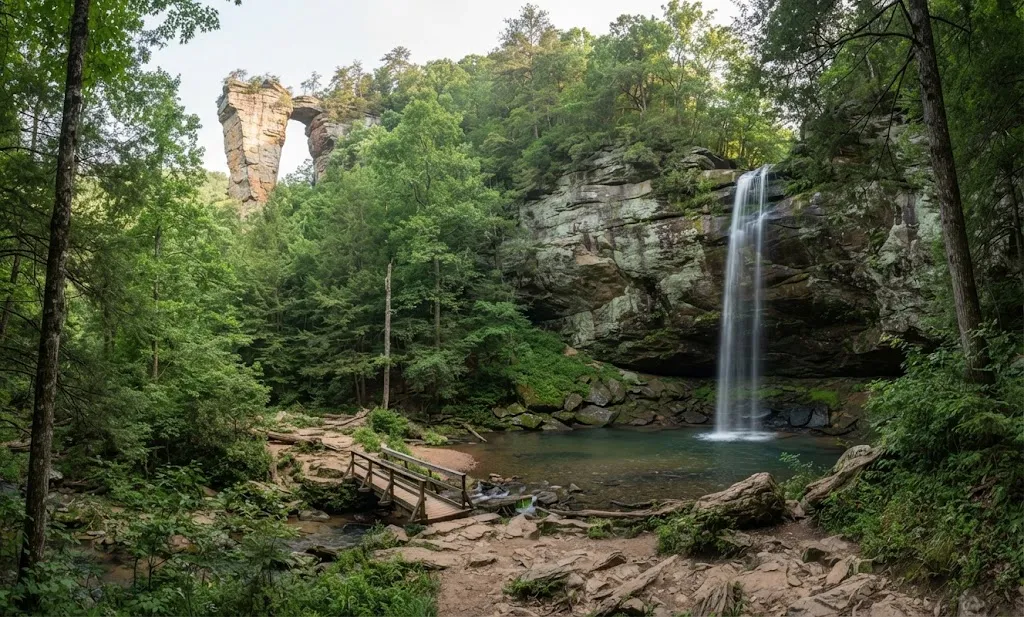
If you want to combine a waterfall with a smaller geological feature, consider the Slave Falls and Needle Arch area.
The Slave Falls out-and-back is approximately 2.6 miles, while the loop is about 3.6 miles. The waterfall is around 60 feet high.
Needle Arch can add approximately 0.5 mile round trip. The National Park Service identifies Needle Arch as one of the many sandstone arches in Big South Fork and notes that it can be reached from the Sawmill Trailhead.
This combination works well for travelers who want more than one feature without committing to one of the area’s longest hikes.
5. Visit the Blue Heron Mining Community
The Blue Heron Mining Community provides a different type of experience from the hiking trails.
The site interprets life in a former company coal-mining town from the 1940s and 1950s. Visitors can see reconstructed or preserved structures, mining-related features, interpretive material, and the historic Mine 18 area.
The Blue Heron area can also be reached by road or by the Big South Fork Scenic Railway.
Why it matters: Big South Fork is not only about scenery. Its cultural and industrial history is an important part of understanding the landscape.
6. Ride the Big South Fork Scenic Railway
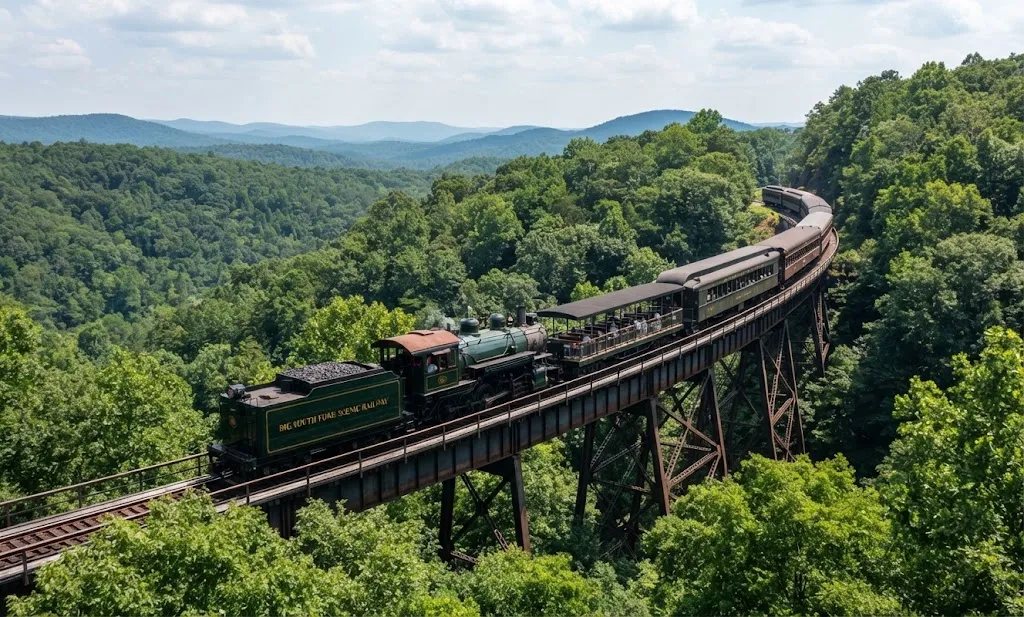
For a slower way to experience the region, consider the Big South Fork Scenic Railway.
The itinerary described in the supplied travel material takes approximately 3 hours:
- About 30 minutes traveling toward Barthell
- Approximately 2 hours at the mining camp
- About 30 minutes returning
The railway connects naturally with the region’s coal-mining history and gives visitors a chance to experience the scenery without spending the entire day on foot.
Good choice for: Families, history enthusiasts, and visitors who want a break from hiking.
7. Stop at Big South Fork’s Scenic Overlooks
You do not need to complete a long trail to enjoy the landscape.
Several overlooks highlighted in the guides provide easy opportunities to see the gorge and river:
| Overlook | Approximate walk/route | What to expect |
|---|---|---|
| East Rim Overlook | About 100–200 feet from parking | Gorge and river views |
| Blue Heron/Gorge Overlook | About 0.5 mile | Paved route and viewing platform |
| Bear Creek Overlook | About 1 mile round trip | Broad landscape and sunset potential |
| Devils Jump Overlook | Short paved walk | View toward the rapids |
The East Rim Overlook is especially useful when you want a scenic stop without committing to a lengthy hike.
For photographers, early morning and late afternoon can provide changing light across the sandstone landscape.
8. Go Paddling on the Big South Fork River
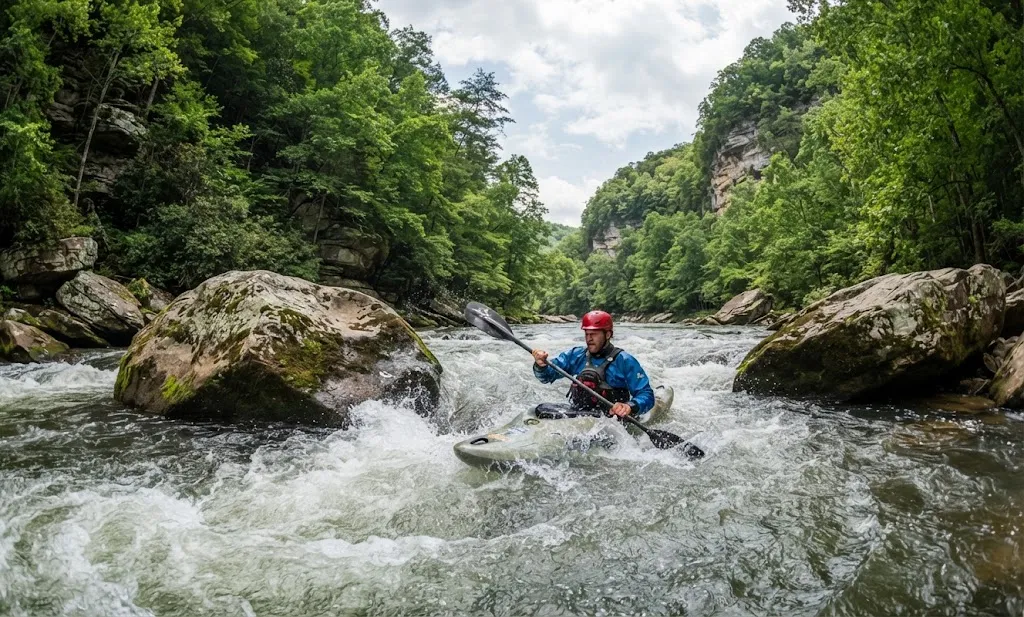
Water-based recreation adds another dimension to the area.
The guides describe opportunities for:
- Canoeing
- Kayaking
- Rafting
- Fishing
River difficulty varies considerably. Some sections are described around Class I–II, while more challenging rapids reach Class III–IV and specific features such as Devils Jump are associated with even more demanding whitewater.
One classic section between Leatherwood Ford and Blue Heron is described as a 2-day paddling trip. Certain difficult sections require appropriate experience and, in some cases, portaging.
Safety first: River conditions can change. Choose a route appropriate for your experience and check current conditions before getting on the water.
9. Go Horseback Riding or Mountain Biking
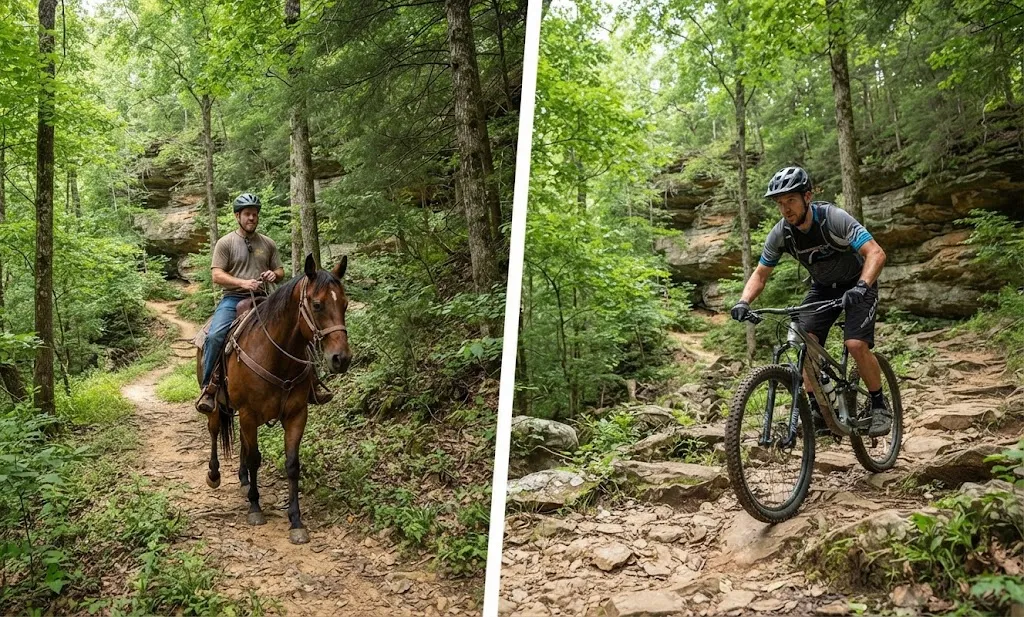
Big South Fork offers substantial trail mileage for visitors who prefer wheels or horseback travel.
The supplied information identifies approximately 200 miles of horse trails. National Park Service statistics also document extensive trail infrastructure, including hiking, horse, and mountain-bike routes.
Horse facilities and camping areas mentioned in the guides include:
- Bandy Creek
- Station Camp
- Bear Creek
Mountain biking is another way to cover more ground than you could comfortably walk in a single day.
Planning tip: Match your route to your experience level and check the applicable trail-use rules before setting out.
10. Explore the Park Beyond the Main Hiking Spots
One of the easiest mistakes on a first visit is limiting Big South Fork to its most famous trails.
Other attractions mentioned across the supplied material include:
- Split Bow Arch
- Yahoo Arch
- Wagon Arch
- Angel Falls
- Devils Jump
- Bandy Creek
- Natural Arch Scenic Area
- Pogue Creek Canyon State Natural Area
- Pickett CCC Memorial State Park
- Colditz Cove State Natural Area
- Barthell Coal Camp
The National Park Service notes that Big South Fork contains numerous sandstone arches, and several can be accessed through established trails or overlooks. Split Bow Arch, for example, has a 0.7-mile loop through the formation.
This variety makes it possible to build a trip around your interests rather than following one fixed itinerary.
A Simple 3-Day Big South Fork Itinerary
If you have 3 days, you can cover several of the major experiences without trying to see everything.
| Day | Morning | Afternoon | Evening |
|---|---|---|---|
| Day 1 | Twin Arches | Slave Falls + Needle Arch | Scenic overlook |
| Day 2 | Blue Heron Mining Community | Scenic Railway or river activity | Relax at camp |
| Day 3 | Yahoo Falls | Yahoo Arch or another short attraction | Depart |
This itinerary is intentionally flexible. If you prefer difficult hiking, replace one of the shorter activities with Honey Creek Loop. If you are traveling with children or want a slower trip, keep the shorter walks and historical attractions.
Camping and Overnight Planning
Big South Fork provides several ways to stay overnight, including general campgrounds, equestrian camping, and backcountry opportunities.
The supplied material identifies 5 campground areas:
- Bandy Creek Campground
- Blue Heron Campground
- Alum Ford Campground
- Bear Creek Horse Camp
- Station Camp Horse Camp
For a first visit, staying near the section of the park you plan to explore can reduce unnecessary driving.
The park also spans two time zones, Eastern and Central, so travelers crossing the time-zone boundary should pay attention to local schedules. The National Park Service specifically advises visitors to plan accordingly.
When Should You Visit?
Big South Fork is a four-season destination, with each season offering a different experience.
Spring:
A good period for flowing water, fresh vegetation, and cooler hiking conditions.
Summer:
Longer daylight hours make it easier to combine several activities, although temperatures can become hot.
Fall:
Fall color adds another reason to explore the overlooks, trails, and railway.
Winter:
The landscape becomes quieter, and leafless trees can open additional views through the forest.
Rather than choosing a season only by temperature, consider the activities you want to prioritize.
What to Pack for Big South Fork
Your packing list should change according to your route, but these basics are useful:
- Comfortable hiking shoes with good traction
- Plenty of drinking water
- Offline trail maps
- Weather-appropriate layers
- Sun protection
- Small first-aid kit
- Food and snacks
- Phone with backup battery
- Headlamp for longer hikes
- Rain protection
- Insect protection during warmer months
For difficult routes such as Honey Creek, navigation equipment and extra time are more important than simply packing light.
How to Make the Experience Easier
Big South Fork is large enough that trying to see everything in one day can make the trip unnecessarily stressful.
A better approach is to group attractions by area.
For natural arches:
Combine Twin Arches, Needle Arch, Split Bow Arch, or Yahoo Arch.
For waterfalls:
Start with Yahoo Falls or Slave Falls.
For history:
Prioritize Blue Heron Mining Community and the Scenic Railway.
For easy viewpoints:
Use East Rim, Blue Heron/Gorge, Bear Creek, or Devils Jump overlooks.
For adventure:
Consider paddling, horseback riding, mountain biking, or a more challenging hike.
This approach improves both time management and trail selection.
FAQs
Is Big South Fork worth visiting for a short trip?
Yes. Even with only 2–3 days, the area offers enough variety to combine hiking, waterfalls, scenic overlooks, history, and outdoor recreation.
How large is Big South Fork?
Big South Fork National River and Recreation Area protects approximately 125,000 acres across Tennessee and Kentucky.
How high is Yahoo Falls?
Yahoo Falls drops approximately 113 feet and is identified by the National Park Service as Kentucky’s highest waterfall.
How long is the Twin Arches hike?
The shortest route from the Twin Arches Trailhead is about 0.7 mile. Other loop options cover more distance.
How difficult is Honey Creek Loop?
Honey Creek is considered one of the more challenging routes discussed in the guides. It involves streams, rocky terrain, waterfalls, rock shelters, and sections where navigation matters.
Can you visit Big South Fork without hiking?
Yes. Scenic overlooks, Blue Heron Mining Community, the Scenic Railway, camping, fishing, and other activities provide alternatives to long hikes.
Does Big South Fork have horseback riding?
Yes. The area has approximately 200 miles of horse trails, along with horse-oriented camping facilities.
Is Big South Fork open year-round?
The National Park Service describes Big South Fork as a four-season park, although individual facilities, roads, and activities can have their own seasonal schedules.
What should first-time visitors prioritize?
For a first visit, a practical combination is Twin Arches, Yahoo Falls, one scenic overlook, and Blue Heron Mining Community. Add Honey Creek or a river activity if you have additional time and the appropriate experience.
Final Planning
Big South Fork is much more than a single hiking destination. Its 125,000 acres combine natural arches, waterfalls, sandstone gorges, historic mining sites, river recreation, scenic overlooks, and extensive trail systems.
If you only have one day, focus on a few nearby attractions rather than rushing across the entire area. With 2–3 days, you can combine the major natural and historical experiences. And with a longer stay, the park’s hiking, horseback riding, biking, paddling, camping, and scenic routes provide plenty of room to explore at a slower pace.
Before leaving, check current park information and trail conditions, particularly for challenging routes and water activities. The National Park Service maintains current maps and visitor information for the area.
Hi, I’m Marcus! I love exploring the outdoors and discovering incredible places. Through ExploreNatureTrips blog, I share my travel experiences, useful tips, and recommendations for the best sights, trails, and destinations to visit.