
18 Beaches With Waterfalls Whose Beauty Will Blow You Away
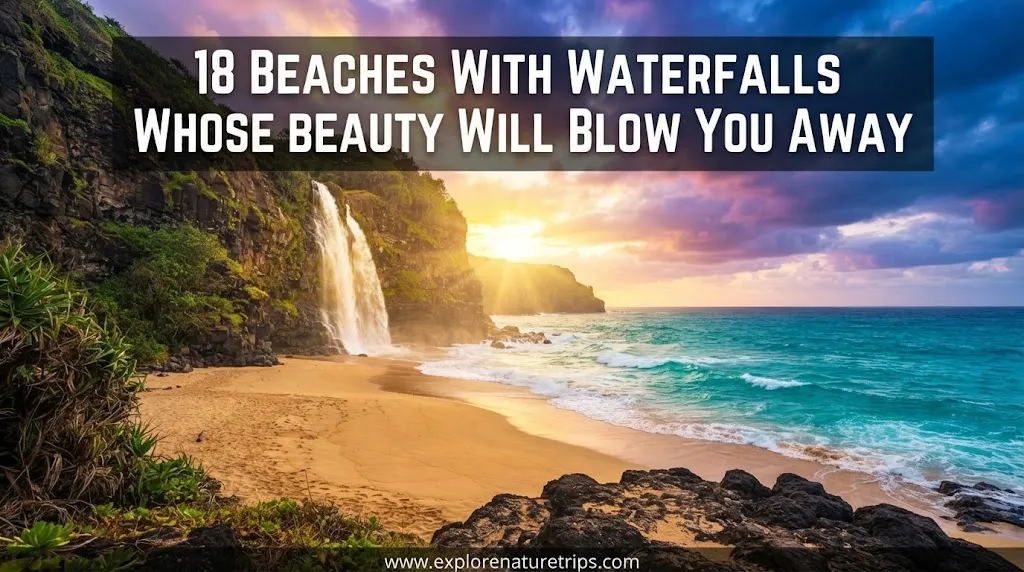
18 Beaches With Waterfalls
There is something special about a beach where the sound of waves is joined by the rush of falling water. These destinations combine coastline, cliffs, forests, rivers, and waterfalls into landscapes that feel completely different from an ordinary beach trip.
The 18 destinations below are selected around that combination. Some have waterfalls falling directly toward the shore, while others place a waterfall only a short walk from the beach. The experience varies widely too: some require a few minutes of walking, while others involve several miles of hiking, low-tide planning, permits, or advance reservations.
To make planning easier, this guide focuses on the details that matter most to travelers: waterfall height, distance, hiking requirements, access conditions, restrictions, reservations, and useful trip-planning numbers.
1. Hug Point Waterfall, Oregon Coast
Hug Point Waterfall is one of the more accessible options for travelers who want to combine a beach outing with a waterfall. The destination is about 30 minutes from Cannon Beach, making it particularly convenient for travelers exploring the Oregon Coast.
The waterfall itself is approximately 15 feet high. What makes this stop especially interesting is the role of the tide. Low tide is important for access, so the beach experience depends heavily on timing.
Rather than treating this as a destination where you can simply arrive whenever you want, check the tide conditions before setting out.
Best for: Travelers wanting a relatively accessible coastal waterfall experience.
2. McWay Falls, Big Sur, California
McWay Falls is one of the most dramatic waterfall-and-coast combinations in the group. The waterfall drops approximately 80 feet in the Big Sur area.
The most important planning detail is also one of the easiest to overlook: beach access is illegal. In other words, seeing the waterfall does not mean you should attempt to reach the beach beneath it.
McWay Falls is located in Pfeiffer State Park, while camping in the area above the falls requires a permit/reservation.
This is a good example of why responsible sightseeing matters. The best experience is to enjoy the landscape from permitted viewpoints rather than trying to reach a restricted area.
Best for: Scenic viewpoints and dramatic coastal photography.
3. Miller Creek Falls and Secret Beach, Southern Oregon
Secret Beach offers a particularly interesting waterfall experience because the area is associated with four waterfalls at different points.
Miller Creek Falls itself is approximately 25 feet high. Instead of being limited to one waterfall viewpoint, visitors can explore a coastline where waterfalls and rocky coastal scenery occur together.
The destination is therefore useful for travelers who enjoy combining beach exploration with short waterfall discoveries.
Best for: Exploring several coastal waterfall features rather than visiting a single viewpoint.
4. Mystic Falls and Mystic Beach, Vancouver Island
Mystic Falls creates an appealing combination of forest, waterfall, and Pacific coastline on Vancouver Island.
The waterfall is approximately 40 feet high, and the falls are around 10 feet from the beach. That close relationship between the waterfall and shoreline is what makes this destination stand out.
Low tide can provide closer access, making tide awareness an important part of planning.
If your ideal beach experience involves getting close to both the water and the waterfall, Mystic Beach is one of the strongest matches in this list.
Best for: Travelers looking for a waterfall very close to the beach.
5. Sombrio Beach Hidden Waterfall, Vancouver Island
Sombrio Beach provides another waterfall experience on Vancouver Island, but its appeal is more about discovery.
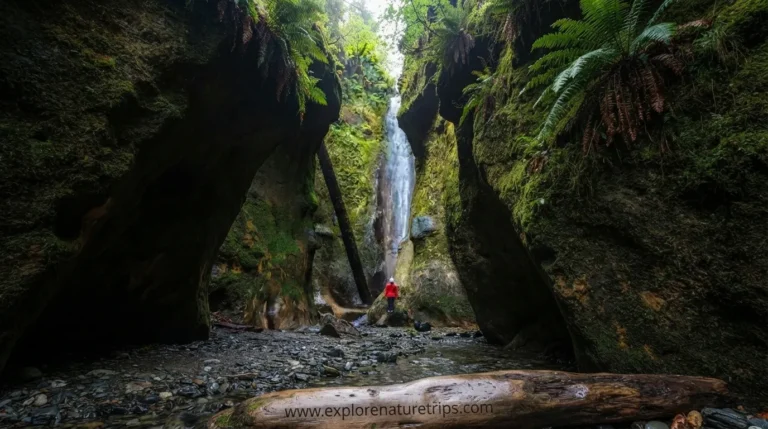
The hidden waterfall is approximately 50 feet from the beach, tucked into a canyon. Reaching it requires hiking rather than simply stepping from the sand toward a visible waterfall.
That makes the experience different from a traditional beach viewpoint. The beach becomes the starting point for a short adventure into a hidden landscape.
Best for: Travelers who enjoy hidden spots and exploring beyond the main beach.
6. Alamere Falls, Point Reyes, California
Alamere Falls brings together a waterfall and California’s coastal landscape in Point Reyes.
The waterfall is around 40 feet high, and the walk is described as relatively easy from the parking area compared with some of the longer hiking destinations on this list.
This makes it an attractive option for travelers who want a coastal waterfall without committing to a major multi-mile adventure.
Best for: Combining a California coastal trip with a manageable waterfall walk.
7. Shannon Falls, Vancouver, Canada
Shannon Falls provides one of the biggest numerical contrasts in this guide.
The waterfall is approximately 1,000 feet high, while the falls are around 200 feet from the coastline.
That combination makes the destination particularly striking: you get a huge waterfall and a coastal setting within a relatively compact area.
For travelers who prioritize scale, Shannon Falls is difficult to ignore.
Best for: Dramatic scenery and travelers impressed by waterfall height.
8. Third Beach Falls, Washington Coast
Third Beach on the Washington Coast provides another classic Pacific Northwest combination of forest, ocean, and falling water.
The waterfall here is 100+ feet high, and the beach forms part of the Olympic Peninsula landscape within the broader Olympic National Park area.
This is less about a resort-style beach experience and more about experiencing a wild coastal environment.
Best for: Hikers and travelers who prefer rugged Pacific Northwest scenery.
9. North Shore Beach Waterfall, Minnesota
Not every beach-waterfall destination in this guide is straightforward to reach.
The North Shore of Lake Superior in Minnesota includes waterfall scenery where access may require a kayak, and some areas are described as restricted.
That makes this destination particularly important to approach with a little more planning. A beautiful location is only useful if you can legally and safely access it.
Best for: Adventurous travelers comfortable with water-based exploration.
10. Spray Falls, Michigan
Spray Falls is located within Pictured Rocks National Lakeshore and adds another level of adventure to the beach-and-waterfall combination.
The hike is approximately 2–3 miles, so visitors should expect to walk rather than simply park beside the attraction.
For travelers who enjoy destinations where the journey is part of the experience, this is an appealing choice.
Best for: Hiking, shoreline exploration, and natural scenery.
11. Mooney Falls, Arizona
Mooney Falls is one of the most demanding destinations in this guide, but its scale helps explain the attraction.
The waterfall is 100+ feet high, and reaching it involves at least 10 miles of hiking. The Havasupai Reservation also means that this isn’t a destination where travelers can simply arrive without preparation.
Reservations and camping planning may need to happen approximately one year in advance.
This is therefore a destination where preparation is part of the trip itself.
Best for: Experienced travelers planning a serious waterfall adventure.
12. Lower Calf Creek Falls, Utah
Lower Calf Creek Falls offers a very different landscape from the Pacific Coast destinations.
Located in Grand Staircase-Escalante, the waterfall is approximately 150+ feet high and requires a 3-mile hike.
The combination of a substantial waterfall and Utah’s dramatic desert environment creates a landscape that feels completely different from a traditional beach setting.
Best for: Travelers who want waterfalls surrounded by desert scenery.
13. Punchbowl Falls, Oregon
Punchbowl Falls is located along the Eagle Creek Trail and offers a waterfall experience connected with a beach viewpoint.
The destination is better suited to travelers interested in hiking and natural scenery than those looking for a conventional swimming beach.
The supplied travel information also notes that swimming is not allowed, so visitors should treat it primarily as a sightseeing and hiking destination.
Best for: Trail-based waterfall sightseeing.
14. Upper Falls, Ohio
Upper Falls in Hocking Hills State Park is a more accessible option compared with some of the lengthy hikes elsewhere on this list.
The area is described as free, but swimming is not allowed.
That makes it useful for travelers who want to include a waterfall stop in a broader Hocking Hills itinerary without making the entire day revolve around a strenuous hike.
Best for: A straightforward nature stop.
15. Ash Cave Falls, Ohio
Ash Cave Falls is another Hocking Hills destination and can be combined with Upper Falls in a single day.
The area isn’t intended for swimming, so the attraction is primarily the scenery, hiking, and natural formations.
For travelers planning an Ohio nature itinerary, combining these two destinations can make better use of a single day.
Best for: Travelers building a multi-stop Hocking Hills day trip.
16. Creation Falls, Kentucky
Creation Falls is located in Red River Gorge, an area known for hiking-focused outdoor experiences.
Unlike some of the destinations where numerical waterfall height is the headline attraction, Creation Falls fits better into an itinerary centered around trails, scenery, and exploration.
Best for: Hikers exploring Red River Gorge.
17. Flat Lick Falls, Kentucky
Flat Lick Falls is another Kentucky waterfall destination, this time within the Daniel Boone National Forest.
Its key advantage for travelers is the short hike, making it a practical option when you want to see a waterfall without dedicating a large portion of the day to a long trek.
Best for: Travelers looking for a shorter waterfall outing.
18. Hamilton Pool Preserve, Texas
Hamilton Pool Preserve near Austin rounds out the list with a destination where advance planning matters.
The attraction requires a reservation, and the waterfall area can be reached through a short hike.
Swimming is possible, although some cave and waterfall areas can be closed. This means visitors should check the current access conditions rather than assuming every part of the preserve will be open.
Best for: Travelers combining a short hike, swimming, and dramatic natural scenery.
Which Beach Waterfall Is Easiest to Visit?
Not all 18 destinations require the same level of effort.
If accessibility is your priority, several destinations stand out because they involve shorter approaches or relatively straightforward sightseeing.
| Destination | Main effort | Planning concern |
| Hug Point | Low-tide access | Tide timing |
| McWay Falls | Viewpoint visit | Beach access prohibited |
| Alamere Falls | Relatively easy walk | Trail planning |
| Shannon Falls | Short coastal relationship | Location/access |
| Upper Falls | Easy nature stop | No swimming |
| Flat Lick Falls | Short hike | Trail conditions |
| Hamilton Pool | Short hike | Reservation |
If you’re choosing based purely on ease, don’t automatically pick the tallest waterfall. A 15-foot waterfall with easy access may be a better experience for a casual traveler than a 100+ foot waterfall requiring 10+ miles of hiking.
Which Ones Require the Most Planning?
Three destinations particularly demonstrate why planning matters:
Mooney Falls
The combination of 100+ feet of waterfall height, 10+ miles of hiking, and reservation/camping requirements makes this one of the most demanding choices.
Hamilton Pool Preserve
The hike may be short, but the requirement for a reservation and possible closures around cave and waterfall areas means checking access before visiting is essential.
Hug Point Waterfall
The challenge here isn’t distance. It’s timing. Low tide can determine whether the relevant coastal area is accessible.
Beach Waterfalls With the Most Impressive Numbers
If you’re choosing based on scale, these destinations stand out:
- Shannon Falls: approximately 1,000 feet
- Lower Calf Creek Falls: approximately 150+ feet
- Third Beach Falls: 100+ feet
- Mooney Falls: 100+ feet
- McWay Falls: approximately 80 feet
- Mystic Falls: approximately 40 feet
- Alamere Falls: approximately 40 feet
- Miller Creek Falls: approximately 25 feet
- Hug Point Waterfall: approximately 15 feet
The numbers tell an interesting story: height doesn’t necessarily determine the overall experience. A smaller waterfall immediately beside a beach can feel more intimate and memorable than a much taller waterfall viewed from a distance.
How to Choose the Right Destination
Before choosing one of these beaches, think about what kind of trip you actually want.
For a low-effort outing
Look toward Hug Point, Alamere Falls, Upper Falls, or Flat Lick Falls. These options are more appropriate when you don’t want a long expedition.
For a serious hiking adventure
Mooney Falls, Spray Falls, and Lower Calf Creek Falls require substantially more walking and preparation.
For dramatic waterfall height
Shannon Falls, Lower Calf Creek Falls, Third Beach Falls, and Mooney Falls stand out numerically.
For unusual access
Mystic Beach, Hug Point, Sombrio Beach, and the North Shore destination demonstrate how tide, hiking, canyon access, or kayaking can change the experience.
For a family-friendly planning approach
A shorter hike or viewpoint can make more sense than selecting a destination simply because its waterfall is taller. Check distance, access restrictions, swimming rules, and reservations before deciding.
Important Things to Check Before You Go
A beach waterfall can look simple on a map but involve very different conditions on the ground.
Check tide conditions
This is particularly important at destinations such as Hug Point and Mystic Beach. Low tide can influence how close you can get to certain coastal features.
Check whether beach access is legal
McWay Falls is a clear example. The waterfall may be visually associated with the beach, but beach access is illegal.
Check reservations
Some destinations cannot be treated as spontaneous day trips. Mooney Falls and Hamilton Pool Preserve require advance planning.
Check swimming rules
Not every waterfall is a swimming destination. Punchbowl Falls, Upper Falls, and Ash Cave Falls have swimming restrictions or do not allow swimming.
Consider hiking distance honestly
A 3-mile hike and a 10+ mile hike represent very different commitments. If you’re traveling with children, older family members, or limited time, the shortest-looking option isn’t always enough—you should consider the entire route and conditions.
FAQs
Which beach has the tallest waterfall on this list?
Shannon Falls has the largest stated waterfall height, at approximately 1,000 feet. It is also described as being around 200 feet from the coastline.
Which beach waterfall is about 80 feet high?
McWay Falls in Big Sur is approximately 80 feet high. However, beach access is illegal, so visitors should enjoy it from permitted viewing areas.
Which waterfall requires the longest hike?
Mooney Falls requires at least 10 miles of hiking, making it one of the most demanding destinations in this collection.
Which beach waterfall requires a 3-mile hike?
Lower Calf Creek Falls involves a 3-mile hike and has a waterfall approximately 150+ feet high.
Are these waterfalls suitable for swimming?
Not necessarily. Some destinations specifically restrict swimming, including Punchbowl Falls, Upper Falls, and Ash Cave Falls. Hamilton Pool Preserve allows swimming when conditions permit, but certain cave and waterfall areas can be closed.
Which destinations require reservations?
Mooney Falls requires substantial advance reservation and camping planning, potentially around one year ahead. Hamilton Pool Preserve also requires a reservation.
Which destination is best if I want a waterfall very close to the beach?
Mystic Falls / Mystic Beach is particularly notable because the waterfall is approximately 10 feet from the beach. Sombrio Beach’s hidden waterfall is approximately 50 feet from the beach.
Do I need to check tides for a beach waterfall?
Yes, when the destination depends on coastal access. Hug Point is specifically described as accessible at low tide, while low tide also provides closer access around Mystic Beach.
Final Thoughts
These 18 destinations show that a beach with a waterfall can mean many different things. Sometimes the waterfall is only 15 feet high and easily combined with a coastal outing. Elsewhere, you may be looking at a 1,000-foot waterfall, a 3-mile hike, or even 10+ miles of hiking.
The best choice depends less on finding the biggest waterfall and more on matching the destination to your time, fitness level, access needs, tide conditions, and willingness to plan ahead. Before visiting, always check current access restrictions, reservations, trail conditions, and swimming rules. That small amount of preparation can turn a beautiful landscape into a much better travel experience.

Hi, I’m Marcus! I love exploring the outdoors and discovering incredible places. Through ExploreNatureTrips blog, I share my travel experiences, useful tips, and recommendations for the best sights, trails, and destinations to visit.
2 Comments