Top 10 National Park Road Trips in the US With Itinerary Ideas

A national park road trip lets you experience much more than individual destinations. You can watch red-rock deserts gradually turn into alpine forests, follow scenic mountain highways, stop at small gateway towns, and build an itinerary around your own travel pace.
The biggest challenge is deciding where to go, how many days to allow, and how much driving is realistic.
The good news is that many of the most rewarding routes are concentrated in specific regions. A 5-day trip can work for a compact route, while 7–10 days gives you more room to explore. For larger loops, plan around 10–14 days or longer.
The itinerary ideas below focus on practical combinations of parks, realistic trip lengths, seasonal considerations, and memorable stops.
1. Utah Mighty 5 Road Trip
Southern Utah is one of the easiest places to build a multi-park road trip because 5 national parks are relatively close together.
The route connects:
- Zion National Park
- Bryce Canyon National Park
- Capitol Reef National Park
- Arches National Park
- Canyonlands National Park
A 7–10 day itinerary gives you enough time to experience the major landscapes without turning the trip into a race.
Suggested itinerary
Days 1–2: Zion National Park
Give Zion 2 nights if possible. Spend time in Zion Canyon, explore its major viewpoints, and choose a hike that matches your ability and the conditions.
Day 3: Bryce Canyon
Travel toward Bryce Canyon and spend the day among its distinctive hoodoos. Sunrise and sunset can be especially rewarding for photographers.
Day 4: Capitol Reef
Use a full day to explore Capitol Reef’s scenic areas, geological formations, and historic Fruita district.
Days 5–6: Arches National Park
Base yourself around Moab for easier access to Arches. Delicate Arch and the Windows area are among the route’s recognizable highlights.
Day 7: Canyonlands National Park
If you have only 7 days, concentrate on one area of Canyonlands rather than attempting to cover the entire park.
With 10 days, add extra hiking and scenic stops instead of simply adding more driving.
Useful driving numbers
A Las Vegas-to-Zion transfer is roughly 3 hours, while Moab-to-Salt Lake City is around 3.5 hours on the commonly used route.
For a more relaxed trip, spring and fall generally provide more comfortable desert temperatures than the hottest part of summer.
2. Grand Circle National Park Road Trip
The Grand Circle expands the Utah journey into a larger Southwest loop.
A longer itinerary can connect:
- Zion
- Bryce Canyon
- Capitol Reef
- Arches
- Canyonlands
- Grand Canyon
Plan approximately 10–14 days for a trip that allows meaningful time at each destination.
A practical 10-day structure
| Days | Area |
|---|---|
| 1–2 | Zion |
| 3 | Bryce Canyon |
| 4 | Capitol Reef |
| 5–6 | Arches |
| 7 | Canyonlands |
| 8–9 | Grand Canyon |
| 10 | Buffer or return travel |
This structure is flexible. You can move a day from one park to another depending on your hiking interests.
A useful rule is to keep 1 buffer day available on a large road trip. Weather, traffic, construction, fatigue, and unexpected discoveries can easily change a schedule.
Why the buffer day matters
Trying to visit six major parks with no flexibility can leave very little time for actual exploration.
A buffer can be used for:
- Extra hiking
- A delayed arrival
- Scenic stops
- Weather-related changes
- Rest
- A longer visit to a favorite park
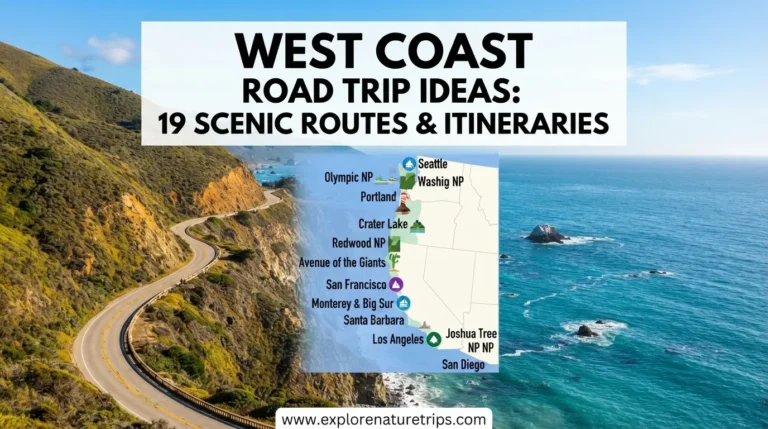
3. California National Park Road Trip
California provides a very different experience from Utah. Instead of concentrating on red-rock landscapes, this route combines giant trees, granite mountains, waterfalls, valleys, and high-elevation scenery.
A classic itinerary focuses on:
- Yosemite National Park
- Sequoia National Park
- Kings Canyon National Park
Plan around 7–10 days for the core journey.
Days 1–3: Yosemite
Allow approximately 3 days if Yosemite is a major purpose of your trip.
Possible experiences include:
- Yosemite Valley
- Glacier Point
- Waterfalls
- Giant granite formations
- High-country scenery
Tioga Road reaches approximately 9,945 feet, so high-elevation access is highly dependent on seasonal conditions.
Days 4–5: Sequoia
Spend 2 days exploring the giant sequoias and mountain scenery.
Moro Rock contains approximately 350 steps, making it an important consideration when planning your physical activities.
Days 6–7: Kings Canyon
Use your time for the scenic canyon, meadows, viewpoints, and surrounding forest.
If you have 10 days, add extra hiking days rather than filling every available hour with driving.
Best time
July through September can provide better access to high-elevation areas, although conditions should always be checked before departure.
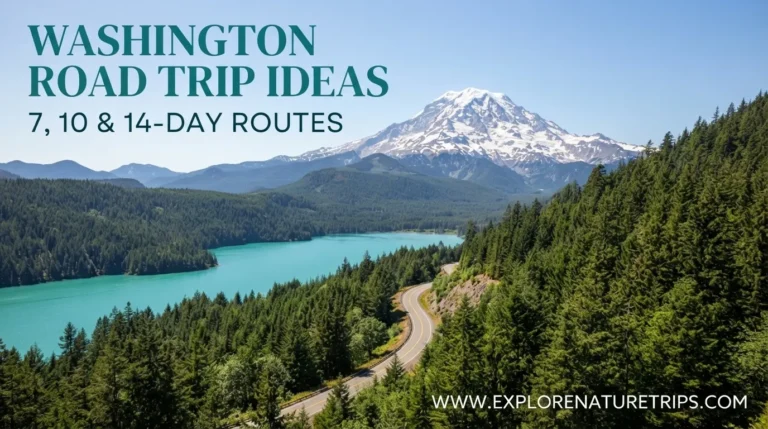
4. Pacific Northwest National Park Loop
The Pacific Northwest offers a dramatic combination of coastline, temperate rainforest, alpine terrain, and mountain scenery.
The core route connects:
- Olympic National Park
- Mount Rainier National Park
- North Cascades National Park
Recommended duration
Plan 7–10 days.
For a 7-day trip, avoid trying to explore every corner of all 3 parks.
A simple structure could look like:
| Days | Destination |
|---|---|
| 1–3 | Olympic |
| 4–5 | Mount Rainier |
| 6–7 | North Cascades |
With 10 days, add additional hiking and scenic stops.
Best season
June through September is a particularly useful window for this route because higher mountain areas can have seasonal snow and road-access limitations.
Long summer daylight also gives you more flexibility for outdoor activities.
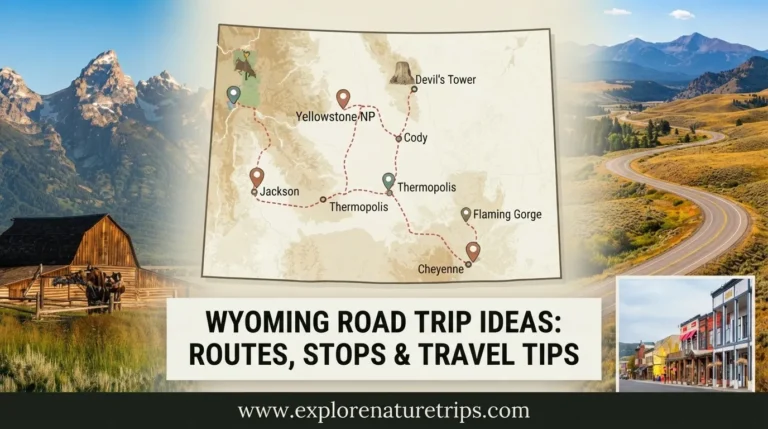
5. Yellowstone and Grand Teton Road Trip
Yellowstone and Grand Teton make a natural combination because they are geographically close compared with many other national park pairings.
A 7-day trip gives you enough time to experience both without constantly changing hotels.
Suggested itinerary
Days 1–4: Yellowstone
Allow 3–4 nights depending on your interests.
Possible highlights include:
- Geysers
- Hot springs
- Wildlife areas
- Scenic valleys
- Yellowstone Lake
Days 5–7: Grand Teton
Spend 2–3 nights exploring the mountain scenery, lakes, viewpoints, and trails.
Planning tip
Stay reasonably close to your daily destinations. Yellowstone is enormous, so choosing accommodation purely on price can sometimes create much longer daily drives.
Summer generally provides broader road access, while early fall can bring cooler conditions and different visitor patterns.
6. Glacier and Rocky Mountain Road Trip
Travelers with 10–14 days can connect two major mountain destinations:
- Glacier National Park
- Rocky Mountain National Park
The overall journey is much larger than a compact Utah loop, so driving time needs to be treated as part of the itinerary.
What makes this route different?
You get:
- High mountain scenery
- Alpine lakes
- Wildlife habitats
- Long scenic highways
- Major elevation changes
Glacier’s Going-to-the-Sun Road and Rocky Mountain’s Trail Ridge Road are important seasonal considerations. High-elevation roads may not be fully accessible during the colder months.
Best duration
10 days works for travelers comfortable with longer driving days.
Choose 14 days if you want more hiking, photography stops, and rest.
7. Great Plains National Park Road Trip
For a shorter adventure, consider a 5–7 day route through the Dakotas.
Possible national park stops include:
- Badlands National Park
- Wind Cave National Park
- Theodore Roosevelt National Park
The route can also include surrounding attractions and scenic areas.
Why choose this trip?
Compared with a large western loop, this itinerary can provide a more manageable introduction to national park travel.
You can combine:
- Badland formations
- Prairie landscapes
- Wildlife viewing
- Scenic drives
- Black Hills attractions
Late spring and early fall can offer comfortable conditions for outdoor exploration.
8. Shenandoah and Great Smoky Mountains Road Trip
A road trip through the Appalachian region offers a completely different landscape from the western parks.
The core route combines:
- Shenandoah National Park
- Great Smoky Mountains National Park
Allow approximately 5–8 days.
5-day version
For a shorter schedule:
- Days 1–2: Shenandoah
- Day 3: Scenic transfer
- Days 4–5: Great Smoky Mountains
7–8-day version
With additional time, spend 3 days around Shenandoah and 4–5 days around the Smokies.
Spring is attractive for flowering landscapes, while fall is particularly popular for colorful foliage.
The Blue Ridge Parkway can help turn the transfer itself into part of the experience rather than simply a drive between destinations.
9. Desert Southwest Road Trip
A desert-focused itinerary can combine:
- Joshua Tree National Park
- Death Valley National Park
- Grand Canyon National Park
Plan approximately 7–10 days.
Sample schedule
| Day | Destination |
|---|---|
| 1–2 | Joshua Tree |
| 3–4 | Death Valley |
| 5 | Travel / scenic stops |
| 6–7 | Grand Canyon |
| 8–10 | Extra hiking, viewpoints, or return travel |
A shorter 3–5 day version can focus on just 1–2 parks.
Important desert planning
Do not judge desert distances only by miles.
Consider:
- Heat
- Water availability
- Fuel stations
- Hiking exposure
- Road conditions
- Early-morning starts
Late fall through spring can be more practical for lower-elevation desert travel than the hottest summer period.
10. Colorado and Mesa Verde Road Trip
A 5–8 day Colorado route can combine Rocky Mountain scenery with the cultural and archaeological landscape around Mesa Verde.
A basic itinerary can include:
- Rocky Mountain National Park
- Mesa Verde National Park
Travelers with additional time can consider adding:
- Great Sand Dunes
- Black Canyon of the Gunnison
Suggested 7-day itinerary
Days 1–3: Rocky Mountain National Park
Allow time for mountain viewpoints, hiking, and elevation adjustment.
Day 4: Scenic travel day
Use the day for the longer transfer instead of attempting a full day of activities at both ends.
Days 5–6: Mesa Verde
Explore the park’s archaeological sites and surrounding scenery.
Day 7: Buffer or return travel
A final buffer makes the itinerary less stressful if weather or road conditions change.
Summer and early fall are useful periods for this type of high-elevation route, although road access can vary by season.
How Many Days Do You Need for a National Park Road Trip?
There is no single perfect trip length. Your available time should determine the number of parks, not the other way around.
| Available Time | Practical Plan |
|---|---|
| 3–4 days | 1–2 nearby parks |
| 5–7 days | 2–4 parks in one region |
| 7–10 days | A concentrated multi-park route |
| 10–14 days | A major regional loop |
| 2+ weeks | Multi-state corridor or extended western journey |
For first-time travelers, a smaller route with more time inside each park can be easier to enjoy than an itinerary built around checking off the largest possible number of destinations.
How to Choose the Right Route
Start with your travel season, then work backward.
If you are traveling in spring
Consider lower-elevation and southern destinations such as:
- Zion
- Bryce Canyon
- Joshua Tree
- Saguaro
- Great Smoky Mountains
If you are traveling in summer
Higher-elevation destinations become more attractive, including:
- Glacier
- Rocky Mountain
- North Cascades
- Yosemite
- Yellowstone
Summer also provides longer daylight hours, but popular areas can be busy, and lodging may fill quickly.
If you are traveling in fall
Fall can work particularly well for:
- Utah
- Yellowstone
- Grand Teton
- Shenandoah
- Great Smoky Mountains
- Colorado
If you are traveling in winter
Several mountain routes become difficult because of snow and seasonal road closures. Lower-elevation destinations can be more practical.
How to Build a Realistic Itinerary
A good road trip is not simply a list of destinations.
It should answer four questions:
- Where will you sleep?
- How long will you drive each day?
- What will you actually do after arriving?
- What happens if weather or road conditions change?
Keep driving days manageable.
For compact routes, keeping many daily transfers around 2–3 hours can leave more time for hiking and sightseeing.
A longer driving day is sometimes unavoidable, but avoid scheduling several consecutive long transfers.
Add a buffer day
For a 7-day or 10-day itinerary, one flexible day can make a major difference.
Use it when:
- Weather changes
- A road closes
- A hike takes longer
- You discover an unexpected viewpoint
- You need additional rest
Stay near the next day’s activities
A cheap hotel far from the park may cost you several hours of driving over multiple days.
Gateway towns can be useful because they provide access to:
- Lodging
- Fuel
- Restaurants
- Groceries
- Equipment
- Visitor services
National Park Road Trip Packing Checklist
Before leaving, prepare for both the road and the trail.
Essential items
- Water
- Snacks and food
- First-aid supplies
- Offline maps
- Phone charger
- Power bank
- Comfortable hiking shoes
- Layers of clothing
- Sun protection
- Rain protection
- Flashlight or headlamp
- Physical road map
- Vehicle emergency supplies
Remote routes may have long gaps between fuel and food services, so do not assume the next station will always be nearby.
Reservations and Park Entry Planning
Some popular national parks use timed-entry systems, vehicle reservations, permits, or other seasonal controls.
Requirements can change from year to year, so check the official park website shortly before your trip.
This is particularly important when your itinerary depends on entering a park at a specific time.
Book early for popular seasons
For summer and fall trips:
- Reserve lodging as early as practical.
- Check campground availability.
- Review cancellation policies.
- Confirm road-opening information.
- Check permits for popular hikes.
- Verify entry requirements before departure.
Do not build an entire 10-day trip around an attraction you have not confirmed is accessible.
How to Save Time on a Multi-Park Trip
Small planning decisions can save hours.
Use a logical route
Avoid repeatedly driving back through the same area.
Group nearby parks
A regional loop is generally more efficient than combining parks separated by hundreds of miles.
Prepare offline navigation
Cell service can become unreliable in remote mountain, desert, and forest areas.
Download maps before entering areas where connectivity may disappear.
Fuel before remote sections
When the next fuel opportunity is far away, fill up before leaving a gateway town.
Start early
Early departures can help you:
- Avoid some traffic
- Find parking more easily
- Beat heat in desert areas
- Reach popular viewpoints before peak crowds
- Create more daylight for hiking
National Park Road Trip Budget Categories
Your total cost depends heavily on trip length, vehicle type, lodging, and activities.
Create your budget around these categories:
| Expense | What to Consider |
|---|---|
| Fuel | Total mileage + vehicle fuel economy |
| Lodging | Park lodges, hotels, cabins, camping |
| Food | Restaurants, groceries, packed meals |
| Park fees | Individual entrance fees or annual pass |
| Permits | Hikes, campsites, timed activities |
| Vehicle | Rental, maintenance, parking |
| Activities | Tours, boats, equipment rentals |
| Emergency fund | Weather-related changes or unexpected costs |
If you plan to visit several fee-charging federal recreation sites during 365 days, compare individual entrance fees with the America the Beautiful annual pass before your trip.
Common Mistakes to Avoid
Trying to visit too many parks
More parks do not automatically mean a better trip.
If you spend most of your vacation behind the wheel, you may see many entrances but experience very little of each destination.
Ignoring elevation
Routes through Colorado, Wyoming, Montana, and the Sierra Nevada can involve significant elevation changes.
Give yourself time to adjust, especially before demanding hikes.
Treating every season the same
A route that works beautifully in July may be impractical in January.
Always check:
- Snow
- Road closures
- Trail conditions
- Heat
- Wildfire conditions
- Seasonal services
Leaving reservations until the last minute
Popular summer destinations can have limited accommodation near park entrances.
Forgetting recovery time
Hiking several miles after a long drive can be exhausting.
A balanced itinerary should include occasional slower days.
A Simple Formula for Planning Your Trip
You can build your own itinerary with this straightforward approach:
Available days → choose region → select 2–5 parks → calculate driving → add activity days → add 1 buffer → check seasonal access.
For example:
10 days + Southwest + 5 parks + manageable transfers + 1 buffer day = a balanced regional road trip.
This approach is more practical than choosing destinations first and trying to force them into a fixed schedule.
FAQs
What is the best length for a national park road trip?
For many multi-park routes, 7–10 days provides a useful balance between driving and exploration. Larger regional loops can require 10–14 days, while a focused trip can work in 3–5 days.
Can you visit multiple national parks in one week?
Yes. A 7-day trip works particularly well when parks are concentrated within the same region. Utah, Washington, and the Yellowstone–Grand Teton area are examples of routes that can be structured around a week.
What is the best national park road trip for 10 days?
A 10-day itinerary can work well for Utah’s Mighty 5, the Grand Circle, California’s major parks, or other concentrated regional routes.
What months are best for national park road trips?
There is no universal best month. Spring and fall can be excellent for many desert and lower-elevation routes, while summer is often more practical for high-elevation mountain parks.
How many national parks should I visit on a road trip?
For a 5–7 day trip, consider approximately 2–4 parks depending on distances. A 7–10 day trip can accommodate more, while a 10–14 day journey can support a larger regional loop.
Should I plan a national park road trip around driving distance or park activities?
Prioritize the parks and experiences you genuinely want to enjoy, then build the driving route around them. A shorter route with more time for hiking and sightseeing is often easier to manage than a route that maximizes the number of parks.
Do I need a buffer day?
A buffer day is especially useful on 7-day and 10-day trips. It gives you flexibility for weather, road closures, fatigue, delayed arrivals, or an attraction that deserves extra time.
What should I check before leaving?
Check current road conditions, park alerts, entrance requirements, permits, timed-entry rules, weather, lodging, fuel availability, and trail conditions shortly before departure.
Final Road Trip Planning
The best national park road trip is not necessarily the one with the most destinations. It is the one where your time, route, season, and activities work together.
Whether you have 5 days for a compact regional adventure or 14+ days for a major western loop, choosing a realistic pace will give you more opportunities to stop, explore, hike, photograph, and enjoy the landscapes between the parks.

Hi, I’m Marcus! I love exploring the outdoors and discovering incredible places. Through ExploreNatureTrips blog, I share my travel experiences, useful tips, and recommendations for the best sights, trails, and destinations to visit.