
Olympic National Park Washington: Trails & Travel Guide

Olympic National Park in Washington State is a destination where visitors can explore rugged Pacific beaches, ancient rainforests, mountain viewpoints, clear lakes, and scenic hiking trails in one trip. Its diverse landscapes make it suitable for day visitors, families, photographers, campers, and experienced hikers.
The park covers approximately 922,651 acres and includes about 73 miles of Pacific coastline. Its highest elevations reach approximately 7,980 feet, while coastal areas remain close to sea level. These significant differences in elevation and landscape mean that weather, trail conditions, and travel times can vary considerably between destinations.
Planning a visit requires more than choosing a few popular attractions. The park has no road running directly through its center, so travelers must plan separate journeys to different areas. Selecting the right season, estimating hiking distances, choosing accommodation, and understanding campground reservations can make a trip more comfortable and rewarding.
This guide covers the main attractions, hiking trails, camping options, entrance passes, transportation routes, seasonal highlights, and practical itineraries to help you plan your visit.
Gallery:





Olympic National Park at a Glance
The park was established in 1938 and is recognized as a UNESCO World Heritage Site and an International Biosphere Reserve. Much of its landscape is protected wilderness, making responsible travel and preparation particularly important.
| Park detail | Information |
|---|---|
| Location | Olympic Peninsula, Washington State, USA |
| Established | 1938 |
| Approximate area | 922,651 acres |
| Pacific coastline | Approximately 73 miles |
| Highest elevation | Approximately 7,980 feet |
| Main landscapes | Mountains, temperate rainforests, lakes, and beaches |
| Main driving route | U.S. Highway 101 |
| Suggested trip length | 3–5 days |
| General visiting season | June–September |
| Year-round opportunities | Coastal walks, rainforest visits, and selected winter activities |
The park is not a single compact attraction. Its mountains, rainforests, and beaches are spread across a large area, and traveling between them can take a substantial portion of the day.
Planning tip: Group attractions by region instead of repeatedly driving between distant locations. This approach helps you spend more time exploring and less time on the road.
Best Time to Visit Olympic National Park
Olympic National Park can be visited throughout the year, but the best time depends on your preferred activities. Summer is generally the easiest season for accessing many hiking routes, while the wetter months offer a different experience in the rainforests and along the coast.
June to September: Best for General Sightseeing
Summer is a popular period for hiking, mountain viewpoints, camping, and exploring the coastline. Many visitors prefer this season because conditions are often more favorable for reaching higher elevations.
However, popular destinations can become busy, particularly in July and August. Campgrounds and accommodation may fill up early, so planning is helpful.
Recommended activities include:
- Exploring the Hoh Rain Forest.
- Hiking to Hurricane Hill.
- Visiting Lake Crescent.
- Walking along Ruby Beach and Rialto Beach.
- Camping at designated campgrounds.
- Exploring scenic viewpoints around the Olympic Peninsula.
March to May: Spring Exploration
Spring can offer quieter trails and opportunities to observe wildlife along the coast. Gray whale migration is one of the seasonal highlights mentioned in the park’s travel information.
Higher mountain trails may still have snow or difficult conditions, so check access information before setting out.
October to December: Rainforest and Coastal Scenery
Autumn is a good option for visitors interested in forest colors, waterfalls, and dramatic Pacific coastal weather. The rainforest can remain appealing during wetter periods, but waterproof clothing and flexible plans are important.
December to February: Winter Activities
Winter offers opportunities to experience the park’s quieter landscapes. Hurricane Ridge may provide snow-based recreation when conditions and road access allow.
The Hurricane Ridge Road schedule can depend on weather and seasonal operations. Check the latest road conditions before traveling to the mountain area.
| Season | Best suited for | Main consideration |
|---|---|---|
| March–May | Quieter visits and coastal wildlife viewing | Snow may remain at higher elevations |
| June–September | Hiking, camping, and sightseeing | Crowds and reservation demand |
| October–December | Rainforest scenery and coastal storms | Wet weather and changing access |
| December–February | Winter scenery and mountain recreation | Snow, road conditions, and limited services |
Best Places to Visit in Olympic National Park
The park’s major attractions are spread across several regions. Prioritizing a few locations is usually more practical than trying to see everything in a single day.
1. Hoh Rain Forest

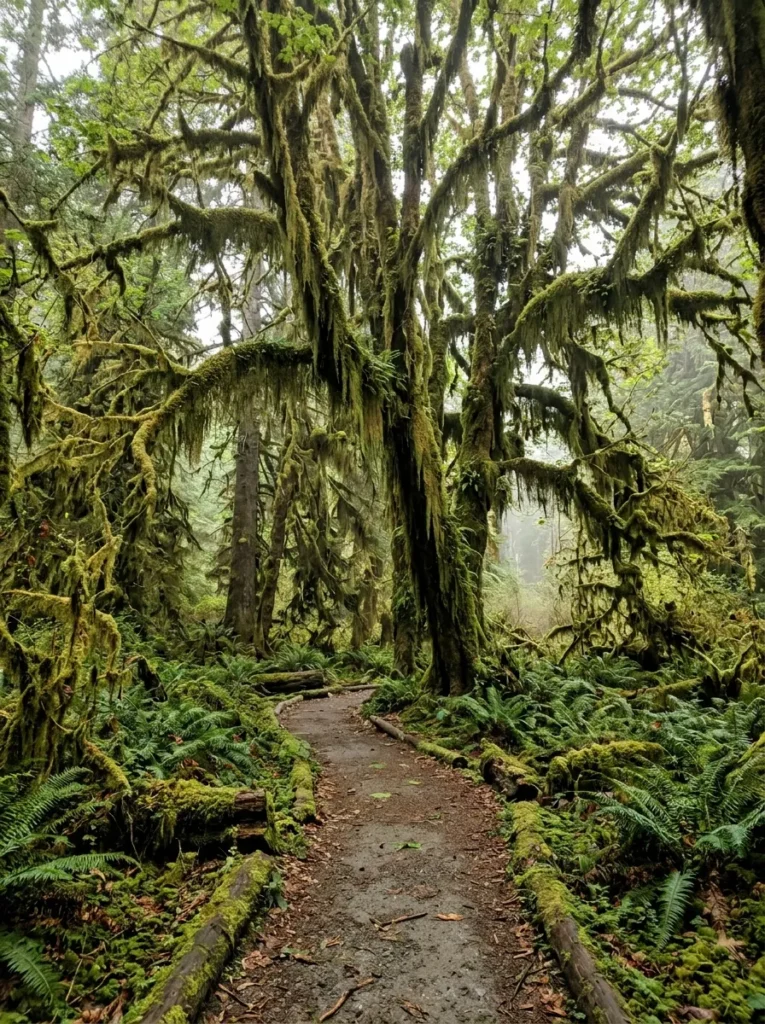
The Hoh Rain Forest is one of the park’s best-known destinations. Its moss-covered trees, lush vegetation, and shaded walking routes provide an opportunity to experience a temperate rainforest.
The Hall of Mosses Trail, a short loop of approximately 0.8 miles, is a useful option for visitors who want a manageable walk through the forest. The Spruce Nature Trail is another short route mentioned in park travel guides.
What to do:
- Walk beneath moss-covered trees.
- Photograph the forest vegetation.
- Explore short nature trails.
- Allow time to enjoy the surroundings rather than rushing through the area.
The road from Highway 101 to the Hoh Rain Forest access area is approximately 18 miles, so include this distance when estimating your journey.
2. Hurricane Ridge
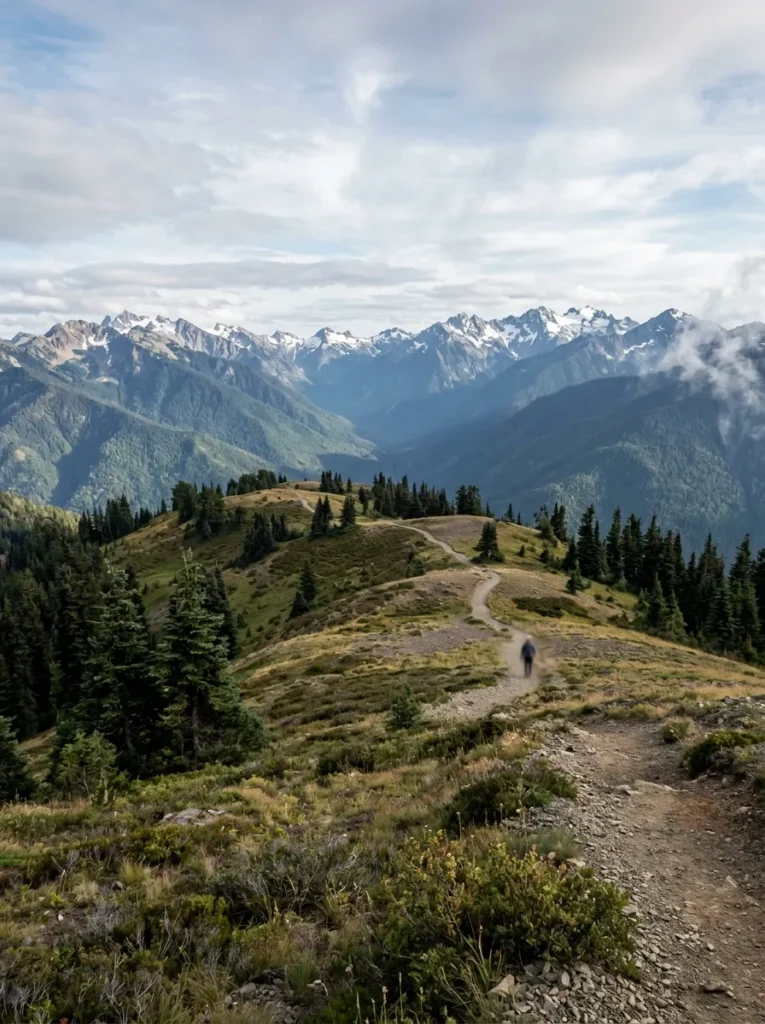
<escape>Hurricane Ridge</escape> is known for mountain scenery, expansive viewpoints, and access to high-country hiking. It is especially appealing to visitors who want to experience the Olympic Mountains without committing to a long backcountry trek.
The Hurricane Hill Trail is approximately 3.2 miles round trip, with around 700 feet of elevation gain.
Visitors should prepare for cooler temperatures at higher elevations, even when coastal areas feel warmer. Snow and weather conditions can affect access at different times of the year.
3. Lake Crescent
Lake Crescent is a scenic destination for lakeside views, photography, and nearby walking trails. Its location also makes it a practical stop when combining northern park attractions.
The lake can be paired with Marymere Falls, which is accessible by a relatively short hiking route.
4. Marymere Falls
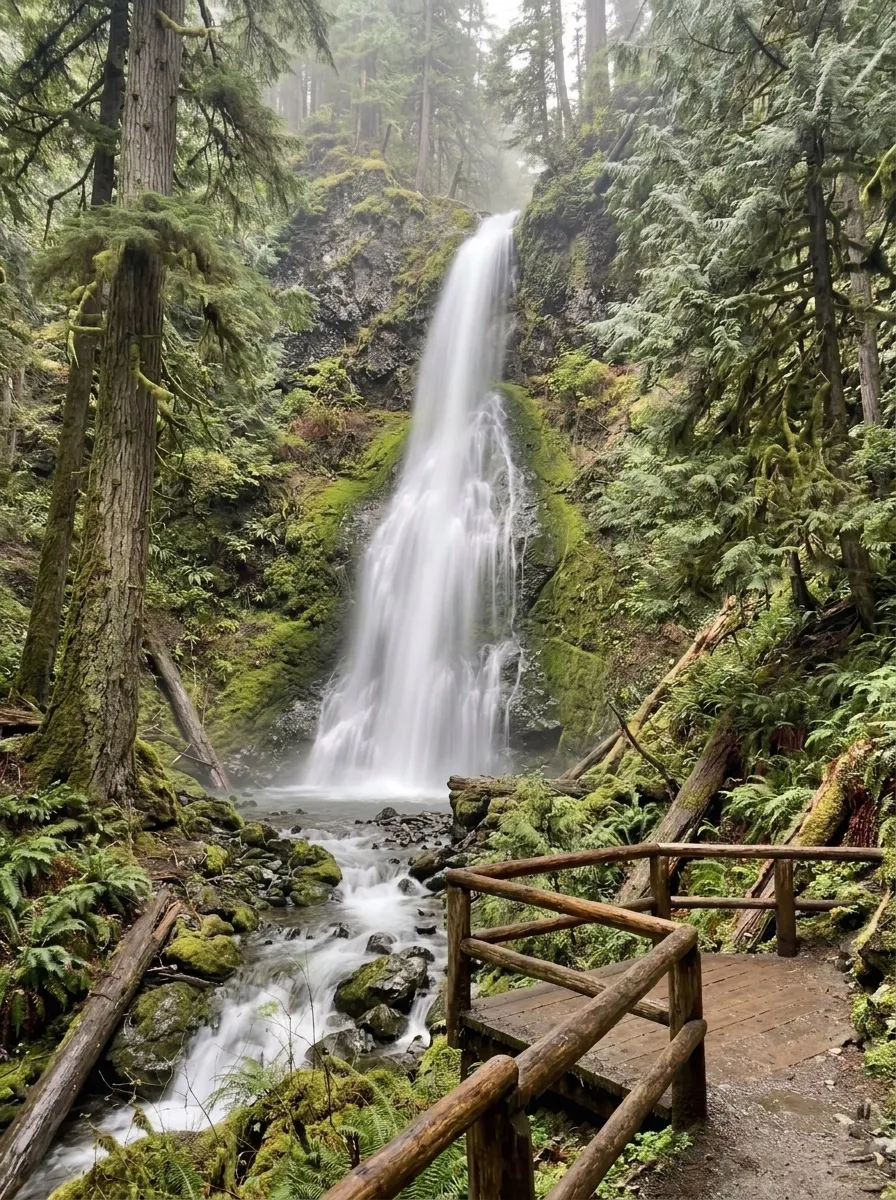
Marymere Falls is a popular waterfall destination near Lake Crescent. The trail is approximately 1.7 miles round trip, with an elevation gain of around 400 feet.
It is a useful option for visitors who want a forest walk and waterfall scenery without undertaking a long mountain hike.
Wear shoes with good traction, especially when the trail is wet.
5. Ruby Beach

Ruby Beach is known for its rugged coastal scenery, sea stacks, driftwood, and views of the Pacific Ocean. A short walk of approximately 0.5 mile round trip provides access to the beach area.
It is well suited to photography and relaxed coastal exploration. Visitors should pay attention to waves, tides, slippery surfaces, and changing coastal conditions.
6. Rialto Beach and Hole-in-the-Wall
Rialto Beach offers a more adventurous coastal walk. The route to Hole-in-the-Wall is approximately 4 miles round trip, depending on the precise turnaround point.
Tide planning is essential. Check tide conditions before attempting the full walk, and do not continue if rising water or unsafe conditions could cut off your return route.
7. Sol Duc Falls
Sol Duc Falls is another popular waterfall destination, reached by a forest trail of approximately 1.6 miles round trip.
The route is relatively short, making it a useful addition to a day focused on the western or northern parts of the park. Nearby Sol Duc facilities may offer additional recreation opportunities when operating.
8. Second Beach
Second Beach is an option for travelers looking for coastal scenery and a more secluded beach experience. The commonly listed route is approximately 2.8 miles round trip, with around 250 feet of elevation gain.
The forest approach and coastal views make it worthwhile for photographers and hikers who want something beyond a roadside viewpoint.
9. Mount Storm King
Mount Storm King is a challenging hike with steep sections and approximately 2,100 feet of elevation gain over 4.1 miles round trip.
Some sections near the top involve ropes. This is not a suitable choice for every visitor, particularly those uncomfortable with steep exposed terrain.
Consider your fitness, experience, weather conditions, and comfort with exposure before attempting the route.
10. Enchanted Valley
Enchanted Valley offers a more demanding backcountry experience. The route described in visitor guides is approximately 26 miles round trip, making it a multi-day option for many hikers.
Backcountry trips require additional preparation, including appropriate equipment, food, water treatment, navigation, and any required permits or reservations.
Do not treat this route as a casual day hike.
Hiking Trails: Distance and Difficulty Comparison
Choosing the right trail is one of the most important parts of planning your visit. The following table compares several popular options using the distances and elevation figures provided in the travel information.
| Trail | Approximate distance | Elevation gain | General difficulty |
|---|---|---|---|
| Hall of Mosses | 0.8-mile loop | Minimal | Easy |
| Ruby Beach | 0.5 mile round trip | Minimal | Easy |
| Marymere Falls | 1.7 miles round trip | 400 feet | Easy to moderate |
| Sol Duc Falls | 1.6 miles round trip | 200 feet | Easy to moderate |
| Hurricane Hill | 3.2 miles round trip | 700 feet | Moderate |
| Second Beach | 2.8 miles round trip | 250 feet | Moderate |
| Rialto Beach to Hole-in-the-Wall | 4 miles round trip | Mostly flat | Moderate; tide-dependent |
| Mount Storm King | 4.1 miles round trip | 2,100 feet | Difficult |
| Hoh River Trail to Five Mile Island | 10 miles round trip | 700 feet | Moderate to strenuous |
| High Divide and Seven Lakes Basin Loop | 18.2-mile loop | 4,000 feet | Strenuous |
Distances and elevation figures are approximate. Route conditions, seasonal closures, and the precise trail endpoint can affect the actual hike.
How to Choose the Right Hike
- For beginners: Start with Hall of Mosses, Ruby Beach, or another short, accessible route.
- For waterfall lovers: Consider Marymere Falls or Sol Duc Falls.
- For mountain views: Choose Hurricane Hill when road and trail conditions permit.
- For coastal exploration: Rialto Beach can be rewarding, but check tides first.
- For experienced hikers: Mount Storm King or longer backcountry routes require more preparation.
Do not select a trail based on distance alone. Elevation gain, mud, weather, exposure, and the time needed to return can make a short route more demanding than expected.
Camping in Olympic National Park
Camping lets visitors spend more time in a particular region without repeatedly driving back to a distant town. However, campgrounds differ in location, facilities, seasonal operation, and reservation requirements.
The following comparison reflects the campground information available in the travel material. Dates and prices should be verified before booking because operating schedules can change.
| Campground | Approximate sites | Price stated in the source | Planning notes |
|---|---|---|---|
| Kalaloch | 170 | $24 per night | Coastal location; seasonal reservations |
| Mora | 94 | $24 per night | Convenient for the coastal region |
| Hoh Rain Forest | 78 | $24 per night | Near rainforest trails; no dump station |
| Fairholme | 88 | $24 per night | Near Lake Crescent |
| Heart O’ the Hills | 97 | $24 per night | Approximately 5 miles south of Port Angeles |
| Sol Duc Hot Springs | Not specified | Varies | Reservations and seasonal operations apply |
Campground Reservation Periods
The published schedule in the collected information includes these examples:
- Kalaloch and Mora: Reservations listed from May 15 through September 20.
- Hoh Rain Forest: Reservations listed from June 12 through September 8.
- Fairholme: A 2026 operating period listed from April 25 through September 29, with reservations from May 15 through September 29.
- Sol Duc: Reservations listed from March 20 through November 1.
- Heart O’ the Hills: Described as open year-round, with sites available on a first-come, first-served basis.
These dates are planning references, not a guarantee that a campground will be available on a particular night.
How to Choose a Campground
Consider your main activities before selecting a campsite:
- Choose a coastal campground if beaches are your primary interest.
- Stay near Lake Crescent if you want to explore the northern part of the park.
- Select a campground near the Hoh area if rainforest trails are your priority.
- Check vehicle-length restrictions if traveling in an RV.
- Confirm whether the site offers the facilities you need, particularly if traveling with children or camping for several nights.
Reserve well ahead for popular summer dates when booking is offered. If you plan to use a first-come, first-served campground, have an alternative ready.
Olympic National Park Entrance Fees and Passes
Entrance fees affect the overall cost of a visit, especially for families and travelers planning multiple park visits.
The collected travel information lists the following pass prices. These figures should be treated as reference prices rather than guaranteed current rates.
| Pass type | Price stated | Validity |
|---|---|---|
| Standard vehicle entrance pass | $30 | 7 days |
| Olympic-specific annual pass | $55 | Annual |
| America the Beautiful interagency annual pass | $80 | Annual federal recreation access, subject to pass terms |
| Senior annual pass | $20 | Eligible visitors aged 62 and older |
| Senior lifetime pass | $80 | Lifetime access, subject to eligibility and terms |
Additional pass programs may be available for eligible military members, fourth graders, and visitors with permanent disabilities.
Which Pass Is Best?
- One short visit: Compare the standard vehicle pass with the needs of your group.
- Several visits to Olympic National Park: An annual park pass may be worth considering.
- Visits to multiple federal recreation sites: An interagency pass may offer broader value.
- Eligible senior visitors: Compare annual and lifetime options based on planned use.
Check the current fee schedule and eligibility rules before paying. Entrance fees, pass prices, and program conditions may change.
Getting to Olympic National Park
Olympic National Park is located on the Olympic Peninsula in northwestern Washington. Visitors commonly reach the region by road, ferry, or a combination of both.
Highway 101 is the main route around the park’s perimeter. It connects many communities and provides access to roads leading toward individual attractions. The highway loop is approximately 380 miles, but you do not need to drive the entire loop to visit the park.
Traveling from Seattle
Two common approaches are the ferry route and the driving route.
| Route | Approximate travel time | Important consideration |
|---|---|---|
| Seattle to Bainbridge Island by ferry | 35 minutes on the ferry | Ferry schedules and waiting times affect the total journey |
| Bainbridge Island to Port Angeles | Around 2 hours of driving | Allow extra time for stops and traffic |
| Seattle to Port Angeles via ferry | Around 3 hours total | Actual time depends on connections and traffic |
| Seattle to Port Angeles by road | Around 3 hours 15 minutes | Traffic and route conditions may change the estimate |
| Wenatchee to Port Angeles | Around 5 hours | Plan for a long drive |
| Spokane to Port Angeles | Around 7 hours | Consider an overnight stop if needed |
These are approximate travel estimates, not guaranteed arrival times. Ferry waiting periods, traffic, weather, and seasonal road conditions can extend the journey.
Why You Should Plan by Region
There is no direct road crossing the center of Olympic National Park. A visit to the Hoh Rain Forest, for example, does not automatically make Hurricane Ridge a quick next stop.
A practical approach is to group your activities into regions:
- Northern area: Port Angeles, Hurricane Ridge, Lake Crescent, and Marymere Falls.
- Western area: Hoh Rain Forest and nearby coastal destinations.
- Pacific coast: Ruby Beach, Kalaloch, Rialto Beach, and Second Beach.
- Southern area: Lake Quinault and nearby rainforest attractions.
Choose a base town that matches the attractions you want to visit. Port Angeles, Sequim, Forks, and communities near Lake Quinault can each work for different itineraries.
Suggested Olympic National Park Itineraries
The park’s size makes itinerary planning particularly important. The best schedule depends on your starting point, hiking ability, accommodation, and the amount of driving you are comfortable with.
One-Day Itinerary
A one-day visit works best when you focus on a limited area rather than attempting to cover the entire park.
Suggested plan:
- Start early and travel to Lake Crescent.
- Hike to Marymere Falls if trail conditions are suitable.
- Continue to a northern mountain viewpoint if Hurricane Ridge access and weather permit.
- Finish with a relaxed lakeside stop before returning.
This plan emphasizes northern destinations. If rainforest or beach scenery is your priority, choose those attractions instead of trying to fit every region into the same day.
Three-Day Itinerary
Three days provides more flexibility and allows you to experience several of the park’s major landscapes.
Day 1: Mountains and lakes
- Visit Hurricane Ridge when accessible.
- Walk the Hurricane Hill Trail if conditions are suitable.
- Explore Lake Crescent.
- Add Marymere Falls if time and energy permit.
Day 2: Rainforest exploration
- Visit the Hoh Rain Forest.
- Walk the Hall of Mosses Trail.
- Explore another short rainforest trail.
- Allow time for the drive and any entrance or parking arrangements.
Day 3: Pacific coastline
- Visit Ruby Beach.
- Continue to Rialto Beach if travel time permits.
- Check tide conditions before walking toward Hole-in-the-Wall.
- Return to your accommodation with enough daylight for the drive.
Three days can provide a rewarding introduction, but it is not enough to explore every major attraction thoroughly.
Five-Day Itinerary
A five-day visit gives you more time to explore without rushing between distant destinations.
| Day | Main focus | Suggested activities |
|---|---|---|
| Day 1 | Northern mountains | Hurricane Ridge and Hurricane Hill |
| Day 2 | Lakes and waterfalls | Lake Crescent and Marymere Falls |
| Day 3 | Rainforest | Hoh Rain Forest and Hall of Mosses |
| Day 4 | Pacific coast | Ruby Beach, Kalaloch, and coastal viewpoints |
| Day 5 | Additional exploration | Rialto Beach, Sol Duc Falls, or another destination that fits your location |
The fifth day is best used flexibly. Select the destination that complements your accommodation and the places you have already visited instead of adding unnecessary driving.
What to Pack for Olympic National Park
The park’s changing elevations and coastal weather make practical clothing and preparation essential.
Essential Packing Checklist
- Waterproof jacket: Useful for rain and changing weather.
- Warm layers: Conditions can be cooler at mountain elevations.
- Comfortable hiking footwear: Choose footwear appropriate for mud, uneven ground, and rocky trails.
- Water and food: Carry sufficient supplies for the planned route.
- Navigation equipment: Download maps or carry a reliable backup because mobile coverage may be limited.
- First-aid supplies: Prepare for minor injuries and unexpected delays.
- Headlamp or flashlight: Helpful if a hike takes longer than expected.
- Sun protection: Bring suitable protection for exposed viewpoints and coastal walks.
- Tide information: Essential for coastal routes such as Rialto Beach to Hole-in-the-Wall.
- Camping equipment: Match your gear to the season, campsite facilities, and expected conditions.
For longer hikes, tell someone your plan and expected return time. Check weather forecasts, trail conditions, road updates, and permit requirements before departure.
Safety Tips and Responsible Visiting
Olympic National Park contains wilderness areas where services and communication may be limited. A little preparation can prevent common problems.
Check Conditions Before You Leave
A trail that is manageable in favorable weather may become difficult after heavy rain or snow. Confirm that your intended road, trail, or campground is open.
Respect Wildlife
Observe animals from a safe distance and never approach or feed them. Store food securely and follow posted guidance about wildlife encounters.
Follow Coastal Safety Guidance
Beaches can have changing tides, slippery rocks, and unexpectedly large waves. Check tide information before coastal hikes, and do not turn your walk into a race against rising water.
Prepare for Limited Mobile Coverage
Do not rely entirely on a phone connection for navigation or emergency communication. Download relevant maps before leaving areas with reliable service.
Follow Permit and Camping Rules
Overnight wilderness trips may require permits or reservations. Use designated camping areas where required, pack out your waste, and respect restrictions designed to protect the park’s natural resources.
Frequently Asked Questions
How many days do you need for Olympic National Park?
Three to five days is a useful planning range. Three days allows you to experience several major regions, while five days gives you more flexibility for hiking, waterfalls, beaches, and rainforest exploration.
What is the best month to visit Olympic National Park?
July and August are popular for general sightseeing and hiking. June and September can also be good choices, depending on weather, trail access, and your preferred activities.
Is Olympic National Park open year-round?
The park is generally accessible throughout the year, but individual roads, facilities, and campgrounds may have seasonal closures or reduced operations. Winter access to mountain areas can depend on weather and road conditions.
What are the easiest hikes in Olympic National Park?
Hall of Mosses, at approximately 0.8 miles, and the short walk to Ruby Beach are useful options for visitors seeking relatively easy outings. Always check the current route conditions and accessibility before visiting.
How long is the hike to Marymere Falls?
Marymere Falls is approximately 1.7 miles round trip, with around 400 feet of elevation gain. Conditions can be muddy or slippery, so suitable footwear is recommended.
Is Mount Storm King suitable for beginners?
Mount Storm King is a challenging route of approximately 4.1 miles round trip, with around 2,100 feet of elevation gain. Steep sections near the top may involve ropes, making it a poor choice for many inexperienced hikers.
How much does it cost to enter Olympic National Park?
The collected visitor information lists a standard vehicle pass at $30 for 7 days. Annual passes and eligibility-based programs may offer alternatives. Confirm the current price before your trip.
Can you visit the rainforest and the beach in one day?
Yes, it may be possible to combine a rainforest visit with a coastal stop, but driving distances can make the day demanding. Choose nearby destinations, start early, and allow enough time for hiking and changing road conditions.
Are reservations necessary for camping?
Reservations are advisable when available, especially during the busy summer period. Some campgrounds operate on a first-come, first-served basis, and availability can change quickly.
Is Highway 101 the main road around Olympic National Park?
Yes. Highway 101 connects many communities and provides access to numerous park destinations. The route around the park’s perimeter is approximately 380 miles, and visitors should plan separate access roads for individual attractions.
What should you not miss in Olympic National Park?
For a first visit, consider Hurricane Ridge, Lake Crescent, the Hoh Rain Forest, Ruby Beach, and either Marymere Falls or Sol Duc Falls. The best selection depends on how much time you have and which region you are exploring.
Final Planning Advice
Olympic National Park rewards visitors who plan around its geography rather than treating it as a collection of nearby stops. Its approximately 922,651 acres, 73 miles of coastline, mountain viewpoints, and rainforest trails provide plenty of variety, but distances between attractions can influence how much you can realistically accomplish.
For a short visit, focus on one region and choose a few accessible attractions. With three days, you can build an itinerary around mountains, rainforest, and coast. With five days, you have more room for additional hikes, scenic stops, and a less hurried pace.
Before departure, verify entrance fees, campground availability, road access, weather, tide conditions, and trail requirements. These final checks help turn a promising itinerary into a practical and enjoyable trip.

Hi, I’m Marcus! I love exploring the outdoors and discovering incredible places. Through ExploreNatureTrips blog, I share my travel experiences, useful tips, and recommendations for the best sights, trails, and destinations to visit.


