5 Things You Need to Do While in the White Mountains

The White Mountains of New Hampshire cover about 25% of the state and offer experiences across 4 seasons. The region combines high mountain scenery, waterfalls, forests, scenic roads, historic rail journeys, lakes, rivers, winter activities, family attractions, and small-town experiences. Around 2 million visitors come to the area each year, so choosing what to do—and when to do it—can make a major difference to your trip.
If you are visiting for the first time, these 5 experiences bring together the major highlights while also giving you useful numbers, distances, time estimates, and seasonal planning tips.
1. Experience Mount Washington and Its Scenic Ways Up
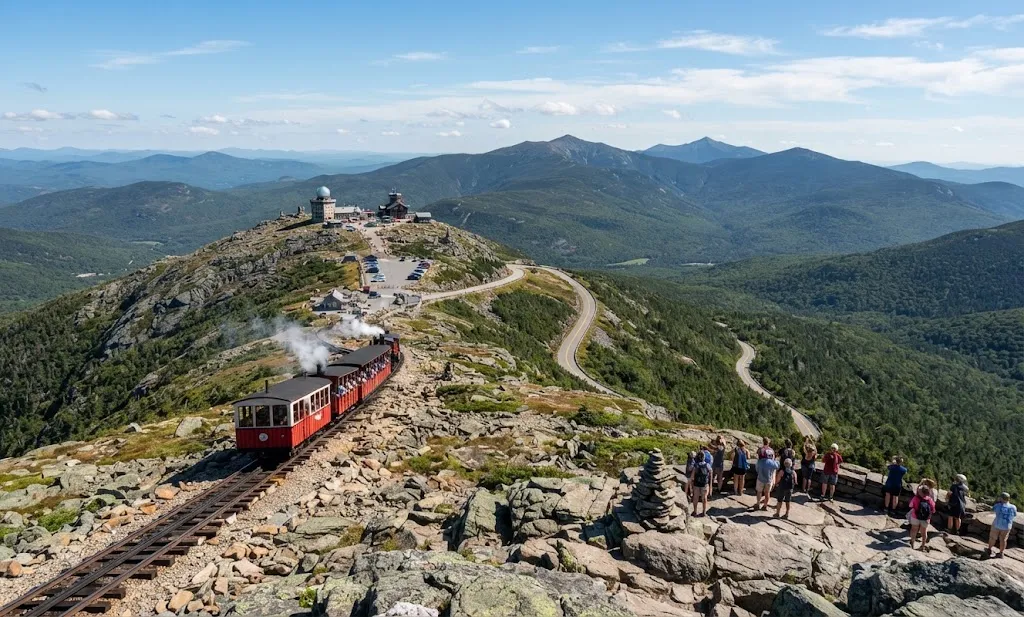
Mount Washington rises above 6,000 feet and is one of the defining attractions of the White Mountains. You have several ways to experience it, including hiking, the Mount Washington Auto Road, and the Mount Washington Cog Railway.
The Mount Washington Cog Railway provides a particularly distinctive way to reach the mountain. The journey is described as about 3 hours, while summit trips generally operate from May through late October. Outside the main summit season, the railway can still operate to Waumbek Station.
The railway also has an important place in mountain transportation history: it was built in 1868, and the route includes Jacob’s Ladder, which reaches a 37.41% grade.
For a more adventurous road experience, the Mount Washington Auto Road takes visitors toward the summit. The road operates seasonally and can close because of weather, so checking conditions before setting out is important.
If you prefer hiking, the mountain offers a much more demanding experience. One route described in the available material is around 10 miles with approximately 4,200 feet of elevation gain.
2. Drive the Kancamagus Highway and Explore the Scenic Stops
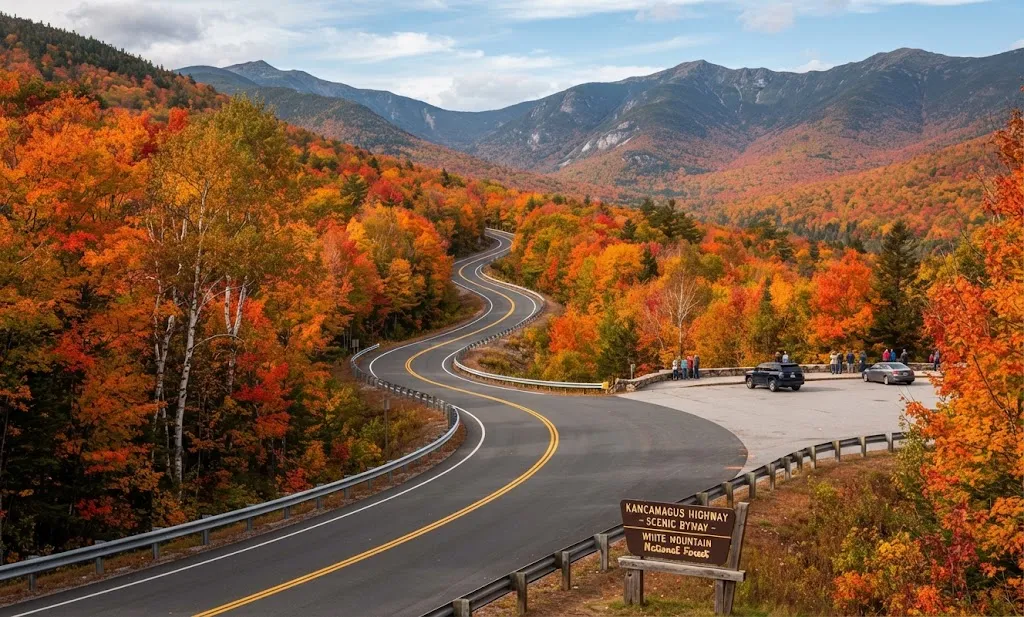
The Kancamagus Highway, also known as Route 112, is one of the major scenic experiences in the White Mountains. It stretches approximately 34–34.5 miles through the region and includes overlooks, hiking access, picnic areas, and forest scenery.
You can drive the route relatively quickly, but treating it simply as a road between two points means missing much of the experience. The available material notes that the drive itself can take under 1 hour, while visitors can spend an entire day stopping at different locations.
Fall is particularly popular because the road becomes a major foliage-viewing route. The strongest foliage period is generally associated with late September through mid-October, with early October repeatedly identified as an important period.
The route also has practical considerations. There are no gas stations, hotels, or restaurants directly along the highway, so planning ahead is useful.
The Albany Covered Bridge, dating to 1857, is another historical feature associated with the route.
Kancamagus Highway at a glance:
- Length: approximately 34–34.5 miles
- Driving time: potentially under 1 hour
- Recommended exploration: potentially a full day
- Peak foliage: late September–mid-October
- Strong foliage period: often early October
- Gas stations along route: none
- Hotels along route: none
- Restaurants along route: none
- Albany Covered Bridge: 1857
Best approach: Start with enough fuel and food, then allow time for scenic stops rather than treating the highway as a simple point-to-point drive. Popular trailheads and parking areas can become busy, particularly during foliage season.
3. Hike to Waterfalls, Viewpoints, and Natural Attractions
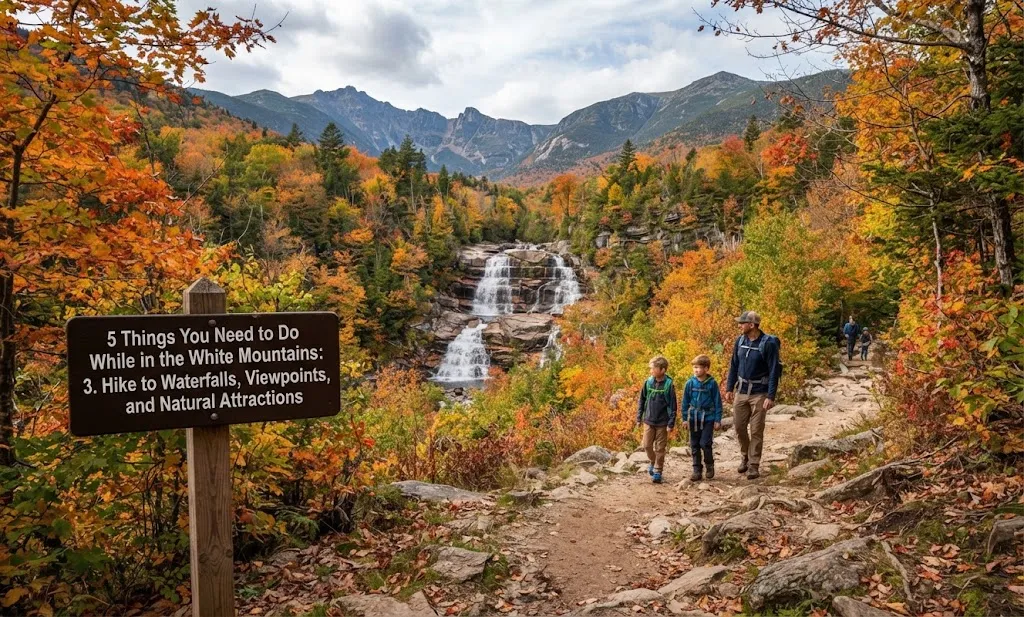
The White Mountains offer hikes for different levels of experience, from short walks to demanding mountain routes. Several trails and natural attractions stand out because their distances make it easier to plan your day.
Artist’s Bluff is one of the most accessible choices for a memorable mountain viewpoint. The trail is about 1.5 miles and is described as moderately difficult. During peak foliage, it can become very busy, with dozens of hikers sharing the viewpoint.
For another short but scenic option, Mount Willard is approximately 3.2 miles round trip, with around 898 feet of elevation gain.
Lonesome Lake offers another hiking option at around 3 miles, with more than 1,000 feet of elevation gain.
For a longer outing, the Frankenstein/Arethusa Falls route is about 5.2 miles with approximately 1,650 feet of elevation gain. Another waterfall option, Franconia Falls, is around 6.8 miles round trip.
If you prefer something much shorter, Sabbaday Falls can be reached with roughly a 15-minute walk, while Glen Ellis Falls is around a 10-minute walk.
The Flume Gorge is another major natural attraction. Its gorge extends about 800 feet, with walls reaching roughly 90 feet. The walking route is about 2 miles, making it a useful choice when you want concentrated scenery rather than a long mountain hike.
The geological formation is described as being more than 200 million years old. Admission information in the source material lists advance prices of $18 for adults and $16 for children, compared with $21 for adults and $19 for children at the window; children under 5 are free.
4. Enjoy the White Mountains Through All 4 Seasons

One of the strongest reasons to visit the White Mountains is that the experience changes throughout the year.
Spring: April–June
Spring brings flowing waterfalls, blooming wildflowers, and cooler hiking conditions. However, melting snow can leave trails muddy, and snow may remain at higher elevations. April–May is also identified as the spring mud season.
Summer: June–August
Summer is a major period for hiking, camping, water activities, scenic attractions, and outdoor exploration. The mountains can also be cooler than lower elevations.
For water recreation, the Saco River, Echo Lake, and Conway Lake provide opportunities for tubing, swimming, paddleboarding, rowing, and other non-motorized activities.
Fall: September–October
Fall is the region’s major foliage season. The strongest period is generally late September through mid-October, with early October repeatedly highlighted for colorful foliage. The trade-off is increased traffic, crowds, and parking pressure.
Winter: December–March
Winter changes the landscape completely. Skiing, snowboarding, snowshoeing, ice skating, snow tubing, winter hiking, and ice-related attractions become major activities. Loon Mountain is highlighted for snow tubing, including a larger tubing area and a smaller option for younger children.
Ice Castles is another seasonal experience. One practical suggestion is to choose a mid-afternoon visit so you can experience the ice in daylight and remain long enough to see the illuminated displays after dark.
5. Explore North Conway and Add Family-Friendly Experiences
A White Mountains trip does not have to be entirely about hiking. North Conway provides shopping, restaurants, coffee shops, local stores, and outlet shopping, making it a useful place to mix outdoor activities with a slower town experience.
The source material specifically mentions places such as Zeb’s General Store, HorseFeathers, and The Met as examples of stops in downtown North Conway.
Families also have several choices beyond hiking.
Story Land has operated for more than 65 years and features more than 30 rides and attractions. The listed starting ticket price is $51.99 for visitors age 3 and older.
The Conway Scenic Railroad offers several journey lengths:
- Conway Valley Train: 1 hour
- Sawyer River Valley Train: 2 hours
- Mountaineer Train: 4 hours
The North Conway station dates to 1874.
Other experiences include Lost River Gorge, where visitors encounter caves, boardwalks, waterfalls, and large boulders. The attraction includes 11 boulder caves, a 1-mile boardwalk, and more than 1,000 stairs, with an estimated visit of about 1.5–2 hours.
A Simple Way to Plan Your White Mountains Trip
You do not need to fit every attraction into one visit. The region is large enough that grouping nearby experiences can make your days easier.
| Trip style | Suggested focus |
|---|---|
| 1 day | Mount Washington area + one short hike or scenic attraction |
| 2 days | Mount Washington + Kancamagus Highway + hiking |
| 3 days | Add waterfalls, North Conway, or a scenic train |
| 4+ days | Add seasonal activities, lakes/rivers, family attractions, and smaller towns |
If your priority is foliage, early October offers the strongest combination of fall color and scenic experiences, but it is also a period when crowds and parking demand increase.
If you prefer fewer people, the source material points toward quieter periods such as January after New Year’s, while spring is described as the slowest season.
Practical Tips Before You Go
A little preparation can make the experience considerably easier.
- Check weather and operating conditions before heading toward high elevations.
- Carry enough food and fuel when driving the Kancamagus Highway.
- Expect busy parking areas during fall foliage.
- Popular trailheads may fill by mid-morning on weekends.
- Seasonal attractions can close outside their operating periods.
- Remember that November through mid-May can see many seasonal businesses closed.
- Choose trails according to your experience, distance preference, and current conditions.
- For water activities, conditions can change after significant rain.
- For winter activities, prepare for changing mountain weather.
- Cluster nearby attractions instead of repeatedly driving across the region.
FAQs
What are the 5 main things to do in the White Mountains?
The five broad experiences are Mount Washington, the Kancamagus Highway, hiking and natural attractions, enjoying the region through its 4 seasons, and exploring North Conway and family-friendly attractions.
How long is the Kancamagus Highway?
The Kancamagus Highway is approximately 34–34.5 miles long. The drive itself can take under 1 hour, but allowing considerably more time lets you stop at overlooks, trails, and other scenic locations.
When is fall foliage usually at its best?
The strongest foliage period is generally late September through mid-October, with early October repeatedly highlighted as an important time for fall color.
Is the White Mountains area good for families?
Yes. In addition to easier walks and waterfalls, the area includes attractions such as Story Land, which has more than 30 rides and attractions, as well as water parks, scenic railroads, and other activities.
How long is the Mount Washington Cog Railway trip?
The journey described in the available material is approximately 3 hours. Summit trips generally run from May through late October.
What can you do in the White Mountains during winter?
Winter activities include skiing, snowboarding, snowshoeing, snow tubing, ice skating, winter hiking, and Ice Castles. Loon Mountain is specifically highlighted for snow tubing.
What are some short hikes or walks?
Options include Sabbaday Falls, which is about a 15-minute walk, Glen Ellis Falls, around a 10-minute walk, and the 1.5-mile Artist’s Bluff hike.
How many days should you spend in the White Mountains?
A 2–3 day visit can cover several major experiences, while 4 or more days gives you more time for hiking, scenic drives, seasonal activities, towns, and family attractions without rushing.
Final Thought
The White Mountains are easiest to appreciate when you balance major mountain experiences with shorter walks, scenic driving, seasonal activities, and time in local towns. Mount Washington provides the high-elevation experience, the Kancamagus Highway delivers a memorable road journey, waterfalls and trails add outdoor adventure, the 4 seasons create different reasons to return, and North Conway adds shopping, food, and family-friendly options.
For a first visit, focus on a manageable number of experiences rather than trying to see everything. Use the distances and times above to build a realistic schedule, and give yourself extra time during early October, when the scenery is especially popular.

Hi, I’m Marcus! I love exploring the outdoors and discovering incredible places. Through ExploreNatureTrips blog, I share my travel experiences, useful tips, and recommendations for the best sights, trails, and destinations to visit.