10 Places to See at Columbia River Gorge on Oregon’s Side
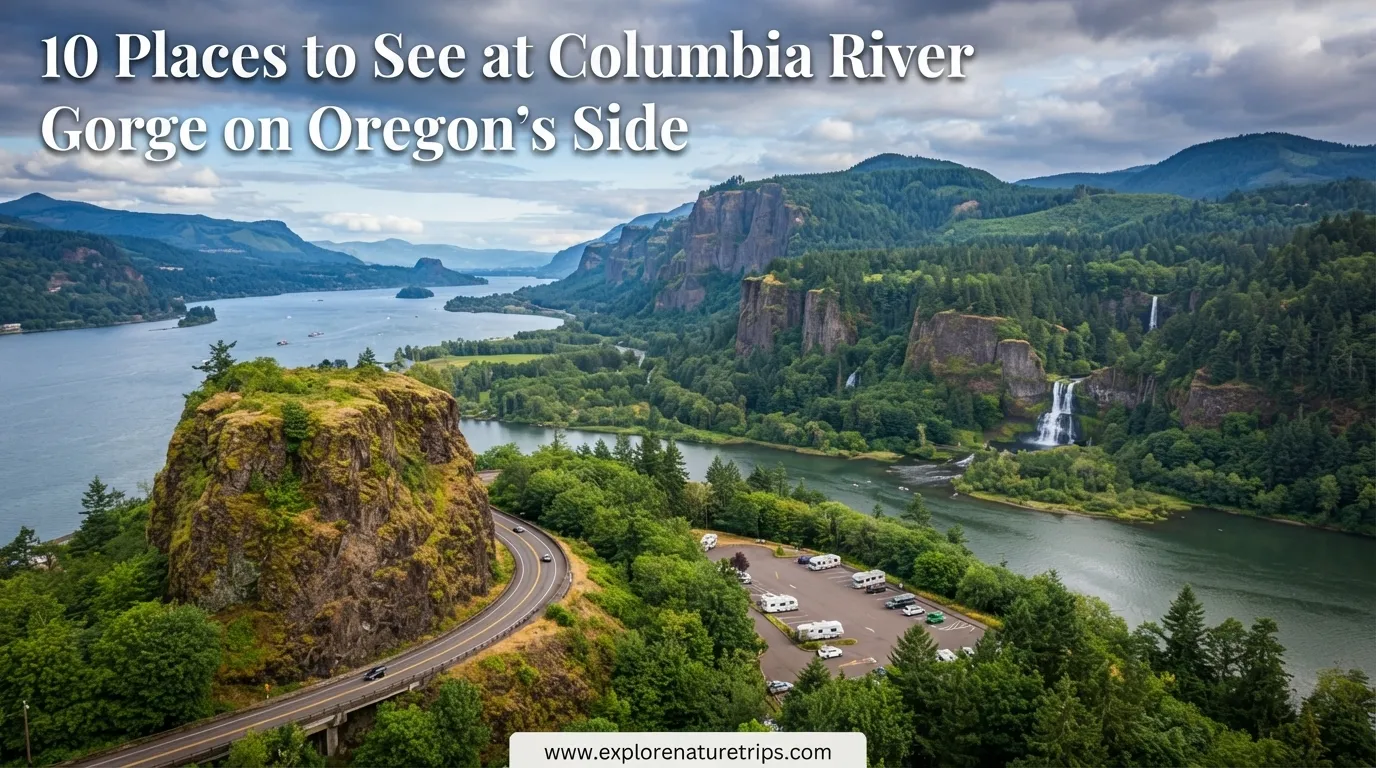
The Oregon side of the Columbia River Gorge is one of the most rewarding areas to explore near Portland. Within a relatively compact stretch of the Gorge, you can find towering waterfalls, historic roads, dramatic viewpoints, short hikes, small towns, and scenic river landscapes.
If you only have one day, you can still experience several highlights because many of the most popular stops are close together. However, a 3–4 day trip gives you more time for hiking, scenic drives, Hood River, Cascade Locks, and the surrounding attractions.
This guide focuses specifically on 10 places to see on the Oregon side, combining the most useful attractions, distances, trail information, scenic stops, and trip-planning details.
1. Multnomah Falls
Multnomah Falls is the signature attraction of the Oregon side and one of the first places most visitors want to see.
The waterfall is commonly described as approximately 620 feet high, making it an especially impressive sight from the base. One of its biggest advantages for a short trip is accessibility: the main viewing area is only about 0.2 mile from the Benson Bridge area.
For travelers who want more than a viewpoint, the Multnomah Falls Trail extends approximately 2.4 miles. This makes the attraction useful for both casual sightseeing and a longer hiking stop.
Why visit Multnomah Falls?
- Approximately 620 feet high
- Benson Bridge is about 0.2 mile from the main access area
- Longer trail is approximately 2.4 miles
- Historic lodge dates to the 1920s
- Located along the Historic Columbia River Highway
If you are visiting the Gorge for only one day, Multnomah Falls should be near the top of your list.
2. Historic Columbia River Highway
The Historic Columbia River Highway is more than simply a road connecting attractions. It is one of the best ways to experience the Oregon side of the Gorge because several waterfalls and viewpoints can be combined into one drive.
The particularly scenic section described in the covers approximately 19 miles, running from Troutdale toward Dodson. The highway was constructed between 1913 and 1922.
Along the route, travelers can reach attractions such as:
- Vista House
- Latourell Falls
- Bridal Veil Falls
- Wahkeena Falls
- Multnomah Falls
- Oneonta Gorge
- Horsetail Falls
This makes the highway particularly useful when planning a one-day Gorge itinerary.
Historic Highway vs. I-84
There are essentially 2 major scenic driving options on the Oregon side:
| Route | Main Advantage |
|---|---|
| Historic Columbia River Highway | Waterfalls, viewpoints and historic scenery |
| I-84 | Faster parallel access through the Gorge |
A practical approach is to use the historic highway for sightseeing and I-84 when you need to cover distance more quickly.
3. Vista House
Vista House is one of the most recognizable viewpoints along the Oregon side of the Gorge.
The viewpoint sits on a 733-foot basalt promontory, giving visitors an elevated perspective over the Columbia River and surrounding landscape.
It works particularly well as an early stop on a scenic drive because you can combine the viewpoint with several waterfalls farther along the Historic Columbia River Highway.
The area is especially valuable for visitors who want big Gorge views without committing to a long hike.
4. Latourell Falls
Latourell Falls is another major waterfall stop along the Historic Columbia River Highway.
The lower waterfall is approximately 224 feet high, while the upper waterfall is around 134 feet. Together, they create one of the more distinctive waterfall landscapes in the Gorge.
The Latourell Loop Trail is about 2.3–2.4 miles, depending on the source and route description used.
One interesting feature mentioned in the travel research is a historic wooden footbridge dating to around 1915.
What makes Latourell Falls worthwhile?
You can combine:
- Lower Latourell Falls
- Upper Latourell Falls
- A roughly 2.4-mile loop
- Historic scenery
- Easy access from the scenic highway
For travelers who want a waterfall experience without spending an entire day on one trail, it is a strong option.
5. Bridal Veil Falls
Bridal Veil Falls is one of the easier waterfall stops to add to a Gorge road trip.
The waterfall is approximately 120 feet high, and the trail from the parking area is around 0.3 mile. One describes the walk as taking approximately 5 minutes.
That short distance makes Bridal Veil particularly useful when you are trying to see several places in the same day.
Good choice for:
- Short walks
- Families looking for a quick stop
- Waterfall photography
- A multi-stop scenic drive
- Visitors with limited time
Instead of dedicating several hours to one attraction, you can visit Bridal Veil and continue toward the other waterfalls along the highway.
6. Wahkeena Falls
Wahkeena Falls provides a different experience because it can be treated as both a quick waterfall viewpoint and a starting point for a longer hike.
The waterfall is approximately 242 feet high, while the lower trail access is described as around 0.2–0.3 mile.
For visitors who want to explore farther, the Wahkeena Trail is approximately 2.8 miles. The route also connects with the wider waterfall landscape around Fairy Falls.
Fairy Falls connection
Fairy Falls is approximately 20 feet high and is reached roughly 1 mile into the Wahkeena hiking route.
This means visitors can choose between a quick stop at Wahkeena Falls or extend the visit into a more substantial hiking experience.
7. Oneonta Gorge
Oneonta Gorge is one of the more adventurous places associated with the Oregon side of the Columbia River Gorge.
The gorge itself is approximately 1 mile long, and the area leads toward a waterfall. describes a route involving a significant climb, with one source giving approximately 900 feet of elevation gain for the Oneonta Falls hike.
The experience can be considerably more demanding than simply stopping at a roadside waterfall. One description mentions waist-deep water, so this is not the same type of visit as Multnomah or Bridal Veil Falls.
The area has also experienced significant closures. One discussed attempting to hike there for nearly 5 years because of repeated closure issues.
Why include Oneonta?
It adds something different to the itinerary:
- Gorge scenery
- A more adventurous hiking experience
- Waterfall exploration
- A natural canyon environment
Because conditions and access can change, visitors should check current access conditions before planning their hike.
8. Horsetail Falls
Horsetail Falls is another convenient waterfall stop along the Oregon side.
The waterfall is approximately 176 feet high, and the Horsetail Falls Trail is around 0.8 mile.
One particularly interesting feature is that the trail can continue behind Upper Horsetail Falls, providing a different perspective than simply viewing the waterfall from the roadside.
Horsetail Falls is also geographically close to Oneonta Gorge, making it easy to combine the two when access and trail conditions allow.
Quick facts
| Feature | Detail |
|---|---|
| Waterfall height | 176 ft |
| Trail distance | 0.8 mile |
| Nearby attraction | Oneonta Gorge |
| Best fit | Waterfall stop + short hike |
9. Eagle Creek Trail
Eagle Creek is a strong choice for visitors who want a hiking-focused experience rather than simply driving from one waterfall to another.
The area is known for multiple waterfalls, including Tunnel Falls, and the trail system gives visitors the opportunity to experience several different waterfall environments.
The notes that Eagle Creek had experienced closure and later reopening, so access history is an important part of planning a visit.
If you have several days in the Gorge, Eagle Creek can complement the shorter waterfall walks along the Historic Columbia River Highway.
Other waterfalls connected with the wider Gorge hiking landscape
- Triple Falls
- Metlako Falls
- Punchbowl Falls
- Tunnel Falls
- Dry Creek Falls
- Elowah Falls
- Ponytail Falls
- Starvation Creek Falls
- Hole in the Wall Falls
This illustrates why the Gorge is much more than a single-waterfall destination.
10. Hood River and the Surrounding Oregon Gorge
The final place on this list is not one single waterfall or viewpoint. Hood River and its surrounding area are worth including because they provide a different side of the Columbia River Gorge experience.
Hood River is associated with outdoor activities, wineries, lavender farms, restaurants, coffee shops, and places to stay.
The nearby town of Mosier is approximately 5 miles east of Hood River, making it another convenient addition to a road trip.
Things to explore around Hood River
- Hood River Sandbar
- Kiteboarding
- Wineries
- Lavender farms
- Local restaurants
- Coffee shops
- Ice cream
- Post Canyon trails
Best Columbia River Gorge Waterfalls to Prioritize
If waterfalls are your main reason for visiting, you do not need to visit every trail. These are some of the strongest options from the combined research:
| Waterfall | Height | Trail / Access | Best For |
|---|---|---|---|
| Multnomah Falls | 620 ft | 0.2 mi to Benson Bridge; 2.4-mi trail | First-time visitors |
| Latourell Falls | 224 ft lower | 2.3–2.4-mi loop | Hiking |
| Wahkeena Falls | 242 ft | 0.2–0.3 mi access | Short stop + hiking |
| Bridal Veil Falls | 120 ft | 0.3 mi | Quick visit |
| Horsetail Falls | 176 ft | 0.8 mi | Short hike |
| Fairy Falls | 20 ft | About 1 mi into Wahkeena route | Extended waterfall hike |
| Punchbowl Falls | 35 ft | 3.4-mi hike | Longer hike |
| Wahclella Falls | 120–250 ft | 1-mi trail | Hiking |
Best Scenic Drive on the Oregon Side
For a first visit, the Historic Columbia River Highway is the most useful route for sightseeing.
Its particularly scenic section is approximately 19 miles, and it connects several of the attractions covered in this guide.
A simple progression is:
Troutdale → Vista House → Latourell Falls → Bridal Veil Falls → Wahkeena Falls → Multnomah Falls → Oneonta Gorge → Horsetail Falls → Dodson
The advantage is that you can experience multiple viewpoints and waterfalls without constantly making long detours.
For longer-distance travel through the Gorge, I-84 provides the faster parallel route.
How Many Days Do You Need?
Your ideal length depends on whether you want a quick sightseeing trip or a slower road trip.
| Trip Length | What You Can Do |
|---|---|
| 1 day | Historic Highway + major waterfalls + viewpoints |
| 2 days | Waterfalls + hiking + additional Gorge stops |
| 3–4 days | Waterfalls + hiking + Hood River + towns + scenic drives |
| Several days | Add Washington-side attractions and longer outdoor activities |
So, if your schedule is limited, do not assume you need a long vacation to see the highlights.
A Practical 1-Day Oregon Gorge Itinerary
If you only have one day, focus on attractions that are relatively close together.
Morning: Historic Highway
Start around Troutdale and follow the Historic Columbia River Highway.
Stop at:
- Vista House
- Latourell Falls
- Bridal Veil Falls
- Wahkeena Falls
This gives you a mixture of viewpoints and waterfalls before reaching the busiest major attraction.
Midday: Multnomah Falls
Spend more time at Multnomah Falls.
You can keep the visit short by viewing the waterfall and Benson Bridge, or allow additional time for the longer trail.
Afternoon: Oneonta and Horsetail
Continue east toward:
- Oneonta Gorge
- Horsetail Falls
Choose the hiking option that fits your available time and current trail/access conditions.
Evening: Continue Toward Hood River
If time allows, continue toward Hood River for food, drinks, wineries, outdoor activities, or an overnight stay.
Oregon Side or Both Sides?
The Columbia River separates Oregon and Washington, and both sides offer different road-trip experiences.
The identifies the Historic Columbia River Highway as the major scenic route on the Oregon side, while Washington has its own scenic route.
If your trip is short, concentrating on Oregon makes sense because you can group many waterfalls and viewpoints into one route.
If you have more time, consider extending the trip to the Washington side.
Best Time to Visit the Columbia River Gorge
The highlights March as a particularly attractive time to visit because snow is described as melting around mid-February, with the landscape becoming especially green in early March.
The combined sources mention visits during:
- February
- March
- September
For wildflower-focused scenery around Tom McCall Preserve, another highlights April–June and September–October.
There is no single perfect month for every activity. Your preferred season depends on whether you care most about greenery, waterfalls, hiking, or scenic landscapes.
Places to Add If You Have More Time
The 10 places above cover the strongest Oregon-side themes, but the Gorge contains many additional attractions.
If you have extra time, consider adding:
Cascade Locks
Cascade Locks is a small Gorge community with a population described as approximately 1,200.
The area includes:
- Bridge of the Gods
- Cascade Locks Historical Museum
- Columbia Gorge Sternwheeler
- Bonneville Fish Hatchery
- Local food and drinks
The Columbia Gorge Sternwheeler operates from May through October, according to the supplied travel guide.
Bridge of the Gods
The Bridge of the Gods crosses the Columbia River approximately 91 feet above the river.
It is also associated with Pacific Crest Trail hikers traveling between Oregon and Washington.
Bonneville Dam
Bonneville Dam is another major Gorge attraction. The places it approximately 7 miles from Oneonta Gorge.
The area is particularly noted for salmon viewing during August and September.
Mt. Hood Scenic Byway
For a longer road trip, the Mt. Hood Scenic Byway can be added south of Hood River.
The supplied travel guide recommends allowing approximately 3–4 hours round trip for the scenic drive.
Timberline Lodge sits at approximately 6,000 feet and is also associated with The Shining.
FAQs
What are the best places to see on the Oregon side of the Columbia River Gorge?
The strongest highlights include Multnomah Falls, Historic Columbia River Highway, Vista House, Latourell Falls, Bridal Veil Falls, Wahkeena Falls, Oneonta Gorge, Horsetail Falls, Eagle Creek Trail, and Hood River.
Can you see the Columbia River Gorge in one day?
Yes. Several major Oregon attractions are close enough to combine in a single day. A one-day trip is best focused on the Historic Columbia River Highway, viewpoints, and the major waterfalls.
How many days are ideal for the Columbia River Gorge?
A 3–4 day trip provides a more comfortable pace. It allows time for waterfalls, hiking, scenic drives, Hood River, Cascade Locks, and additional attractions.
How tall is Multnomah Falls?
Multnomah Falls is described in the supplied sources as approximately 620 feet high.
How long is the Historic Columbia River Highway scenic section?
The particularly scenic section discussed in the is approximately 19 miles long, running from the Troutdale area toward Dodson.
Which Columbia River Gorge waterfall is easiest to visit?
Bridal Veil Falls is one of the shortest walks, with the waterfall described as approximately 0.3 mile from the trailhead and around 120 feet high.
Is Oneonta Gorge a difficult hike?
It can be more challenging than the roadside waterfall stops. The supplied waist-deep water in some conditions and a climb of approximately 900 feet on the Oneonta Falls route. Always verify current access and conditions before going.
When is a good time to visit the Oregon side?
March is highlighted by one travel source because snow typically melts around mid-February and the landscape becomes especially green in early March. Other supplied sources also discuss February and September visits, while April–June and September–October are highlighted for Tom McCall Preserve.
What should I see if I only have a few hours?
Prioritize Vista House, Latourell Falls, Bridal Veil Falls, Multnomah Falls, and Horsetail Falls. These provide a good mix of viewpoints and waterfalls without requiring a full-day hiking commitment.
Is Hood River worth adding to a Columbia River Gorge trip?
Yes, particularly if you have more than one day. Hood River adds wineries, outdoor activities, restaurants, coffee shops, lavender farms, and hiking opportunities to a waterfall-focused itinerary.
Final Thoughts
The Oregon side of the Columbia River Gorge is easy to enjoy because so many different experiences can fit into one trip. You can spend a morning visiting waterfalls, drive the 19-mile scenic highway, stop at Vista House for expansive views, and still have time for hiking or exploring Hood River.
For a quick visit, concentrate on the Historic Columbia River Highway and its major waterfalls. If you can stay 3–4 days, slow down and add Eagle Creek, Cascade Locks, Hood River, wineries, and longer hikes. The biggest advantage is flexibility: the Gorge works equally well as a short scenic day trip or a much longer outdoor adventure.

Hi, I’m Marcus! I love exploring the outdoors and discovering incredible places. Through ExploreNatureTrips blog, I share my travel experiences, useful tips, and recommendations for the best sights, trails, and destinations to visit.
One Comment