10 Explore Sea Cave Spots on the Oregon Coast
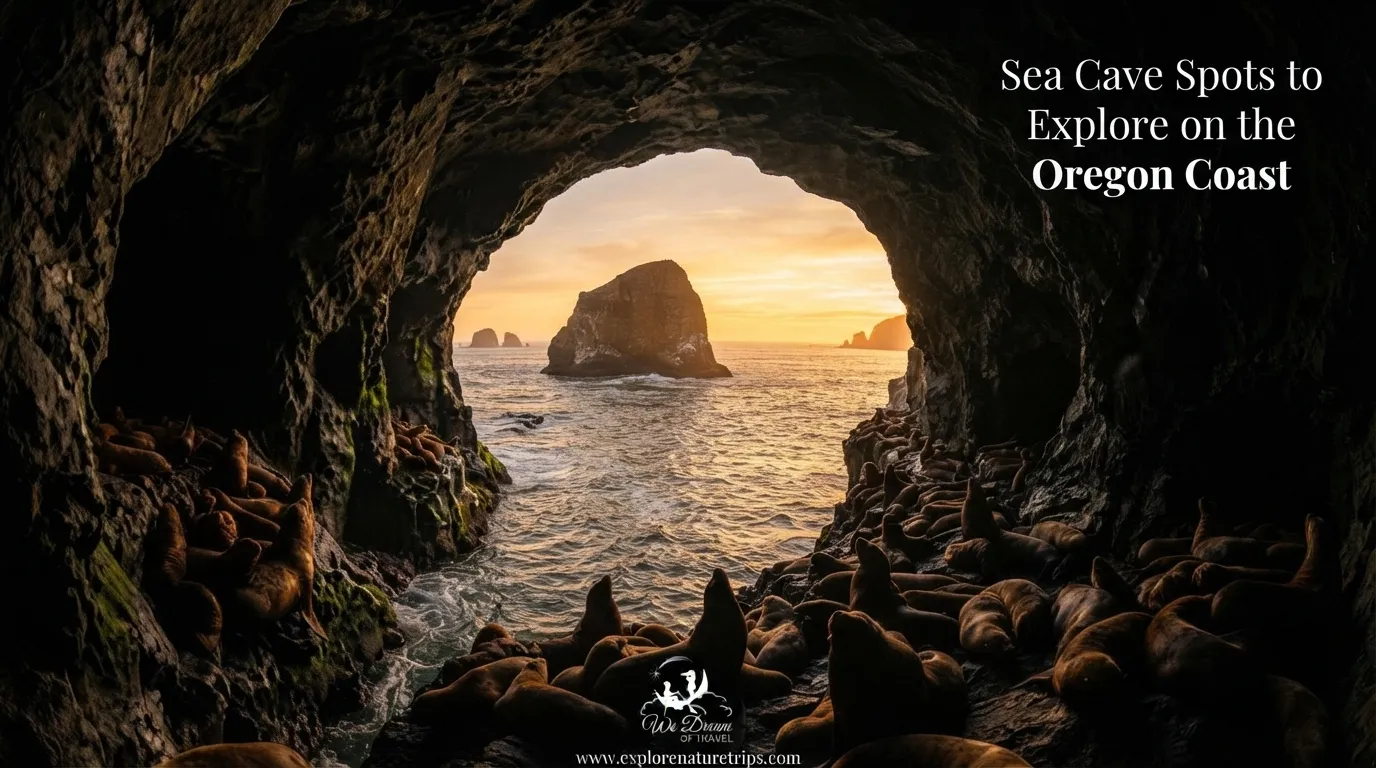
The Oregon Coast is known for its rugged cliffs, sandy beaches, rock formations, and dramatic Pacific Ocean views. Among its most interesting natural features are sea caves, where waves have gradually carved openings into coastal rock.
Some locations have a single cave, while others contain several caves spread around beaches, cliffs, and rocky formations. Natural Bridges, for example, has at least 5 sea caves, while Hug Point is described as having 4 caves in one account. Other destinations combine caves with waterfalls, tide pools, hidden beaches, wildlife, or scenic viewpoints.
However, sea caves are strongly influenced by the ocean. Low tide can reveal caves that are inaccessible at higher water levels, while wet rocks, algae, waves, and changing tides can make exploration hazardous.
Here are the key sea cave spots and cave-related coastal locations to know before planning your Oregon Coast trip.
Hunting for Sea Caves on the Oregon Coast? Here Are 10 Spots to Explore, With the Full Guide Laid Out Below!
1. Natural Bridges
Natural Bridges stands out as one of the strongest places for seeing multiple sea caves in one coastal area. The identifies at least 5 sea caves, although the actual number may be higher depending on how the formations are counted.
One advantage of Natural Bridges is that visitors can view the formations from above. Getting closer may involve hiking or kayaking, but the ocean conditions are an important consideration.
Why Natural Bridges Is Worth Visiting
The area is particularly appealing if your goal is to see several coastal formations rather than one isolated cave.
You can expect:
- At least 5 sea caves
- Dramatic coastal rock formations
- Elevated viewing opportunities
- Possible closer access through hiking or kayaking
- A location near Secret Beach
The key thing to remember is that rough water and changing tides can make close exploration dangerous.
Natural Bridges vs. Secret Beach
Secret Beach is located next to Natural Bridges and provides another opportunity to see multiple caves.
According to the, Secret Beach has 2–4 sea caves spread across 4 different beaches. Some caves can only be accessed when the tide is sufficiently low.
For visitors interested in exploring rather than simply photographing the coastline, tide timing becomes especially important.
2. Secret Beach
Secret Beach offers a different experience from a single designated cave attraction. Instead, caves are distributed across 4 beaches, with estimates ranging from 2 to 4 sea caves.
The changing coastline means that what you can see or access may depend heavily on tide and sand conditions.
What Makes Secret Beach Interesting?
The area combines:
- 2–4 sea caves
- 4 beaches where caves are spread
- Rocky coastal scenery
- Low-tide access to some formations
- Proximity to Natural Bridges
The author had visited Secret Beach 2 times, emphasizing the importance of visiting during low tide when exploring the caves.
Tip: Don’t treat low tide as merely a sightseeing preference. It can determine whether certain cave areas are reachable at all.
3. Hug Point
Hug Point is one of the most varied locations in the list because it combines sea caves, a waterfall, tide pools, and a historic coastal route.
The give slightly different descriptions of the cave count. One identifies 4 sea caves, while another describes several caves and additional formations that become accessible as the tide falls.
What You Can See at Hug Point
- 4 sea caves according to one source
- A coastal waterfall
- Tide pools
- A large cave near the waterfall
- Another large sea cave farther around the point
- Additional formations revealed by low tide
- Historic wagon-trail remnants
The location is only a few miles south of Cannon Beach and can become busy on weekends.
When to Explore Hug Point
Low tide is the key factor. Higher water can prevent access to some areas.
The also notes that the author first visited Hug Point in 2018, during high tide, and later regarded it as one of the less difficult locations from a personal-access perspective.
Even so, coastal conditions can change quickly, so visitors should not assume that a previous experience guarantees safe conditions on another day.
4. Devil’s Punchbowl
Devil’s Punchbowl is a distinctive coastal formation at Otter Rock where the ocean has shaped the rock into a dramatic bowl-like structure.
- 2 caves inside the Punchbowl
- 2 caves outside it
This makes it an interesting option for visitors who want more than a single cave entrance.
What to Know Before Going Inside
Beach-level access requires low tide. The rocks can also become wet and slippery.
Potential hazards include:
- Wet rocks
- Algae
- Slippery surfaces
- Incoming tide
Good hiking shoes or water shoes can be useful when conditions allow access.
One important point from the is that Devil’s Punchbowl can also be viewed from the parking area, meaning you don’t necessarily have to enter the cave area to appreciate the formation.
5. Sea Lion Caves
6
Sea Lion Caves near Florence is different from the other locations because it is both a sea cave and a wildlife attraction.
The cave is described by the as America’s largest sea cave and as a year-round home for Steller sea lions.
The Elevator Descent
Visitors reach the viewing area using an elevator that descends approximately:
200 feet / 61 meters
Another gives the descent as 208 feet, so the reported measurement varies slightly by source.
When Are Sea Lions Most Visible?
Winter is highlighted as the best season for seeing sea lions inside the cave.
During spring and summer, the animals often move toward outdoor shoreline ledges instead.
Some years have recorded up to 200 sea lions, while the broader descriptions refer to hundreds of Steller sea lions using the area.
Other Things to See
The surrounding attraction also offers:
- Ocean viewpoints
- Shoreline paths
- Birding opportunities
- Whale watching
- Marine-life viewing
- Views toward the Heceta Head area
Visitors should observe wildlife from a respectful distance and avoid disturbing sea lions or seals.
6. Neptune Beach
Neptune Beach, near the Neptune State Scenic Viewpoint, provides a much smaller-scale cave experience.
The describes 2 Neptune State Scenic Viewpoints, one northern and one southern. The beach includes picnic tables, restrooms, sand, rock formations, and a small sea cave.
What Is the Cave Like?
The cave is relatively small. Depending on the amount of sand present, a visitor may be able to crouch down and look inside.
This makes Neptune Beach more suitable for someone interested in seeing a small coastal cave alongside a beach stop, rather than expecting a huge cavern.
7. Bob Creek Wayside
Bob Creek Wayside is described as a quieter coastal location south of Yachats.
The identifies 2 cave formations, although it also notes that they could potentially be interpreted as 1 cave, depending on how the rock structures are viewed.
The Two Cave Features
One formation resembles a cave-like opening beside a large boulder.
The other is described as a sizable sea cave that can potentially be entered on foot.
The larger cave can be dark and slippery, so careful footing is particularly important.
For travelers who prefer less prominent coastal stops, Bob Creek Wayside offers a different experience from the more developed Sea Lion Caves attraction.
8. Oceanside Tunnel and Cave
Oceanside is especially interesting because the coastal feature here includes both a man-made tunnel and a natural sea cave.
The distinction matters: the tunnel itself is not a natural sea cave.
What You’ll Find
The route passes through a man-made tunnel in the headland and leads toward a hidden beach. A larger natural sea cave is located farther along the coastal area.
The cave’s height can change depending on seasonal sand levels.
This is a good example of why cave exploration on the Oregon Coast can vary from one visit to another.
Do not confuse the tunnel with the natural cave when planning what you want to see.
9. Indian Beach Sea Cave
Indian Beach is located in Ecola State Park near Cannon Beach and is described as a sea-cave destination accessible during low tide.
The setting combines the cave with a more traditional Oregon Coast experience.
Highlights
- Sea cave
- Secluded beach
- Tide pools
- Hiking trails
- Coastal scenery
The important planning consideration is low tide. The cave and beach environment should be approached with awareness of changing water levels.
10. Cave of the Winds at Bandon
Cave of the Winds is located near Face Rock State Scenic Viewpoint in Bandon.
Unlike a commercial cave attraction, its appeal comes from the combination of the cave, sea stacks, cliffs, and the area’s broader historical and cultural context.
A Cave With a Long History
The Cave of the Winds name has appeared in historical records for approximately 100 years.
The surrounding Face Rock area also has Indigenous cultural and storytelling connections extending back hundreds or potentially thousands of years, according to the material.
For visitors interested in more than just photography, this location adds a historical dimension to the Oregon Coast cave experience.
How Tides Affect Oregon Coast Sea Caves
Tides are arguably the most important consideration when visiting accessible sea caves.
A cave that appears reachable on a map may become difficult or impossible to reach as water rises. Conversely, falling water can expose beaches, rocky passages, tide pools, and cave entrances.
Low Tide
Low tide is particularly important at:
- Secret Beach
- Hug Point
- Devil’s Punchbowl
- Indian Beach
- Other beach-level cave areas
Low tide can reveal formations that remain underwater or inaccessible during higher water.
High Tide
High tide isn’t necessarily bad for sightseeing. It can make some coastal formations more dramatic.
For example, the material highlights high tide as an important viewing condition at Devil’s Punchbowl and describes dramatic ocean activity around other coastal formations.
The difference is that viewing from a safe location and entering a cave are two different activities.
Which Oregon Coast Cave Spot Fits Your Trip?
Best for Multiple Caves
Natural Bridges is the strongest choice if your priority is seeing several caves in one area, with at least 5 identified.
Best for a Wildlife Experience
Choose Sea Lion Caves if you want your cave visit combined with Steller sea lions and a developed visitor experience.
Best for Caves + Waterfall
Hug Point combines 4 reported sea caves with a waterfall, tide pools, and coastal scenery.
Best for a Dramatic Rock Formation
Devil’s Punchbowl stands out for its unusual bowl-shaped coastal formation and 4 associated caves.
Best for a Quieter Coastal Stop
Bob Creek Wayside is described as relatively quiet and off the beaten path.
Best for a Hidden-Beach Experience
Oceanside offers something different: a man-made tunnel, hidden beach, and natural cave in the same coastal setting.
Sea Cave Safety Tips
Sea caves can look inviting, but the ocean makes them fundamentally different from inland caves.
Check the Tide Before You Go
If your planned cave requires low tide, don’t simply arrive and assume conditions will remain favorable.
Allow enough time to explore and return before the tide changes.
Watch Wet and Slippery Rocks
Devil’s Punchbowl and other beach-level caves can contain wet rocks and algae.
A pair of water shoes or sturdy hiking shoes can provide better footing than ordinary footwear.
Never Let the Cave Entrance Trap You
A cave can appear safe when the tide is falling but become dangerous when water starts returning.
Keep the exit route in mind rather than walking deeper simply because a passage looks accessible.
Don’t Get Too Close to Wildlife
At Sea Lion Caves, the animals are wild. Give sea lions and seals plenty of space and avoid disturbing them.
Have a Backup Viewpoint
Several locations can still be enjoyed without entering the cave itself. Natural Bridges can be viewed from above, while Devil’s Punchbowl can be appreciated from the parking-area viewpoint.
That makes a flexible plan much safer than making cave entry the only objective.
FAQs
How many sea caves are on the Oregon Coast?
The does not establish one definitive total for the entire Oregon Coast. Individual locations contain different numbers, including at least 5 at Natural Bridges, 2–4 at Secret Beach, and 4 at both Hug Point and Devil’s Punchbowl.
Which Oregon Coast location has the most caves in this list?
Natural Bridges has the highest reported count, with at least 5 sea caves. The source also notes that there may be more.
What is the best tide for exploring Oregon Coast sea caves?
Low tide is generally the important condition for beach-level cave access. It can expose entrances and passages that are inaccessible at higher water.
However, visitors should still check actual coastal conditions and leave enough time to return safely.
How many caves are at Secret Beach?
The identifies 2–4 sea caves at Secret Beach, distributed across 4 beaches.
How many caves are at Hug Point?
One specifically counts 4 sea caves at Hug Point. Other descriptions refer to several caves and additional formations that become accessible at low tide.
How many caves are at Devil’s Punchbowl?
The identifies 4 caves: 2 inside the Punchbowl and 2 outside.
How deep is Sea Lion Caves?
The elevator descent is reported as approximately 200 feet (61 meters) by one source and 208 feet by another.
When is the best time to see sea lions inside the cave?
Winter is identified as the best viewing season because Steller sea lions often move toward outdoor ledges during spring and summer.
Is the Oceanside tunnel a natural sea cave?
No. The specifically distinguishes the man-made tunnel from the natural sea cave beyond it.
Can you enter every Oregon Coast sea cave?
No. Access varies by location, tide, sand level, rock conditions, and ocean conditions. Some caves are best viewed from a distance rather than entered.
Final Thoughts
The Oregon Coast offers a surprisingly varied collection of cave experiences. Natural Bridges leads this list with at least 5 reported sea caves, while Secret Beach has 2–4 and both Hug Point and Devil’s Punchbowl are associated with 4 caves. Sea Lion Caves provides a completely different experience by combining a massive coastal cavern with wild Steller sea lions.
The biggest lesson is that these aren’t ordinary sightseeing spots. Tides, wet rocks, changing sand levels, and ocean conditions can determine what is accessible. Plan around the conditions, keep a safe route back to shore, and remember that enjoying a sea cave from a distance can be just as worthwhile as going inside.

Hi, I’m Marcus! I love exploring the outdoors and discovering incredible places. Through ExploreNatureTrips blog, I share my travel experiences, useful tips, and recommendations for the best sights, trails, and destinations to visit.





One Comment