Is Breakneck Ridge Dangerous? What Hikers Should Know
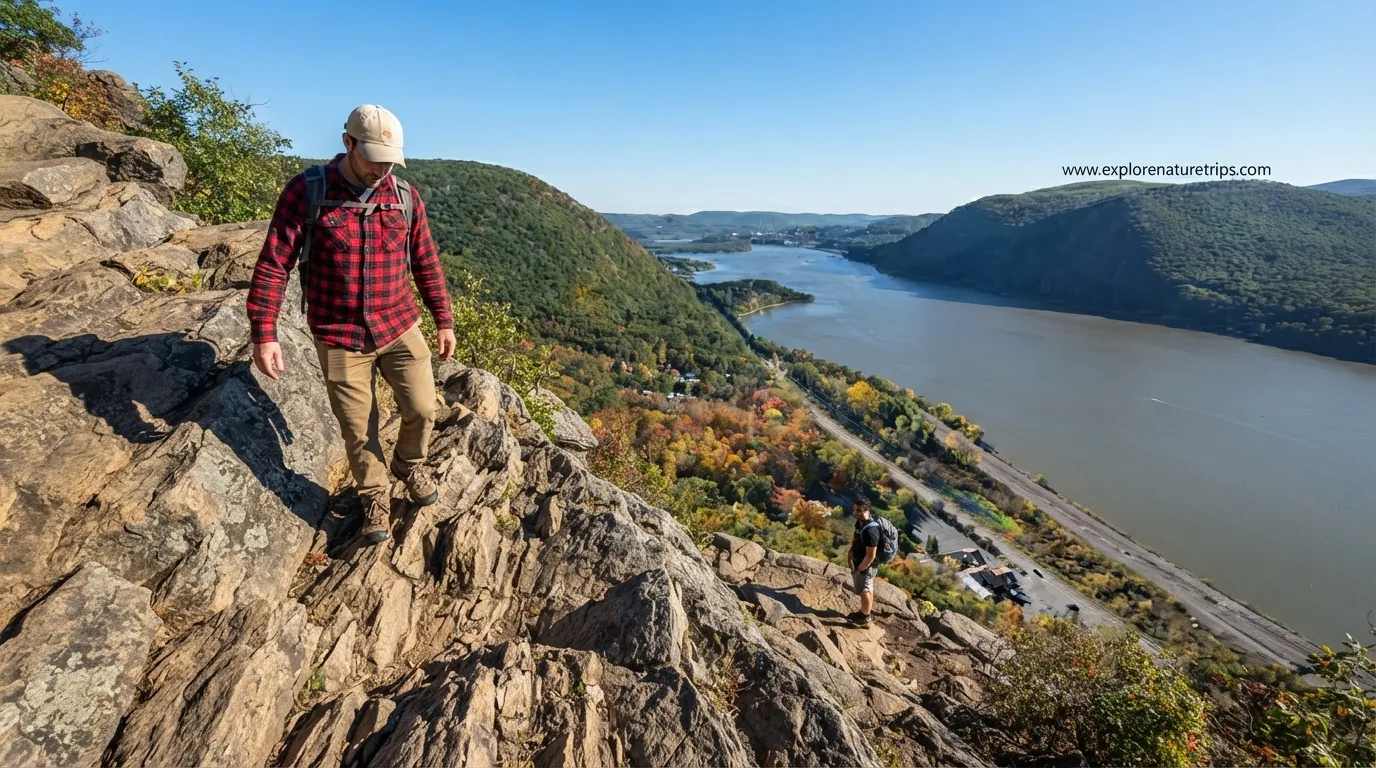
Breakneck Ridge is one of those hikes where the name gives you a pretty good warning. Located in Hudson Highlands State Park, the trail is known for steep climbing, exposed rock, scrambling, and impressive views toward the Hudson River and, on clear days, New York City.
But is Breakneck Ridge actually dangerous?
The answer depends heavily on which route you choose, your hiking experience, the conditions, and how prepared you are. The trail has difficult and potentially dangerous sections, especially near the beginning, but there are also easier ways to experience the area without committing to the hardest version.
One experienced account reports completing Breakneck Ridge at least 12 times and using different route combinations. Other hikers describe the main loop as a technical, full-body hike that can require rock-climbing-style movement.
Why Is Breakneck Ridge Considered Dangerous?
The biggest issue is not simply distance. The challenge comes from the steepness and terrain.
The main 3.7-mile loop gains more than 1,200 feet of elevation, and one first-person hiking account describes approximately 1,400 feet of gain on its version of the loop. A longer route can reach approximately 2,000 feet of elevation gain.
The opening section is especially demanding. Hikers may need to use their hands on exposed rocks, and some parts feel more like scrambling than conventional trail walking.
Explore describes the route as a technical hike, noting that some sections require movement similar to rock climbing. It also reports that first responders frequently perform rescues because hikers attempt the trail without adequate preparation.
That does not mean every visitor faces the same level of danger. A major lesson from the experiences is that hikers can choose a route that better matches their ability.
The 4 Main Route Options
One of the most useful aspects of the available hiking experience is the breakdown into four different options. They range from a relatively short beginner-friendly loop to a demanding route toward the Beacon Fire Tower.
| Route | Distance | Elevation Gain | Difficulty |
|---|---|---|---|
| Option 1 | 1.5 miles | 500+ ft | Easy–moderate |
| Option 2 | 3.5 miles | 700+ ft | Moderate |
| Option 3 | 6 miles | 1,200 ft | Hard |
| Option 4 | 9.5 miles | 2,000 ft | Hard |
Option 1: The Shorter Beginner-Friendly Route
The shortest route covers approximately 1.5 miles and gains 500+ feet.
It begins at the Breakneck Ridge parking area and follows the white BR trail before turning toward the Green Trail. The route then uses the Yellow Trail to return.
The Green Trail is described as relatively easier to descend and includes steps, making this route a substantially different experience from committing to the most difficult sections of the main ridge.
For someone interested in seeing the area without immediately choosing the hardest version, this is the route that deserves consideration first.
Option 2: A Moderate 3.5-Mile Route
The second option increases the distance to 3.5 miles and the elevation gain to 700+ feet.
Instead of leaving the white trail early, hikers continue farther before using the Yellow and Red Trails.
One useful feature of this route is a waterfall view along the Red Trail, giving hikers an additional visual reward without requiring the longest route.
Option 3: The 6-Mile Advanced Route
The third route covers approximately 6 miles with around 1,200 feet of elevation gain.
This option continues farther along the white Breakneck Ridge trail, passes additional trail junctions, reaches the summit area, and eventually connects with the Red and Yellow Trails for the return.
This is where the hike becomes much more appropriate for experienced hikers. The combination of distance, elevation, and steep terrain makes preparation more important than simply being able to walk several miles.
Option 4: The 9.5-Mile Hardest Route
The longest option is approximately 9.5 miles with 2,000 feet of elevation gain.
The route follows the white trail toward the Beacon Fire Tower, where the hiking account describes views toward New York City. Hikers then return using the trail system toward the parking area.
This is not the version to choose simply because you want to “complete Breakneck Ridge.” It requires considerably more time, endurance, and comfort with difficult terrain than the shorter alternatives.
The First Mile Deserves Extra Attention
Across the information, the beginning of the hike repeatedly stands out as one of the most challenging parts.
The first mile can involve rapid elevation gain and steep rock sections. This means hikers may experience the hardest physical work relatively early rather than gradually building into the hike.
That matters when planning your day. A person who feels comfortable walking several miles on ordinary trails should not automatically assume that the same fitness level translates directly to Breakneck Ridge.
The terrain—not simply the mileage—is what changes the experience.
Is Breakneck Ridge Suitable for Beginners?
A simple yes-or-no answer would be misleading.
The hardest sections are not appropriate for inexperienced hikers, and one specifically describes the main trail as unsuitable for children or beginners. Another experienced source, however, explains that beginners can choose shorter and easier route combinations that avoid some of the most difficult areas.
A better way to think about it is:
- Complete beginner: Consider an easier route rather than the hardest ridge section.
- Some hiking experience: Choose a route that matches your current ability.
- Experienced hiker: The longer and harder routes may be appropriate if conditions are favorable.
- Experienced with technical terrain: The full ridge experience may be more manageable, but preparation is still important.
Your ability to handle steep rock, exposure, elevation gain, and scrambling matters more than the number of miles you normally walk.
What About Vertigo or Fear of Heights?
This is an important consideration.
The first-person experience specifically warns that people with vertigo should avoid certain scrambling areas. The author suggests considering the nearby Bull Hill Loop Trail as a safer alternative for people who want to hike in the area but are uncomfortable with the more exposed sections.
If heights already make you uncomfortable, do not assume that reaching the summit will make the exposure disappear. Choosing a less technical route is the more sensible approach.
What Should You Wear and Carry?
The advice consistently emphasizes preparation.
Essential items
- Sturdy hiking shoes or boots
- Plenty of water
- Nutritious snacks
- A trail map
- Sunscreen
- Bug spray
- Gloves can be useful for rocky scrambling
One first-person account specifically mentions wishing the hikers had brought gloves. Explore also strongly recommends sturdy footwear and warns against unsuitable casual shoes.
The important point is simple: this is not the place to treat footwear as an afterthought.
Why Weather Matters So Much
Wet rock changes the difficulty considerably.
Explore recommends choosing a sunny day without rain because wet rocks and trail surfaces can become slippery.
For a hike involving steep scrambling, losing traction is a much bigger concern than it would be on a flat walking trail.
Before leaving, consider whether the conditions will make the rock sections substantially harder than expected. If conditions are poor, postponing the hike is more sensible than trying to prove that you can finish it anyway.
Can You Bring a Dog?
Dogs have been seen on Breakneck Ridge, but the difficult sections can create a problem.
Some portions are challenging enough that a dog may be unable to continue without assistance. One specifically notes seeing dogs but also describes sections where they would need to be carried. Explore similarly warns that dogs can struggle with difficult portions of the route.
If your dog is not already comfortable with challenging terrain, a different trail may be a better choice.
How Long Does the Hike Take?
The answer depends on the route.
The shortest option is only 1.5 miles, while the longest reaches 9.5 miles. That is a major difference in both physical demand and time.
A first-person account of the approximately 3.7-mile main loop took a little more than 5 hours, illustrating why distance alone is not a reliable way to estimate the day. Steep scrambling, stopping for views, route decisions, and crowded sections can all affect the pace.
For this reason, avoid planning your day around an overly aggressive time estimate.
Getting to Breakneck Ridge From New York City
Public transportation is one of the convenient aspects of the hike.
Explore reports that the Metro-North journey from New York City takes approximately 1.5 hours, with tickets mentioned at around $14–$22. On weekends, trains can stop directly at Breakneck Ridge, while weekday service stops at Cold Spring, approximately 2 miles from the trail.
Driving is another option, with the journey from New York City described as taking roughly the same amount of time. However, parking near the trailhead is limited.
How to Make the Hike Safer
The best safety strategy is not one single piece of equipment. It is choosing a route that matches your ability and avoiding unnecessary risks.
Keep these points in mind:
- Choose your route before starting.
- Do not automatically attempt the 9.5-mile version.
- Expect the first mile to be particularly demanding.
- Wear footwear with dependable traction.
- Carry enough water and food.
- Check the weather before leaving.
- Avoid wet or slippery rock conditions.
- Give yourself enough time instead of rushing.
- Be especially careful on exposed scrambling sections.
- Consider a less difficult trail if you have vertigo.
- Avoid bringing inexperienced dogs onto technical sections.
- Go during quieter periods if possible to reduce crowding.
The strongest common message across the experiences is that preparation reduces unnecessary risk.
When Should You Avoid the Hardest Route?
There are several situations where choosing an easier option makes more sense:
- You have little hiking experience.
- You are uncomfortable with heights.
- You have vertigo.
- The rocks are wet.
- You are not comfortable scrambling with your hands.
- You are hiking with someone who cannot handle steep terrain.
- You have underestimated the elevation gain.
- You do not have appropriate footwear.
- You are running short on daylight or time.
There is no advantage to choosing the hardest route simply for bragging rights. Breakneck Ridge offers multiple ways to experience the area.
What Makes Breakneck Ridge Worth Hiking?
The difficulty is only part of the story.
The reward is the combination of Hudson River scenery, elevated viewpoints, rock formations, and expansive views. On a clear day, the summit area can provide views extending toward New York City.
The first-person hiking experience also highlights multiple scenic viewpoints, including an official viewpoint at approximately 686 feet.
That contrast—hard physical effort followed by wide-open views—is a major part of the trail’s appeal.
Breakneck Ridge vs. a Safer Alternative
If your goal is simply to enjoy the Hudson Highlands rather than specifically conquer the steepest section, consider easier alternatives.
The Nature Seeker specifically recommends Bull Hill Loop Trail for people who want another hiking option in the area, including people who may not be comfortable with the most difficult portions of Breakneck Ridge.
The Nimham Trail is also identified as a more moderate way for less-experienced hikers to reach impressive summit views.
That gives visitors a useful choice: you can still have a memorable hiking day without treating the most technical route as mandatory.
Frequently Asked Questions
Is Breakneck Ridge actually dangerous?
Yes, some sections are dangerous, particularly the steep scrambling areas. However, the overall experience depends on the route, weather, fitness, preparation, and experience level. Easier route options can avoid some of the most difficult sections.
How long is the Breakneck Ridge hike?
The commonly discussed main loop is approximately 3.7 miles, while the route options described by one experienced source range from 1.5 to 9.5 miles.
How much elevation gain does Breakneck Ridge have?
The 3.7-mile loop gains more than 1,200 feet, while the longer route toward Beacon Fire Tower can reach approximately 2,000 feet of elevation gain.
Is Breakneck Ridge good for beginners?
The hardest version is not recommended for beginners. However, the area has shorter and easier route options, including a 1.5-mile option with 500+ feet of elevation gain.
How long does Breakneck Ridge take?
Time varies significantly by route and pace. One first-person account reports taking a little more than 5 hours on a roughly 3.7-mile hike, showing how much the steep terrain and scrambling can slow progress.
Can you take a train to Breakneck Ridge?
Yes. From New York City, Metro-North takes approximately 1.5 hours according to the coverage. Weekend trains can stop directly at Breakneck Ridge, while weekday service may require getting off at Cold Spring and walking approximately 2 miles.
Can dogs hike Breakneck Ridge?
Dogs are seen on the trail, but some sections are difficult enough that dogs may require assistance. The route is better suited to dogs and owners already accustomed to challenging hiking.
What should I wear for Breakneck Ridge?
Wear sturdy hiking shoes or boots with good traction. Gloves may also be useful on rocky scrambling sections. Carry water, food, a map, and sun protection.
Is Breakneck Ridge safe in the rain?
The guidance advises against wet conditions because rocks and trail surfaces can become slippery. For a route involving steep scrambling, postponing the hike during poor conditions is the safer choice.
Final Takeaway
So, is Breakneck Ridge dangerous to hike?
It can be—but the answer is more complicated than simply calling the entire trail dangerous.
The main loop is about 3.7 miles with more than 1,200 feet of elevation gain, and the hardest route described reaches 9.5 miles and 2,000 feet of gain. The first mile is particularly steep, and some sections require scrambling and careful movement over rocks.
The most important lesson is to choose the route that matches your experience. A shorter 1.5-mile option can provide an introduction to the area, while experienced hikers can take on longer routes if conditions and preparation are appropriate.
Breakneck Ridge rewards preparation, patience, and good judgment. If the terrain, weather, or route feels beyond your ability, choosing an easier trail is not failing—it is making the smarter hiking decision.

Hi, I’m Marcus! I love exploring the outdoors and discovering incredible places. Through ExploreNatureTrips blog, I share my travel experiences, useful tips, and recommendations for the best sights, trails, and destinations to visit.