7 Stunning Places on Vancouver Island You Need to Visit
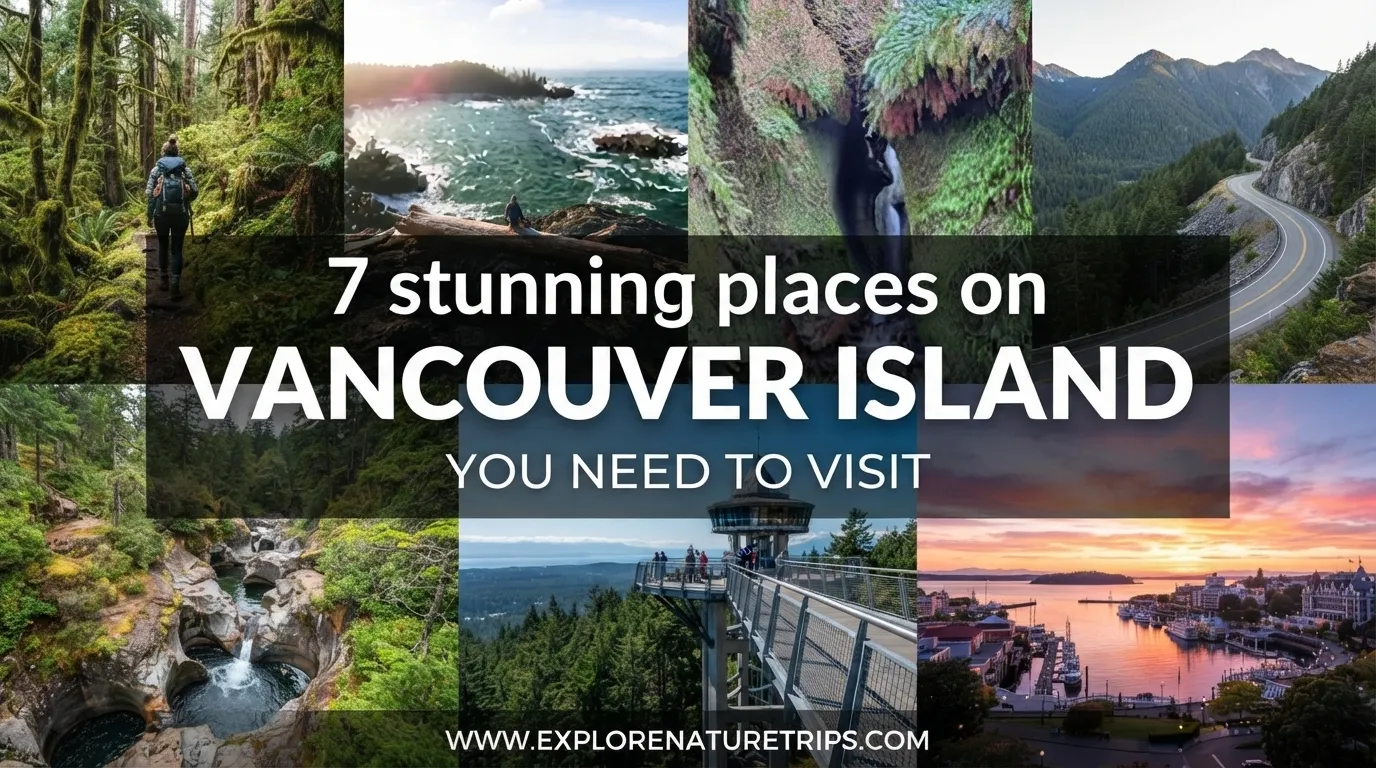
Vancouver Island combines wild coastline, old-growth forests, historic towns, wildlife experiences, beaches, hiking trails, and relaxed seaside communities in one destination. It is also much larger than many first-time visitors expect.
The island stretches about 460 km from Victoria in the south toward Cape Scott Provincial Park in the north. That size matters when planning a trip because visiting several areas can involve significant driving time.
For example, one travel experience covered the island over 6 days, while another recommended dividing a northern road trip into 2 days in Campbell River and 2 days in Telegraph Cove. These examples show why choosing your base before arriving can make the trip much easier.
Rather than trying to see everything, focus on a few destinations that match your interests. The seven places below cover the strongest combination of city experiences, beaches, hiking, wildlife, forests, and coastal scenery.
Planning a trip to Vancouver Island? Below are 7 stunning places you need to visit for an unforgettable experience.
1. Victoria — Best for History, Culture, and a City Break
Victoria is one of the easiest places to begin exploring Vancouver Island. As the capital of British Columbia, it combines historic architecture, gardens, waterfront scenery, restaurants, and outdoor activities.
The city was founded in 1843, giving its historic centre a particularly strong connection to British Columbia’s past. Walking around Bastion Square, Fan Tan Alley, the Inner Harbour, and the Parliament Buildings provides a straightforward way to experience the city without needing a complicated itinerary.
For visitors who prefer hiking, Jocelyn Hill, Mount Douglas, and Mount Tolmie are highlighted as options around Victoria.
The city’s evening atmosphere is another attraction. A walk along Dallas Road followed by time around the Inner Harbour gives you a different experience from the daytime sightseeing.
| Victoria highlight | Best suited to |
| Inner Harbour | Waterfront sightseeing |
| Parliament Buildings | History and architecture |
| Fan Tan Alley | Historic exploration |
| Bastion Square | Food, shops, and atmosphere |
| Jocelyn Hill | Hiking |
| Mount Douglas | Hiking and views |
| Mount Tolmie | Short outdoor experience |
One of the notable accommodation landmarks is the Fairmont Empress, which has been an iconic Victoria hotel since 1908.
Another option mentioned by the is Oak Bay Beach Hotel, approximately 15 minutes from downtown Victoria.
2. Tofino — Best for Surfing and Wild Beaches
Tofino is one of the strongest choices for travelers looking for a combination of surfing, beaches, coastal scenery, restaurants, and a remote atmosphere.
The destination is described as feeling relatively remote while still offering shops, restaurants, accommodation, and outdoor activities. That balance makes it particularly useful for travelers who want nature without completely giving up town conveniences.
Cox Bay Beach is one of the key locations associated with the area. Surfing is a major attraction, and the specifically mention surf schools and rental shops.
One travel account rented a longboard from Relic Surf Shop in Ucluelet for 24 hours at $28 CAD, giving visitors a useful real-world price reference from that trip.
The wider Tofino area also provides access to trails and coastal viewpoints. If you enjoy combining an active day with a relaxed evening, Tofino is one of the strongest choices on the island.
What makes Tofino useful for a trip?
- Surfing and beach time
- Coastal walks
- Restaurants and cafés
- Remote scenery
- Wildlife experiences
- Access to nearby Ucluelet
- Accommodation directly around the beaches
The also highlight Pacific Sands Beach Resort, The Shoreline Tofino, and Ocean Village as accommodation choices.
3. Cowichan Bay — Best for a Slower Coastal Escape
Between Nanaimo and Victoria, the Cowichan Valley offers a noticeably different experience from the more rugged west coast.
The area combines green forests, coastline, small communities, vineyards, food, and relaxed scenery. Rather than trying to cover the entire valley in a short visit, using Cowichan Bay as a base can make exploring the surrounding area easier.
The historic seaside village provides a slower pace and works well for travelers who want to include food and scenery alongside outdoor activities.
The recommendations include:
- Villa Eyrie
- Salishan Tree House Suite
- Blue Grouse Estate Winery
- Unsworth Vineyards
- True Grain Bread
- The Masthead Restaurant
- Rock Cod Café
- Oceanfront Suites
This area is particularly useful as part of a road trip between Victoria and other Vancouver Island destinations.
4. Campbell River — Best for Water, Wildlife, and Forests
Campbell River is a strong choice for travelers who want to combine coastal scenery with hiking and waterfalls.
The city is surrounded by provincial parks and provides access to Discovery Passage and Quadra Island. A good starting point is Discovery Fishing Pier, described by the as Canada’s first saltwater fishing pier.
Nearby attractions include:
- Discovery Passage Aquarium
- Maritime Heritage Centre
- Shoppers Row
- Tyee Plaza
- Discovery Harbour Shopping Centre
- Elk Falls Provincial Park
The Discovery Passage Aquarium operates from May to August, while the Maritime Heritage Centre is open year-round according to the material.
Elk Falls is the standout
Elk Falls Provincial Park is one of the strongest nature stops around Campbell River. It has a waterfall, suspension bridge, viewpoints, picnic areas, and more than 6 km of hiking trails.
The trails pass through old-growth forest containing large Western Red Cedar and Douglas Fir trees.
For travelers who want a destination that combines a town base with an easy transition into nature, Campbell River is particularly practical.
One accommodation mentioned in the content, Brown’s Bay Resort, is approximately a 22-minute drive from downtown Campbell River.
5. Sooke — Best for Coastal Hiking and Rainforest Scenery
Sooke is suited to travelers who want a more outdoor-focused experience without going as far north as Telegraph Cove or Campbell River.
The area is characterized by rugged coastline, rainforest, beaches, hiking, and wildlife experiences.
One of the major attractions is East Sooke Regional Park, which covers more than 3,500 acres and includes more than 50 km of hiking trails.
That makes Sooke particularly attractive for visitors who prefer walking and exploring rather than spending the entire day sightseeing from a vehicle.
Another highlighted activity is whale watching. The material identifies March through October as the whale-watching season while also noting that wildlife movements can vary.
Sooke planning snapshot
| Feature | detail |
| East Sooke Regional Park | 3,500+ acres |
| Hiking trails | 50+ km |
| Whale-watching period | March–October |
| Main character | Coast, rainforest, beaches |
For accommodation, the mentions Sooke Point Ocean Cottage Resort and Sterling Cove.
6. Telegraph Cove — Best for Wildlife and North Island Adventure
Telegraph Cove offers one of the most distinctive experiences on Vancouver Island.
It is one of the remaining boardwalk settlements on the island and acts as a gateway for marine and wildlife-focused adventures.
Popular experiences highlighted by the include:
- Whale watching
- Grizzly bear tours
- Sea kayaking
- Marine wildlife viewing
- Exploring the historic village
The community also experienced a major setback when a devastating fire swept through part of the village in December 2024. The describes ongoing restoration efforts and encourages travelers to support the local community by visiting.
This history is important because Telegraph Cove is not simply another scenic stop. Its character is closely connected to its historic waterfront community.
If wildlife is a major priority, this destination deserves consideration alongside Ucluelet.
7. Ucluelet — Best for Dramatic Coastline and Hiking
Ucluelet is sometimes treated as a stop on the way to Tofino, but the material presents it as a destination worth exploring in its own right.
Its coastline is more rocky and dramatic, contrasting with the sandy beaches associated with Tofino.
The biggest attraction is the Wild Pacific Trail.
Wild Pacific Trail
| Detail | Information |
| Total trail length | 8 km |
| Trail sections | 3 |
| Lighthouse section | Lighthouse Loop |
| Other sections | Artist Loops, Rocky Bluffs |
| Main scenery | Ocean, shoreline, old trees |
The 8 km Wild Pacific Trail follows the coastline and provides views toward Barkley Sound and the Broken Group Islands.
Its three sections are:
- Lighthouse Loop
- Artist Loops
- Rocky Bluffs
This makes Ucluelet particularly useful for travelers who want a coastal walking experience without needing an extreme hike.
The town also has the Ucluelet Aquarium, which the describes as a catch-and-release aquarium open from March through November.
Kayaking and stand-up paddleboarding are additional options, including trips toward the Broken Group Islands for more experienced paddlers.
How to Choose Between the 7 Places
Not every traveler needs the same Vancouver Island itinerary. Your best destination depends heavily on what you want to do.
| If you want… | Consider… |
| History and culture | Victoria |
| Surfing and beaches | Tofino |
| Food, vineyards, and relaxation | Cowichan Bay |
| Waterfalls and hiking | Campbell River |
| Long coastal hikes | Sooke |
| Wildlife and marine adventures | Telegraph Cove |
| Dramatic coastline and walking | Ucluelet |
This approach is more practical than trying to visit every attraction simply because it appears on a list.
Vancouver Island Road Trip Ideas
The island’s size makes road-trip planning especially important.
The material highlights three useful routes.
Pacific Marine Circle Route
The Pacific Marine Circle Route covers approximately 289 km.
The route connects:
Victoria → Sooke → Port Renfrew → Lake Cowichan → Cowichan Valley → Victoria
It is a useful option when you want to concentrate on the island’s southwestern coastline and nearby inland scenery.
North Vancouver Island Route
A northern itinerary can connect:
Nanaimo → Campbell River → Telegraph Cove
One recommends spending:
- 2 days in Campbell River
- 2 days in Telegraph Cove
That gives you a 4-day structure before adding travel time between destinations.
Victoria to Ucluelet and Tofino
The east-to-west journey is approximately 320 km.
The suggested sequence is:
Victoria → Cowichan → Nanaimo → Parksville → Port Alberni → Ucluelet → Tofino
This route works particularly well for travelers who want to experience several different landscapes instead of staying in one area.
How Long Should You Spend on Vancouver Island?
There is no single correct number of days.
One ‘s personal trip lasted 6 days, while another recommends 4 days just for Campbell River and Telegraph Cove on a northern itinerary.
For a first visit, the most important consideration is not simply the number of days but the amount of driving involved.
A useful planning principle is:
Fewer bases + more time in each place = less rushing.
Trying to combine Victoria, Tofino, Ucluelet, Campbell River, and Telegraph Cove into a very short trip can turn a nature-focused vacation into a driving-heavy itinerary.
Getting Around Vancouver Island
The material strongly emphasizes the usefulness of having your own vehicle.
Although buses exist, a rental car provides considerably more flexibility for reaching beaches, trailheads, parks, viewpoints, and smaller communities.
The island is approximately 460 km long, while the drive between Victoria and Port Hardy can take about 5.5 hours.
That distance makes transportation planning a major part of the experience.
There are also ferry connections between Vancouver and Vancouver Island. Depending on the route, the ferry journey can take approximately 30 minutes to 2 hours.
One reported paying $17.20 CAD each way as a foot passenger.
Can You Visit Vancouver Island in One Day?
A day trip is possible, but the emphasize choosing your destination carefully.
Because ferry travel takes time, attempting to cross the island and return in one day would leave very little time for exploration.
For a short visit, concentrating on one major east-coast destination such as Victoria, Nanaimo, or Campbell River makes more sense than trying to cover multiple regions.
For a longer trip, the island becomes much more rewarding because you can include west-coast destinations and inland areas without constantly watching the clock.
Practical Tips Before You Go
A few simple decisions can make a Vancouver Island trip significantly easier.
1. Pick your region first.
Do not begin with a giant list of attractions. Decide whether your priority is Victoria, the west coast, the south coast, or northern Vancouver Island.
2. Allow driving time.
The island is approximately 460 km long, so distances that look small on a map can consume a significant part of your day.
3. Keep outdoor footwear practical.
The Cox Bay Lookout hike is approximately 4 km, takes around 45 minutes, and has about 400 m of elevation gain. Mud can also be an issue, so waterproof footwear can be useful.
4. Match activities to the season.
The material identifies March–October for whale-watching opportunities around Sooke and April–October as a strong whale-sighting period in the Travel Lemming guide.
5. Leave room for weather.
Coastal activities can be affected by changing conditions. A flexible itinerary is better than scheduling every hour.
6. Respect trails and natural areas.
At places such as Cathedral Grove, staying on designated trails and following Leave No Trace principles helps protect sensitive ecosystems.
Frequently Asked Questions
What are the 7 best places to visit on Vancouver Island?
The seven destinations highlighted in the material are Victoria, Tofino, Cowichan Bay, Campbell River, Sooke, Telegraph Cove, and Ucluelet.
How long is Vancouver Island?
Vancouver Island stretches approximately 460 km from south to north according to the material.
Is 6 days enough for Vancouver Island?
A 6-day trip can provide a useful introduction, especially if you concentrate on a smaller region. Trying to cover the entire island in six days can become rushed.
How long is the Wild Pacific Trail?
The Wild Pacific Trail in Ucluelet is approximately 8 km and is divided into 3 sections: Lighthouse Loop, Artist Loops, and Rocky Bluffs.
How many hiking trails are in East Sooke Regional Park?
The material states that East Sooke Regional Park has more than 50 km of hiking trails across its 3,500+ acres.
Is Tofino good for surfing?
Yes. Tofino is highlighted as a major surfing destination, with beaches, surf shops, schools, and rental opportunities.
Can you take a day trip to Vancouver Island?
Yes, but it is better to concentrate on Victoria, Nanaimo, or Campbell River rather than trying to explore the entire island in one day.
How far is Victoria from Port Hardy?
The drive from Victoria to Port Hardy is approximately 5.5 hours, illustrating the island’s considerable size.
Final Thoughts
Vancouver Island is best experienced as a collection of distinct destinations rather than one single attraction.
Victoria brings history and culture, Tofino delivers surfing and beaches, Cowichan Bay offers a slower coastal escape, Campbell River combines waterfalls with outdoor adventures, Sooke is ideal for hiking and coastline, Telegraph Cove stands out for wildlife, and Ucluelet provides dramatic coastal scenery.
The numbers also tell an important story: approximately 460 km of island length, a 5.5-hour Victoria-to-Port Hardy drive, an 8 km coastal trail in Ucluelet, more than 50 km of trails in East Sooke, and a 289 km Pacific Marine Circle Route.
That is why the best Vancouver Island itinerary is not necessarily the one with the most stops. It is the one that gives you enough time to actually experience the places you choose.
Hi, I’m Marcus! I love exploring the outdoors and discovering incredible places. Through ExploreNatureTrips blog, I share my travel experiences, useful tips, and recommendations for the best sights, trails, and destinations to visit.