Pocono Mountains: Things to Do, Places & Travel Guide
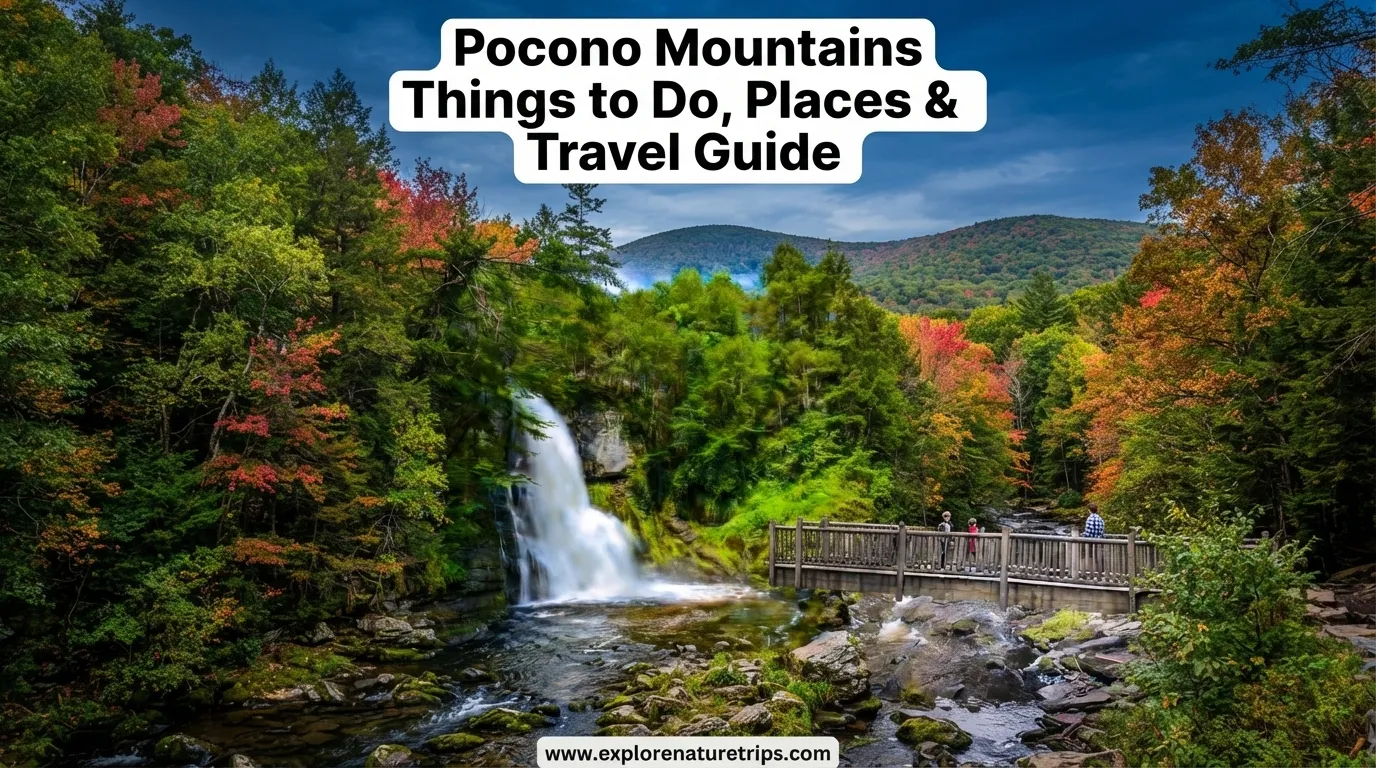
The Pocono Mountains are a four-season destination in northeastern Pennsylvania covering 2,400 square miles across 4 counties: Carbon, Monroe, Pike, and Wayne. The region combines mountain scenery, waterfalls, woodlands, rivers, small towns, parks, outdoor recreation, and resort experiences.
For travelers who enjoy being outdoors, the numbers help explain the scale of the area: there are 170 miles of winding rivers, more than 163 ski trails, 261 miles of hiking and biking trails, over 35 golf courses, 9 state parks, and 2 national parks.
That makes the Poconos useful for very different types of trips, from a short weekend escape to a longer outdoor-focused vacation. The region also caters to families, couples, weddings, reunions, corporate groups, and other travelers.
Where Are the Pocono Mountains?
The Pocono Mountains are located in northeastern Pennsylvania and encompass Carbon, Monroe, Pike, and Wayne counties.
The region includes mountain terrain, forests, waterfalls, rivers, lakes, recreational areas, and small communities. VisitPA describes the scenery as changing noticeably as travelers pass through the Lehigh Tunnel and enter the Pocono Mountains.
The area is broad enough that planning by region or town can make a trip much easier. Important communities featured by the Pennsylvania tourism source include:
| Community | Why It Matters |
|---|---|
| Blakeslee | Pocono community and travel base |
| Hawley | Small-town destination |
| Honesdale | Historic town |
| Jim Thorpe | Historic town with attractions and shops |
| Lackawaxen | Delaware River area |
| Milford | Small town near outdoor attractions |
| Mount Pocono | Mountain destination |
| Pocono Lake | Lake-area destination |
| Stroudsburg | Shopping, dining, and local attractions |
How Big Are the Poconos?
One of the easiest ways to understand the destination is through its numbers.
| Feature | Number |
|---|---|
| Total region | 2,400 square miles |
| Counties | 4 |
| Winding rivers | 170 miles |
| Ski trails | 163+ |
| Hiking & biking trails | 261 miles |
| Golf courses | 35+ |
| State parks | 9 |
| National parks | 2 |
The official regional description also provides an interactive map covering the full 2,400-square-mile destination, which is useful because attractions are spread across the four counties rather than concentrated in one town.
Best Things to Do in the Pocono Mountains
The Poconos work especially well for travelers who want to combine outdoor activities with towns, scenic attractions, food, and relaxing accommodations.
Visit Bushkill Falls
Bushkill Falls is one of the major waterfall attractions highlighted in the material. The Nature Seeker guide notes 8 waterfalls, making the attraction particularly suitable for visitors who want a waterfall-focused outing.
It can also fit into a broader Pocono itinerary alongside hiking and nearby attractions.
Explore Jim Thorpe
Jim Thorpe is one of the most prominent towns highlighted across the travel material.
Visitors can explore its historic downtown, shops, museums, and the Lehigh Gorge Scenic Railway. It is also a useful base for combining town exploration with outdoor activities.
For a traveler who does not want an entire vacation devoted to hiking, Jim Thorpe adds a good balance of history, scenery, shopping, and sightseeing.
Explore the Delaware River
The Pocono Mountains contain 170 miles of winding rivers, making water-based recreation an important part of the destination.
Activities highlighted by the sources include:
- Kayaking
- Canoeing
- Fishing
- Boating
- Whitewater rafting
The Delaware River is particularly important around the Delaware Water Gap.
Visit Delaware Water Gap
The Delaware Water Gap is one of the major scenic areas identified by VisitPA.
Approximately 40 miles of the Delaware River run through the area between high bluffs and forested shores. The Delaware Water Gap National Recreation Area is another major reason to include this area in an outdoor itinerary.
For visitors interested in scenic drives, hiking, water activities, and photography, this is one of the strongest areas to prioritize.
Spend Time at Lake Wallenpaupack
Lake Wallenpaupack is highlighted as a destination for activities such as:
- Fishing
- Paddleboarding
- Boat tours
- Lakeside relaxation
It can work particularly well as a slower-paced day between more active hiking or adventure days.
Hike the Pocono Trails
The region has 261 miles of hiking and biking trails, so hiking is one of the most important ways to experience the landscape.
The material identifies trails and hiking areas including:
- Raymondskill Falls Trail
- Bushkill Falls Trails
- Lehigh Gorge Trail
- Big Pocono State Park
- Mount Tammany
- Hickory Run State Park
- Promised Land State Park
Hiking difficulty varies, so visitors should choose trails according to experience, weather, terrain, and available time.
Hickory Run State Park by Season
Hickory Run State Park offers a useful example of how activities change throughout the year.
VisitPA highlights the 2.6-mile Sand Spring Trail for cross-country skiing during winter.
In spring, visitors can fish for trout in Mud Run or Hickory Run. Summer brings additional outdoor opportunities.
This makes the park particularly useful for travelers who want to experience the Poconos beyond the traditional summer season.
Winter Activities in the Pocono Mountains
Winter transforms the Poconos into a destination for snow-based recreation.
The region has more than 163 ski trails, with activities including:
- Skiing
- Snowboarding
- Snow tubing
- Snowshoeing
- Cross-country skiing
The material identifies Camelback, Jack Frost, and Shawnee Mountain among the ski destinations.
If skiing is the main purpose of your trip, compare the available terrain and conditions before choosing where to stay.
Summer Activities in the Poconos
Summer provides a different experience, with the region’s 261 miles of hiking and biking trails becoming especially useful for outdoor travelers.
Popular activities include:
- Hiking
- Biking
- Golf
- Fishing
- Boating
- Kayaking
- Canoeing
- Whitewater rafting
- Ziplining
- Horseback riding
The official tourism information also identifies more than 35 golf courses, giving golfers plenty of options within the region.
Best Time to Visit the Pocono Mountains
The Poconos have four distinct seasons, and the best time depends on what you want to do.
| Season | Period | Best For |
|---|---|---|
| Spring | April–June | Hiking, waterfalls, wildflowers |
| Summer | July–August | Lakes, boating, rafting, hiking |
| Fall | Late September–October | Fall foliage and scenic outings |
| Winter | December–March | Skiing, snowboarding, snow tubing |
The Nature Seeker material particularly emphasizes April–June for spring hiking, July–August for summer water and adventure activities, late September–October for fall foliage, and December–March for winter recreation.
The official Pocono Mountains information likewise presents the destination as a year-round travel region.
A Simple 5-Day Pocono Mountains Itinerary
A longer visit makes it possible to combine towns, waterfalls, rivers, lakes, and parks rather than spending the whole trip in one area.
Day 1: Jim Thorpe
Start in Jim Thorpe.
Spend the day exploring the downtown area, shops, museums, and the Lehigh Gorge Scenic Railway. This gives you an easy introduction to the area’s history and scenery before adding more demanding outdoor activities.
Day 2: Hiking and Adventure
Choose a hike around the Lehigh Gorge or another suitable trail.
After hiking, add an adventure activity such as ziplining at Camelback or Pocono TreeVentures.
The goal is to combine one major outdoor activity with enough time to relax rather than overcrowding the day.
Day 3: Waterfalls and the Delaware River
Visit Bushkill Falls, where the attraction features 8 waterfalls.
Later, head toward the Delaware River for kayaking or another water activity. If conditions and timing allow, finish the day with a scenic drive and stargazing.
Day 4: Lake Wallenpaupack
Make Lake Wallenpaupack the focus of the fourth day.
Depending on the season, activities can include fishing, paddleboarding, boating, or simply spending time around the lake.
This provides a slower day after several active outdoor experiences.
Day 5: State Park and Stroudsburg
Finish with Promised Land State Park or another suitable outdoor area.
Later, stop in Stroudsburg for coffee, shopping, dining, or a final walk before beginning your return journey.
Pocono Mountains for Different Types of Travelers
The region is not designed for only one kind of visitor.
For Families
Families can combine easier outdoor activities with attractions, towns, resorts, water-based recreation, and seasonal activities.
The official tourism source specifically identifies the Poconos as suitable for family vacations and reunions.
For Couples
Couples can build a trip around scenic areas, spas, small towns, restaurants, lakes, hiking, and relaxing accommodations.
The official regional material specifically includes couples getaways among its travel uses.
For Outdoor Travelers
Outdoor-focused visitors have an extensive selection of hiking, biking, fishing, kayaking, rafting, skiing, snowboarding, and other activities.
The scale is significant: 261 miles of hiking and biking trails, 170 miles of rivers, 163+ ski trails, 9 state parks, and 2 national parks.
For Golfers
Golfers have access to 35+ golf courses across the region, making golf another major part of the Poconos’ four-season recreation offering.
Hidden and Quieter Outdoor Options
Not every Pocono experience needs to revolve around the busiest attractions.
The material identifies several additional nature-focused locations:
- Hawk Falls at Hickory Run State Park
- Austin T. Blakeslee Natural Area
- Tobyhanna State Park
- Lacawac Sanctuary
- Raymondskill Falls
- Big Pocono State Park
- Promised Land State Park
These locations can be useful when planning a trip around hiking, waterfalls, forests, and quieter outdoor experiences.
What to Pack for a Pocono Trip
Your packing list should change with the season and activities, but a practical outdoor-focused list includes:
- Comfortable hiking shoes
- Reusable water bottle
- Weather-appropriate layers
- Bug spray
- Sunscreen
- Rain jacket or poncho
- Small backpack
- Camera or smartphone
- Swimsuit
- Binoculars
- Trail map or offline GPS
If you plan to spend significant time outdoors, downloading maps before leaving your accommodation is particularly useful because the guide notes that cell service can be spotty in some mountain areas.
Practical Planning Tips
Check Trail Conditions
Mountain weather can change quickly. Check conditions before leaving for a trail, especially during winter or periods of heavy rain.
Download Maps
Do not depend entirely on mobile service. Download important maps before entering areas where reception may be limited.
Plan for Parking
Some popular parks and trailheads may have parking requirements or permits. Check the specific location before arrival.
Protect Food From Wildlife
The region is home to wildlife including black bears. Store food properly rather than leaving it exposed.
Reserve Fall Weekends Early
Late September through October can be an especially attractive period because of fall foliage. Popular weekends may become busy, so planning accommodation ahead of time can make the trip easier.
Pocono Mountains Travel Planning Tools
The official Pocono Mountains tourism site provides several tools intended to simplify trip planning.
These include:
- An interactive map
- Pocono Experience Passports
- Lodging information
- Travel guides
- Itinerary ideas
- Things-to-do resources
The interactive map covers the entire 2,400-square-mile region, making it particularly useful when attractions are spread across different counties.
The official tourism organization also provides a travel guide for visitors planning a Pocono getaway.
Frequently Asked Questions
How large are the Pocono Mountains?
The Pocono Mountains cover approximately 2,400 square miles across 4 counties: Carbon, Monroe, Pike, and Wayne.
How many rivers are in the Pocono Mountains?
The regional tourism information highlights 170 miles of winding rivers, making water recreation an important part of the destination.
How many ski trails are in the Poconos?
The official regional information lists more than 163 ski trails across the Pocono Mountains.
How many hiking and biking miles are available?
The Pocono Mountains have 261 miles of hiking and biking trails highlighted by the regional tourism organization.
How many golf courses are in the Pocono Mountains?
The official tourism information lists more than 35 golf courses in the region.
How many state parks are in the Poconos?
The region has 9 state parks, along with 2 national parks.
How many waterfalls does Bushkill Falls have?
The Nature Seeker guide identifies 8 waterfalls at Bushkill Falls.
How long is the Sand Spring Trail?
The Sand Spring Trail at Hickory Run State Park is 2.6 miles and is highlighted by VisitPA for cross-country skiing in winter.
How much of the Delaware River runs through the Delaware Water Gap?
VisitPA states that 40 miles of the Delaware River run through the Delaware Water Gap area.
What are the main seasons to visit?
The Poconos can be visited throughout the year. April–June is highlighted for spring activities, July–August for summer recreation, late September–October for fall foliage, and December–March for winter activities.
Final Takeaway
The Pocono Mountains are large enough to support very different types of trips, but their strongest advantage is the combination of nature, outdoor recreation, small towns, and four-season activities in one destination.
With 2,400 square miles, 4 counties, 170 river miles, 261 hiking and biking miles, 163+ ski trails, 35+ golf courses, 9 state parks, and 2 national parks, there is enough variety to build a short weekend itinerary or a much longer outdoor-focused vacation.
For a first visit, a balanced plan is often the most useful: combine a town such as Jim Thorpe or Stroudsburg, one waterfall experience, a river or lake activity, a suitable hike, and a seasonal attraction. That approach lets you experience several sides of the Poconos without trying to cover the entire 2,400-square-mile region in one trip.

Hi, I’m Marcus! I love exploring the outdoors and discovering incredible places. Through ExploreNatureTrips blog, I share my travel experiences, useful tips, and recommendations for the best sights, trails, and destinations to visit.