Michigan Road Trip Ideas: 10 Routes, Stops & Tips
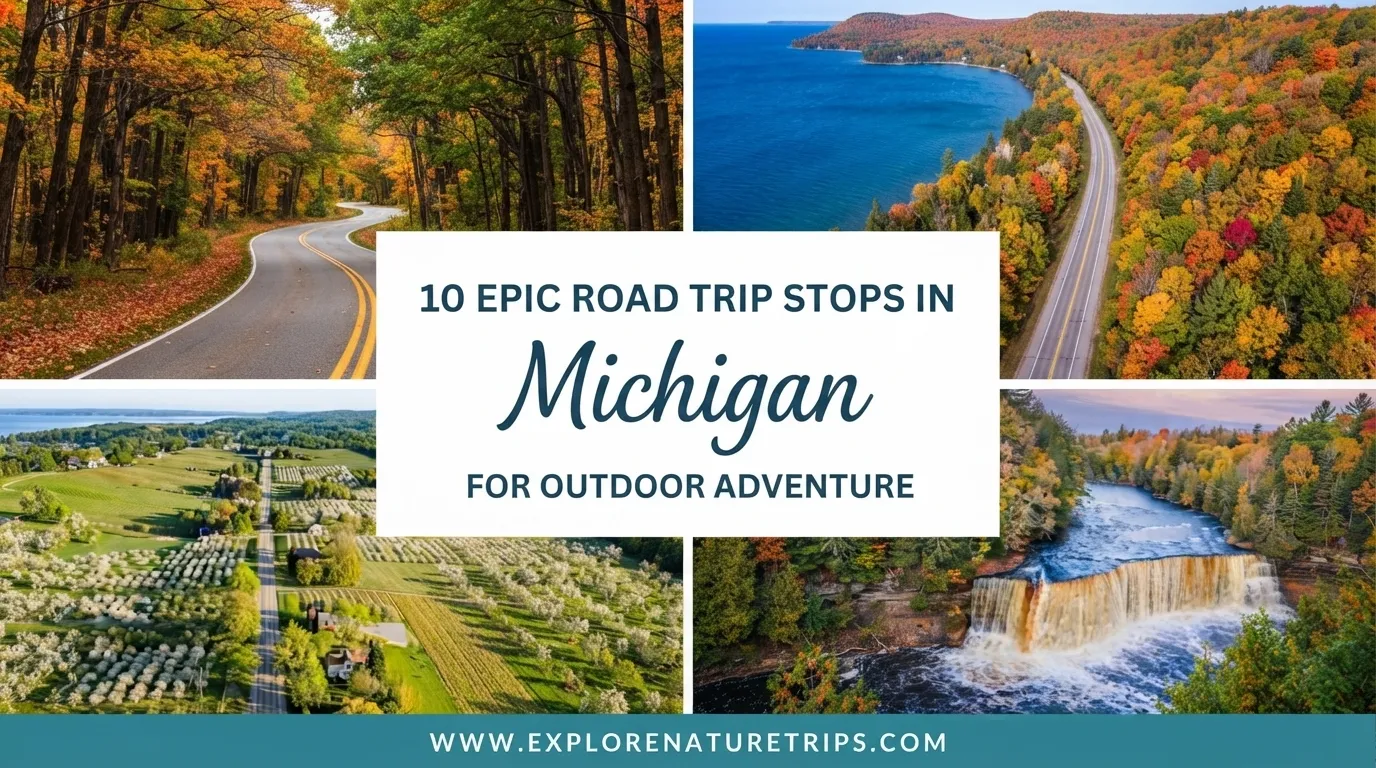
Planning a Michigan road trip can be surprisingly difficult because the state offers two peninsulas, huge freshwater shorelines, waterfalls, dunes, islands, forests, historic towns, and outdoor destinations spread across a large area.
A good trip is therefore less about trying to see everything and more about choosing a route that matches your available days, driving tolerance, and interests.
Across the routes and itineraries reviewed for this guide, the most useful choices range from a 120-mile Mackinac-area drive to a 550-mile Lake Superior journey. A longer family itinerary covers about 10 days, while several individual routes work well in 3–4 days.
The guide below brings those approaches together so you can quickly decide where to go, how long to stay, and which stops deserve priority.
How Many Days Do You Need for a Michigan Road Trip?
There is no single correct answer.
For a short getaway, 2–3 days is enough for a focused route such as Tunnel of Trees and Mackinac Island.
A 4-day trip works especially well for individual regional routes. This is the length used repeatedly in the sample itineraries for destinations such as the Lake Michigan coast, M-22, the Upper Peninsula, Keweenaw Peninsula, and Lake Huron.
For travelers wanting a broader experience, a 10-day itinerary can connect Detroit or Grand Rapids with the northern Lower Peninsula, Mackinac Island, the eastern Upper Peninsula, Munising, and Houghton.
A longer trip can also be expanded to roughly 2 weeks by continuing beyond Michigan toward Chicago.
1. Lake Michigan Lakeshore Road Trip
The Lake Michigan coast is one of the easiest choices for a first Michigan road trip.
The route described by BestRoadTrip covers approximately 300 miles and takes about 3–4 days. It runs from New Buffalo toward Mackinaw City, passing through places such as Saugatuck, Sleeping Bear Dunes, Traverse City, and Petoskey.
Suggested 4-Day Plan
Day 1: Holland and the Big Red Lighthouse
Day 2: Saugatuck and Ludington, including beaches and dune scenery
Day 3: Traverse City and the Old Mission Peninsula
Day 4: Sleeping Bear Dunes National Lakeshore
The best period suggested for this coastal trip is June through September, when beaches, lakeside communities, and outdoor activities are especially appealing.
Why Choose This Route?
- Easy route structure
- Lake views throughout the journey
- Beaches and dunes
- Wineries
- Small towns
- Lighthouses
- Sleeping Bear Dunes
- Good choice for first-time visitors
2. Lake Superior and Upper Peninsula Road Trip
If your priority is wilderness, the Upper Peninsula deserves more time.
BestRoadTrip describes the Michigan portion of the Lake Superior route as approximately 550 miles, requiring 5–7 days, with a moderate difficulty level.
Major stops include:
- Pictured Rocks National Lakeshore
- Tahquamenon Falls
- Whitefish Point
- Great Lakes Shipwreck Museum
- Porcupine Mountains
- Copper Harbor
Pictured Rocks is particularly striking, with approximately 40 miles of multicolored sandstone cliffs rising as high as 200 feet above Lake Superior.
Best Time
The broader Upper Peninsula routes are recommended from approximately May through October, while the most favorable summer and early-fall conditions vary by individual route.
For fall foliage, September and October can be particularly attractive, with Upper Peninsula colors reaching their peak around early October.
3. Tunnel of Trees and Mackinac Island
For a shorter trip, consider the 120-mile Tunnel of Trees and Mackinac Island route.
BestRoadTrip estimates approximately 2–3 days and rates it Easy.
The route uses M-119, commonly known as the Tunnel of Trees, before continuing toward Mackinaw City and Mackinac Island.
Mackinac Island Highlights
Mackinac Island is particularly different from a conventional driving destination because cars have been prohibited there since 1898.
Visitors instead experience the island by:
- Bicycle
- Horse-drawn carriage
- Walking
The Nature Seeker’s itinerary includes an 8-mile shoreline loop for cyclists, while BestRoadTrip highlights Fort Mackinac and the island’s Victorian character.
The island can therefore work extremely well as a 2–3 day escape without requiring a large driving itinerary.
4. Upper Peninsula Waterfall Road Trip
Michigan’s Upper Peninsula is particularly attractive if waterfalls are your priority.
The featured waterfall circuit covers approximately 250 miles and takes about 3–4 days.
Important waterfall stops include:
- Bond Falls
- Agate Falls
- Hungarian Falls
- Canyon Falls
- Tahquamenon Falls
The Upper Peninsula contains 300+ waterfalls, according to the route guide, making it possible to build an entire trip around waterfalls and forest scenery.
A Simple 4-Day Structure
Day 1: Marquette and nearby waterfalls
Day 2: Munising and Pictured Rocks
Day 3: Tahquamenon Falls
Day 4: Porcupine Mountains and Copper Harbor
This approach is best suited to travelers who prefer hiking, waterfalls, forests, and remote scenery over city attractions.
5. M-22 Scenic Road Trip
M-22 is another strong option for travelers who want a combination of coastal scenery, fall colors, small towns, and wine country.
The Nature Seeker recommends approximately September through October for fall colors, while summer is better suited to beach-focused travel.
Suggested 4-Day Itinerary
| Day | Main Stop |
|---|---|
| 1 | Traverse City → Suttons Bay |
| 2 | Wineries → Leland/Fishtown |
| 3 | Sleeping Bear Dunes → Glen Arbor |
| 4 | Scenic M-22 drive → Traverse City |
This route is particularly useful if you want outdoor scenery without committing to the longer Upper Peninsula drives.
6. Keweenaw Peninsula Adventure
The Keweenaw Peninsula offers a more remote experience in Michigan’s Upper Peninsula.
The Nature Seeker suggests a 4-day structure:
- Day 1: Houghton and the A.E. Seaman Mineral Museum
- Day 2: Copper Harbor and Estivant Pines
- Day 3: Fort Wilkins Historic Park
- Day 4: Eagle Harbor and waterfalls
The recommended period is June through October.
The area is especially appealing for travelers looking for:
- Hiking
- Kayaking
- Biking
- Waterfalls
- Beaches
- Mining history
- Dark skies
- Less-developed scenery
Madeline Marquardt’s guide adds a strong first-hand outdoor perspective, describing multiple visits to the Keweenaw across winter and summer, including a return trip in 2025.
7. Lake Huron Lighthouse and Shipwreck Route
Michigan’s Lake Huron shoreline provides a different type of road trip.
Instead of focusing mainly on beaches and dunes, this route emphasizes lighthouses and maritime history.
The Nature Seeker’s 4-day plan starts in Port Huron and finishes in Mackinaw City.
Route Structure
Day 1: Port Huron and Fort Gratiot Lighthouse
Day 2: Tawas Point and Sturgeon Point
Day 3: Presque Isle lighthouses and Alpena
Day 4: Mackinaw City and Old Mackinac Point Lighthouse
The recommended travel period is May through October.
8. The Thumb Scenic Road Trip
The Thumb is a useful choice if you want a quieter Michigan road trip away from some of the better-known tourist corridors.
The Nature Seeker recommends June through September.
Suggested 4-Day Route
| Day | Plan |
|---|---|
| 1 | Bay City → Caseville |
| 2 | Port Austin → Turnip Rock |
| 3 | Port Huron → lighthouse sightseeing |
| 4 | Return through inland farm country |
The route combines lakefront communities, farmland, and unusual geological scenery.
For travelers who have already visited Sleeping Bear Dunes or Mackinac Island, this can provide a more relaxed alternative.
9. West Michigan Wine and Lakeshore Route
West Michigan combines lakeside scenery with wineries, farm-to-table dining, and smaller communities.
The recommended period is late summer to early fall.
Suggested 4-Day Plan
Day 1: New Buffalo and tasting rooms
Day 2: St. Joseph and Benton Harbor
Day 3: Fennville and Holland wineries
Day 4: Lakeside inn or farm retreat
This is a particularly good route for travelers who want less hiking and more food, wine, small-town atmosphere, and lakeside relaxation.
10. Pictured Rocks to Mackinac Scenic Loop
This route combines several of the Upper Peninsula’s most recognizable attractions.
A 4-day sample itinerary looks like this:
- Day 1: Pictured Rocks by boat or kayak
- Day 2: Seney Wildlife Refuge → St. Ignace
- Day 3: Mackinac Bridge → Mackinaw City
- Day 4: Mackinac Island or Lake Huron beaches
The Nature Seeker recommends approximately June through October for this route.
It is a strong option if you want to combine Pictured Rocks + wildlife + Mackinac-area attractions without building a much longer itinerary.
Michigan Road Trip Seasons at a Glance
| Season | What to Expect | Best Use |
|---|---|---|
| May–June | Wildflowers, beginning of tourist season | Upper Peninsula exploration |
| July–August | Warm water, peak summer conditions | Beaches and classic road trips |
| September–October | Fall colors, fewer crowds | Scenic drives |
| November–April | Snow and closures | Winter-focused travel |
BestRoadTrip identifies July and August as peak season, while September and October offer spectacular fall foliage and generally fewer crowds.
The Nature Seeker’s individual routes also show how much timing matters: the Lake Michigan coast is strongest from June–September, M-22 is particularly attractive in September–October, and the Keweenaw route works well from June–October.
A 10-Day Michigan Road Trip Itinerary
If you have more time, the Family Voyage provides a useful framework for connecting several regions instead of concentrating on one route.
| Days | Area |
|---|---|
| Day 1 | Detroit or Grand Rapids |
| Days 2–3 | Northern Lower Peninsula |
| Day 4 | Mackinac Island |
| Day 5 | Eastern Upper Peninsula |
| Days 6–8 | Munising |
| Days 9–10 | Houghton |
The itinerary can also be extended to 2 weeks by continuing south to Chicago.
Why This Longer Route Works
It gives you time for:
- City attractions
- Northern Michigan
- Mackinac Island
- Waterfalls
- Pictured Rocks
- Lake Superior scenery
- Upper Peninsula exploration
The tradeoff is more driving and more accommodation planning.
The Family Voyage notes that its accommodations were booked 8 months ahead, yet some options were already limited. For a summer trip, early planning can therefore make a significant difference.
Michigan Road Trip Costs to Know
A road trip budget should include more than fuel and hotels.
The Family Voyage reports $11 per car for State Park admission and describes choosing the $39 non-resident annual pass for greater flexibility.
BestRoadTrip lists the Sleeping Bear Dunes National Lakeshore pass at $25 per vehicle and the Mackinac Bridge toll at $4.
| Expense | Amount Mentioned |
|---|---|
| State Park admission | $11/car |
| Michigan non-resident annual pass | $39 |
| Sleeping Bear Dunes pass | $25/vehicle |
| Mackinac Bridge toll | $4 |
These are planning figures from the reviewed guides, so travelers should verify current fees before departure.
Practical Michigan Driving Tips
Download Maps Before Entering the Upper Peninsula
Cell service can become unreliable in parts of the Upper Peninsula. Both the route-planning and family-itinerary sources recommend preparing for areas without dependable connectivity.
Download your maps while you still have Wi-Fi.
Do Not Ignore Fuel Stops
Gas stations are less frequent in remote Upper Peninsula areas. BestRoadTrip specifically advises drivers not to pass a station when the tank is below half full.
Understand Michigan Left Turns
Michigan’s unusual “Michigan left” system can surprise visitors. Instead of making a conventional direct left at certain intersections, drivers may need to continue forward and use a designated turnaround.
Allow More Time Than the Map Suggests
A scenic road trip is not the same as a highway transfer.
You will likely stop for:
- Viewpoints
- Photos
- Short hikes
- Beaches
- Food
- Lighthouses
- Waterfalls
- Small towns
Building some flexibility into your schedule will make the trip much more enjoyable.
What to Pack for a Michigan Road Trip
The Family Voyage recommends a practical mix of road-trip and outdoor equipment, including a cooler, ice packs, water, snacks, summer clothing, jeans, hiking pants, long sleeves, fleece or a sweatshirt, water-friendly shoes, bug repellent, and a paper map.
For an Upper Peninsula trip, also consider:
- Offline maps
- Portable phone charger
- Comfortable hiking shoes
- Reusable water bottle
- Rain layer
- Small first-aid kit
- Extra snacks
- Camera
- Physical backup map
The goal is simple: be prepared for stretches where stores, restaurants, and phone service are not immediately available.
Best Michigan Road Trip by Travel Style
| If You Want… | Choose… |
|---|---|
| First Michigan trip | Lake Michigan Lakeshore |
| Waterfalls | UP Waterfall Circuit |
| Long wilderness trip | Lake Superior Route |
| Short getaway | Tunnel of Trees + Mackinac Island |
| Fall colors | M-22 |
| Remote scenery | Keweenaw Peninsula |
| Lighthouses | Lake Huron route |
| Quiet coastal drive | Thumb |
| Food and wineries | West Michigan |
| Big multi-region vacation | 10-day itinerary |
Best Weekend Michigan Road Trips
You do not need a full week to enjoy Michigan.
Northern Michigan Weekend
Combine Mackinac Island + Mackinaw City.
Upper Peninsula Weekend
Combine Pictured Rocks + Tahquamenon Falls.
Lake Michigan Weekend
Combine Sleeping Bear Dunes + Traverse City.
These combinations come directly from the shorter-trip recommendations in The Nature Seeker’s guide.
Michigan Road Trip Planning Mistakes to Avoid
Trying to Cover the Entire State
Michigan is large enough that rushing between distant attractions can turn a vacation into a driving marathon.
Pick a region first.
Booking Too Late
Summer accommodation can become limited well before the trip. One family itinerary reports booking 8 months in advance and still finding some choices restricted.
Depending Completely on Cell Service
Remote Upper Peninsula sections can have weak or nonexistent service.
Download your maps before leaving major towns.
Packing Only for Warm Weather
Even summer outdoor trips benefit from layers. A sweatshirt, fleece, or long sleeve can be useful when conditions change.
Filling Every Hour
Leave room for unexpected viewpoints, beaches, waterfalls, and small-town stops.
A road trip should have enough structure to keep you moving but enough flexibility to let you stop.
Frequently Asked Questions
What is the best length for a Michigan road trip?
A 4-day trip works well for one regional route, while 10 days provides enough time to connect major areas of both peninsulas.
How many miles is a Michigan road trip?
It depends on the route. Examples include 120 miles for Tunnel of Trees and Mackinac Island, 250 miles for the UP Waterfall Circuit, 300 miles for the Lake Michigan Lakeshore route, and 550 miles for the Michigan portion of the Lake Superior route.
What is the best month for a Michigan road trip?
July and August are strong choices for warm-weather travel. September and October are especially attractive for fall colors and fewer crowds.
Is Mackinac Island part of a road trip?
Yes, although you leave your car behind. Cars have been prohibited on Mackinac Island since 1898, so visitors typically explore by bicycle, carriage, or on foot.
Is the Upper Peninsula worth adding?
Yes, especially if you enjoy waterfalls, forests, Lake Superior scenery, hiking, and quieter roads. The Upper Peninsula contains 300+ waterfalls and several major natural attractions.
How much should I plan for Michigan State Park fees?
The Family Voyage reports $11 per car for State Park admission and a $39 non-resident annual pass. Check current fees before traveling because charges can change.
Can I do Michigan in 10 days?
Yes. A published family itinerary uses 10 days to connect Detroit or Grand Rapids, northern Michigan, Mackinac Island, the eastern Upper Peninsula, Munising, and Houghton.
Should I download offline maps?
Yes. Both major itinerary guidance and route-planning advice highlight unreliable cell service in parts of the Upper Peninsula.
Final Planning Recommendation
The best Michigan road trip depends on how much time you have.
For 2–3 days, choose Tunnel of Trees and Mackinac Island.
For 4 days, choose one focused region such as the Lake Michigan coast, M-22, Keweenaw Peninsula, or Upper Peninsula waterfalls.
For 5–7 days, the Lake Superior route gives you substantially more wilderness and major Upper Peninsula attractions.
For 10 days, combine the Lower Peninsula, Mackinac Island, and several Upper Peninsula destinations.
Most importantly, do not measure the success of your trip by how many places you check off. Michigan’s strongest experiences come from giving yourself enough time to stop at the lake, waterfall, lighthouse, trail, or small town that catches your attention along the way.

Hi, I’m Marcus! I love exploring the outdoors and discovering incredible places. Through ExploreNatureTrips blog, I share my travel experiences, useful tips, and recommendations for the best sights, trails, and destinations to visit.