New Mexico Road Trip Ideas: 11 Scenic Routes & Tips

New Mexico is an excellent destination for travelers who enjoy dramatic desert landscapes, historic towns, mountain roads, ancient settlements, unusual rock formations, and relaxing hot springs. Often called the Land of Enchantment, the state offers a variety of experiences, from exploring white gypsum dunes to discovering traditional adobe architecture and hiking through forested mountains.
The best New Mexico road trip depends on how much time you have, which attractions interest you, and how far you want to drive each day. A short getaway can combine historic towns and scenic viewpoints, while a longer journey can connect national parks, archaeological sites, remote wilderness areas, and mountain communities.
This guide brings together 11 road trip ideas, practical route information, suggested trip durations, seasonal considerations, and important planning tips to help you organize a memorable journey.
11 Best New Mexico Road Trip Ideas
New Mexico’s attractions are spread across a large area, so selecting a route before departure can help you avoid unnecessary driving. The following options cover different interests, including outdoor adventures, cultural experiences, food stops, family activities, and scenic mountain drives.



Santa Fe to Taos via the High Road
Recommended duration: 3–4 days
The High Road to Taos is a rewarding choice for travelers who enjoy historic villages, mountain scenery, traditional architecture, and art. Instead of taking the most direct route between Santa Fe and Taos, this drive passes through smaller communities where visitors can experience northern New Mexico’s distinctive cultural character.
Suggested route: Santa Fe → Chimayo → Truchas → Las Trampas → Taos.
Highlights include:
- Explore Santa Fe’s historic streets, galleries, and adobe buildings.
- Stop in Chimayo to discover its religious and cultural heritage.
- Enjoy mountain scenery around Truchas and Las Trampas.
- Visit Taos Pueblo to learn about its longstanding Indigenous community.
- See the Rio Grande Gorge Bridge and surrounding landscape.
- Return toward Santa Fe using the lower Rio Grande route if it fits your plans.
Best time to visit: Spring and autumn are attractive seasons for comfortable sightseeing, while April through October offers a broad window for planning this journey.
Allow time for village stops, photographs, meals, and short walks. The appeal of this route lies in exploring the places between the main destinations rather than simply reaching Taos as quickly as possible.
Enchanted Circle Scenic Byway
Recommended duration: 3 days
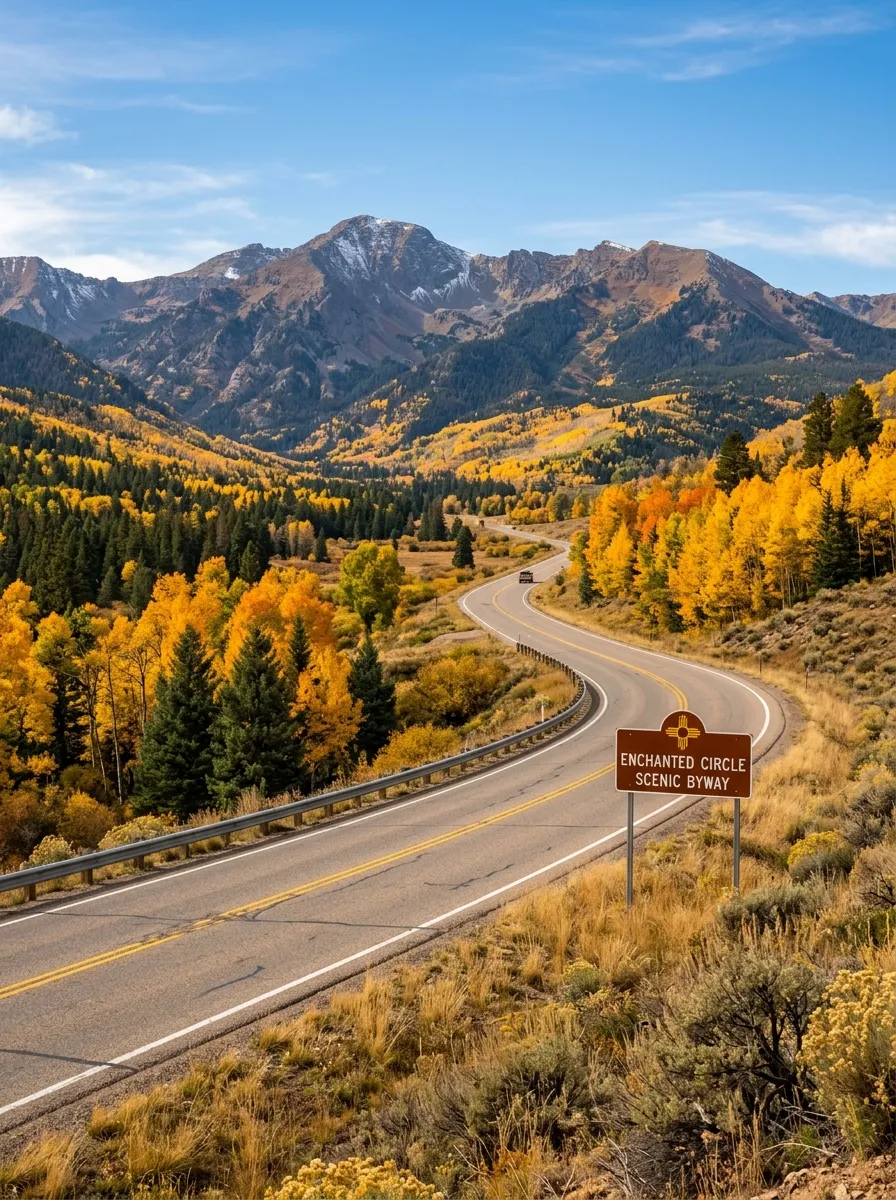
The Enchanted Circle is a mountain-oriented road trip featuring alpine scenery, forested slopes, small communities, and outdoor recreation. It is a good option for visitors who want to experience a different side of New Mexico beyond its desert landscapes.
Suggested route: Taos → Red River → Eagle Nest → Angel Fire → Taos.
| Stop | What to experience |
|---|---|
| Taos | Art, history, local food, and cultural attractions |
| Red River | Mountain scenery, hiking, and seasonal recreation |
| Eagle Nest Lake | Lakeside views and outdoor activities |
| Angel Fire | Mountain landscapes and recreational opportunities |
| Sangre de Cristo Mountains | Scenic viewpoints and photography |
Best time to visit: Late spring through early autumn is suitable for many outdoor activities. Winter can also appeal to visitors interested in skiing, provided road and weather conditions are appropriate.
A three-day itinerary gives you time to explore the communities along the loop instead of rushing between viewpoints. Check mountain weather before departure, particularly during winter.
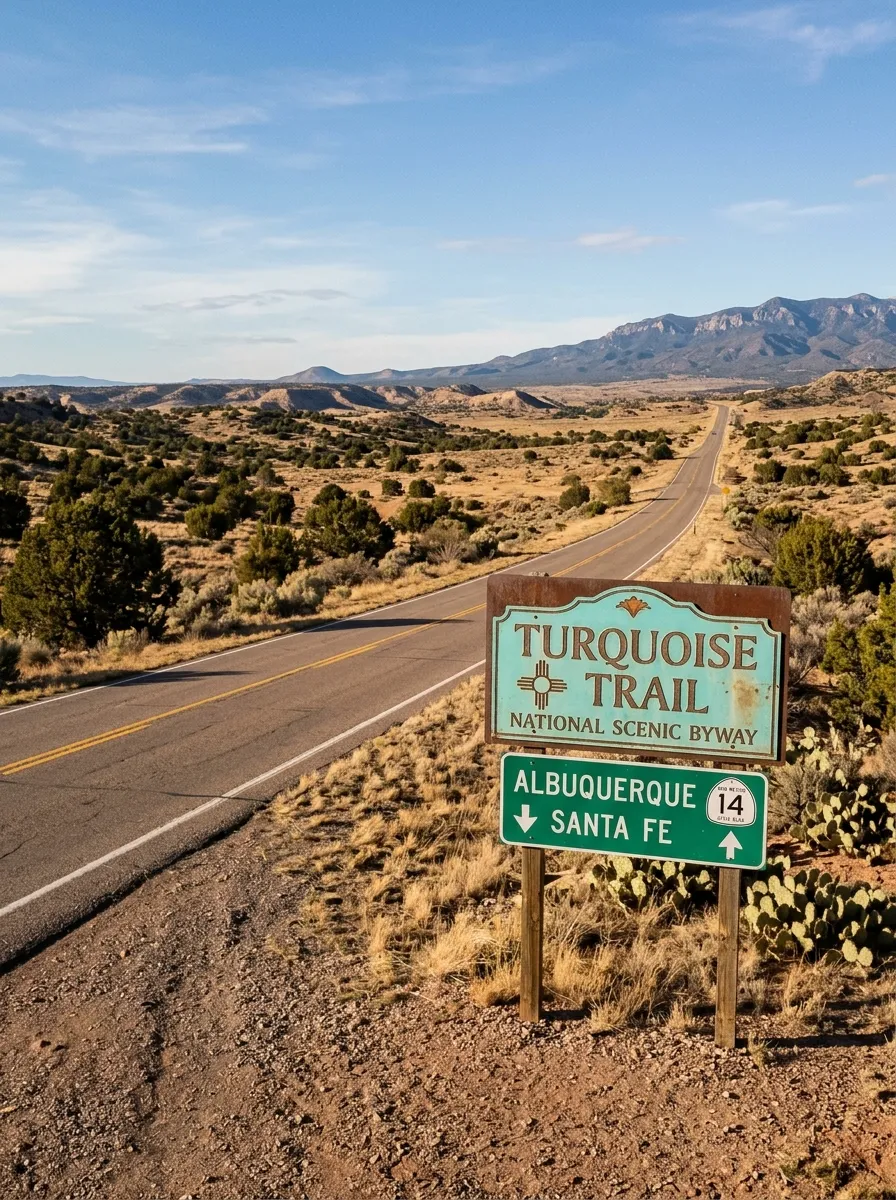
Turquoise Trail: Albuquerque to Santa Fe
Recommended duration: 1–3 days
The Turquoise Trail National Scenic Byway offers an alternative to the main highway between Albuquerque and Santa Fe. It combines high-desert landscapes, historic mining settlements, art galleries, and opportunities to explore small communities.
Suggested route: Albuquerque → Madrid → Cerrillos → Santa Fe.
Things to do:
- Explore Albuquerque’s historic Old Town.
- Enjoy scenic views around the Sandia Mountains.
- Browse galleries and local shops in Madrid.
- Discover the mining history associated with Cerrillos.
- Finish in Santa Fe with its museums, restaurants, and historic architecture.
Madrid is especially appealing to travelers interested in art, jewelry, handmade objects, and unusual local shops. The route also works well for photography because the landscape changes between open desert areas and elevated viewpoints.
Best time to visit: Spring and autumn generally offer comfortable conditions for exploring outdoors, although the route can be considered throughout the year.
For a quick getaway, this drive can be incorporated into a single day. Travelers who prefer leisurely sightseeing can spread it over a longer visit.
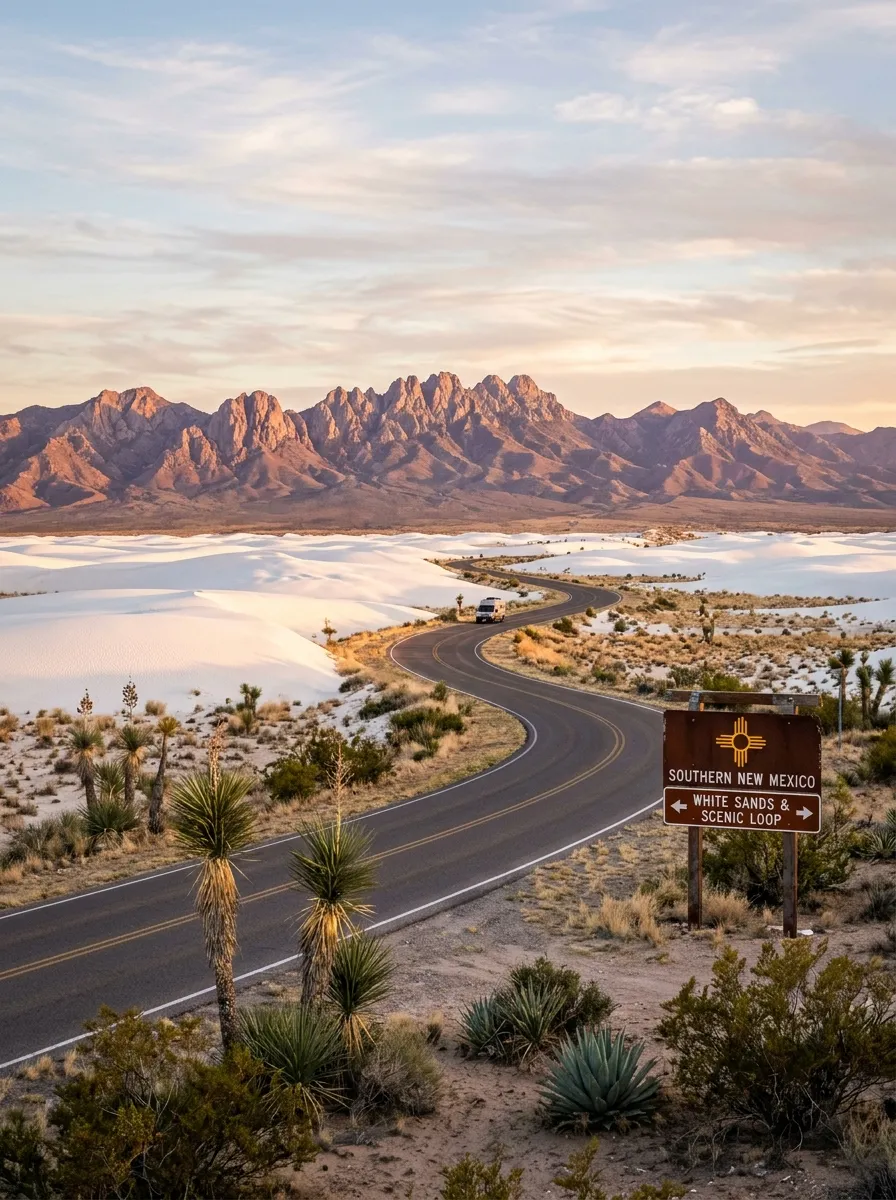
White Sands and Southern New Mexico Loop
Recommended duration: 4 days
Southern New Mexico combines bright white dunes, desert mountain scenery, historic communities, and opportunities to explore space-related attractions. This loop is a strong choice for photographers, families, and travelers interested in unusual natural landscapes.
Suggested route: Las Cruces → Mesilla → White Sands National Park → Alamogordo → Truth or Consequences.
Main attractions:
- Las Cruces: Use the city as a base for exploring southern New Mexico.
- Old Mesilla: Walk through the historic district and browse local businesses.
- White Sands National Park: Explore the gypsum dunes, photograph the landscape, and enjoy dune sledding where permitted.
- Alamogordo: Visit the New Mexico Museum of Space History.
- Truth or Consequences: Relax at a hot-spring facility after several days of sightseeing.
White Sands is particularly memorable because its gypsum dunes create a bright landscape that contrasts with the surrounding desert. Bring sun protection and sufficient drinking water, and plan outdoor activities around temperatures and park conditions.
Best time to visit: October through April can offer more comfortable daytime conditions than the hottest summer months.
Reserve enough time for the dunes rather than treating the park as a brief roadside stop. Sunsets and changing light can make the landscape especially appealing.
Historic Route 66 Across New Mexico
Recommended duration: 3–4 days
A Route 66 road trip is ideal for travelers who enjoy classic American roadside culture, vintage signs, historic motels, diners, and small-town stops. The New Mexico section provides opportunities to explore communities that developed around this famous highway.
Suggested route: Tucumcari → Santa Rosa → Albuquerque → Gallup.
Highlights include:
- Photograph vintage neon signs and historic roadside buildings in Tucumcari.
- Visit the Santa Rosa Blue Hole if conditions and access permit.
- Explore Albuquerque’s Old Town and local food scene.
- Discover roadside attractions and historic architecture in Gallup.
- Look for regional crafts and cultural experiences along the way.
This journey is more about the experience of traveling than about reaching one particular attraction. Take time to explore local businesses and historic districts instead of driving the entire route without stopping.
Best time to visit: Spring and autumn are useful seasons to consider when planning a multi-day drive.
A flexible itinerary works best because the most interesting discoveries may be small museums, local restaurants, or historic buildings that you encounter along the way.
Carlsbad Caverns and Guadalupe Mountains
Recommended duration: 3–4 days
This road trip focuses on geology, underground landscapes, desert hiking, and mountain scenery. It is particularly suitable for travelers who want to combine an underground cave experience with outdoor exploration.
Suggested route: Carlsbad → Carlsbad Caverns National Park → Guadalupe Mountains area → Carlsbad.
What to experience:
- Explore the remarkable underground formations at Carlsbad Caverns National Park.
- Learn about the geological processes that created the caves.
- Discover nearby desert landscapes and mountain views.
- Consider hiking in the Guadalupe Mountains area if conditions and your fitness level permit.
- Allow time for wildlife observation and nighttime sky viewing where conditions are suitable.
The region’s contrast between underground chambers, dry desert terrain, and rugged mountains makes it different from the northern mountain routes.
Best time to visit: October through April is a useful period to consider for outdoor activities, although cave access and individual attractions may have their own schedules.
Check the official reservation requirements and current access information before leaving. Cave entry, guided activities, and hiking plans may need separate preparation.
Albuquerque to Chaco Canyon
Recommended duration: 3–4 days
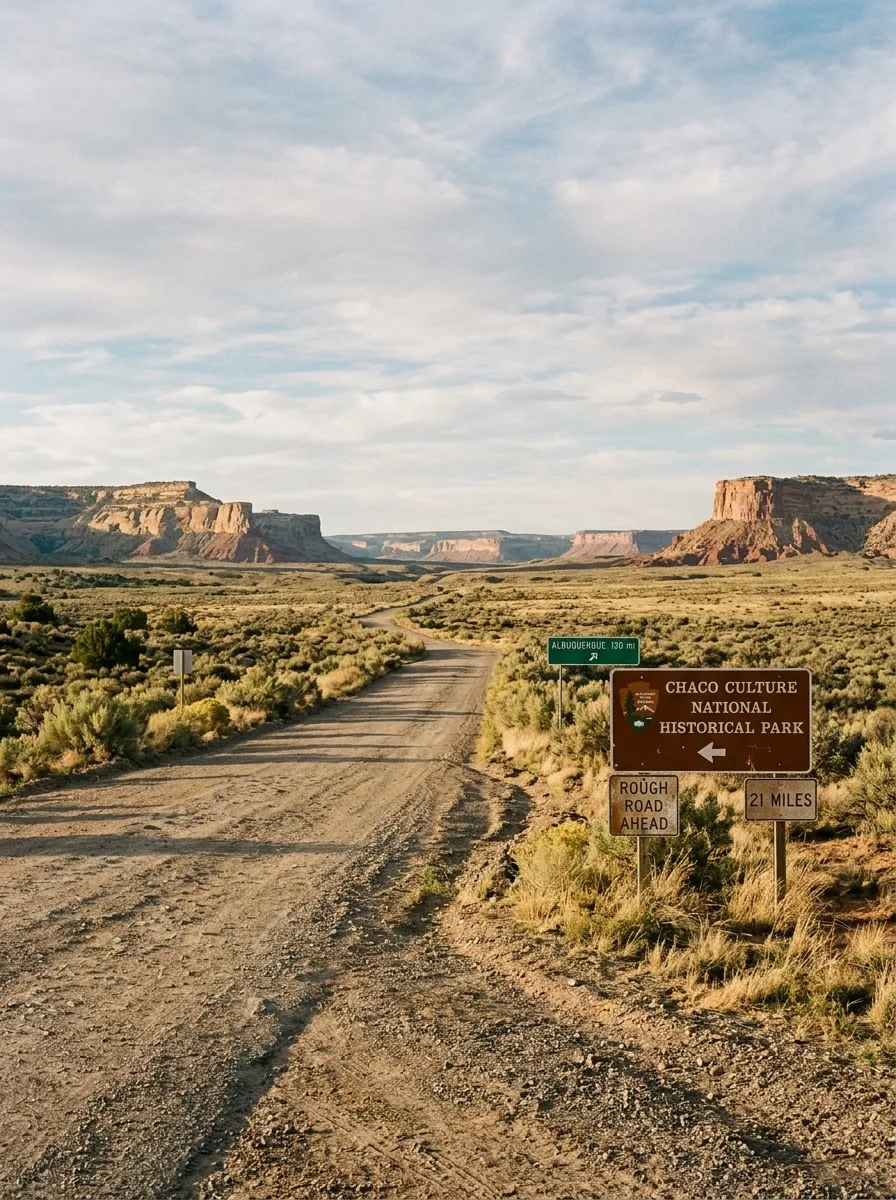
Travelers interested in archaeology and ancient settlements can plan a journey from Albuquerque toward Chaco Culture National Historical Park. The park preserves important remains associated with ancestral Puebloan communities.
Suggested route: Albuquerque → Petroglyph National Monument → Chaco Culture National Historical Park.
Main experiences:
- Explore petroglyphs and cultural landscapes near Albuquerque.
- Discover the monumental archaeological structures at Chaco Canyon.
- Learn about ancestral Puebloan architecture and settlement patterns.
- Enjoy the remote desert environment and opportunities for stargazing.
- Spend time understanding the historical significance of the site rather than rushing through it.
Chaco Canyon requires more preparation than many accessible roadside attractions. The final approach can involve rough, unpaved roads, and conditions may change with weather.
Best time to visit: April through early June and September through October are useful seasonal windows to consider.
Before departure, check current road conditions, park guidance, and accommodation or camping availability. Do not assume that a standard passenger vehicle will be suitable for every approach under every condition.
Gila Cliff Dwellings and Silver City
Recommended duration: 3–4 days
This southwestern New Mexico trip combines archaeological history, forest scenery, hiking, and small-town exploration. Silver City provides a convenient starting point for discovering the surrounding region.
Suggested route: Silver City → Gila National Forest → Gila Cliff Dwellings → Silver City.
Things to do:
- Explore Silver City’s historic streets, shops, and art galleries.
- Visit Gila Cliff Dwellings National Monument.
- Learn about the people who constructed and occupied the cliff dwellings.
- Explore appropriate hiking routes in Gila National Forest.
- Consider a visit to City of Rocks State Park if it fits your schedule.
This route works well for travelers who prefer quieter destinations and outdoor activities rather than large urban attractions. Allow additional time for mountain roads and the distances between individual sites.
Best time to visit: March through June and September through November are useful periods to consider.
Check trail conditions, weather forecasts, and current access rules before beginning a hike.
Northern Pueblos and Georgia O’Keeffe Country
Recommended duration: 3–4 days
Northern New Mexico offers a combination of artistic landscapes, historic settlements, cultural heritage, and scenic mountain roads. This route is especially appealing to travelers who enjoy photography, architecture, museums, and short hikes.
Suggested route: Santa Fe → Española → Abiquiú → Ghost Ranch → Chama.
Highlights include:
- Explore Santa Fe’s galleries and cultural institutions.
- Discover the communities around Española.
- Visit the landscapes associated with Georgia O’Keeffe.
- Explore the dramatic rock formations around Ghost Ranch and Abiquiú.
- Visit northern communities and scenic viewpoints along the way.
The region’s distinctive colors, rock formations, and changing light make it attractive to photographers. However, visitors should distinguish between publicly accessible viewpoints and privately managed properties.
Best time to visit: Spring and autumn are suitable periods for comfortable sightseeing and outdoor exploration.
If you plan to visit a museum, historic property, or guided attraction, check opening hours and booking requirements in advance.
Very Large Array and Space History Tour
Recommended duration: 3–4 days
For travelers interested in science and astronomy, New Mexico offers an opportunity to explore radio astronomy, space-history exhibits, and landscapes suited to nighttime observation.
Suggested route: Socorro → Very Large Array → Bosque del Apache → Truth or Consequences → Alamogordo.
What to include:
- Visit the Very Large Array to learn about radio astronomy.
- Explore the surrounding high-desert landscape.
- Stop at Bosque del Apache for wildlife observation.
- Visit space-history attractions around Alamogordo.
- Consider an evening dedicated to stargazing if the weather cooperates.
The Very Large Array is a particularly distinctive destination because its large radio telescopes are spread across an open landscape. Wildlife observation at Bosque del Apache provides a contrasting experience, making this a varied itinerary.
Best time to visit: The route can be planned year-round, although autumn and winter may provide appealing opportunities for clear nighttime skies.
Check observatory access, visitor hours, wildlife conditions, and the forecast before setting out.
New Mexico Volcanoes and Natural Wonders
Recommended duration: 5–7 days or longer
Travelers who want a more ambitious adventure can build an extended route around volcanic formations, unusual rock landscapes, dunes, caves, and mountain viewpoints. A complete statewide loop can involve substantial driving, so dividing it into smaller sections is often more practical.
One possible extended route includes Albuquerque, Grants, Quemado, Shiprock, Carrizozo, Las Cruces, White Sands, Carlsbad Caverns, and northern New Mexico attractions.
Natural landmarks worth considering:
- Capulin Volcano National Monument
- El Malpais National Monument
- Valley of Fires Recreation Area
- Bisti/De-Na-Zin Wilderness
- White Sands National Park
- Carlsbad Caverns National Park
- Valles Caldera National Preserve
- Rio Grande Gorge Bridge
- Sandia Crest
The attraction of this itinerary is its variety. Volcanic terrain, white dunes, underground formations, and mountain scenery create a broad introduction to the state’s natural diversity.
However, an extended route can cover well over 1,000 miles depending on the stops selected. Rather than treating every destination as a quick visit, choose a manageable group of attractions and leave room for hiking, meals, and rest.
Best time to visit: Spring and autumn are useful starting points for planning many outdoor activities, but conditions vary significantly by elevation and location.
For remote areas, research road access, fuel availability, mobile coverage, and the equipment required for your planned activities.
Best New Mexico Road Trips by Distance and Driving Time
The following table compares example routes by their stated distance and driving time. These figures describe driving rather than the complete time needed for sightseeing.
| Road trip | Distance | Driving time | Suggested use |
|---|---|---|---|
| Santa Rosa to Santa Fe | 185 miles | 4 hours | Short getaway |
| Albuquerque weekend loop | 370 miles | 6.5 hours | Three-day trip |
| Pie shop route | 247 miles | 4.5 hours | Food-focused trip |
| Spring scenery route | 164 miles | 4 hours | Waterfalls and hiking |
| Summer state park loop | 854 miles | 15 hours | Extended outdoor adventure |
| Fall mountain route | 353 miles | 8 hours listed | Autumn scenery |
| Winter lights route | 190 miles | 4 hours | Seasonal attractions |
| Family-friendly route | 415 miles | 7 hours | Family activities |
| Natural wonders loop | 1,429 miles | 26 hours | Extended exploration |
| Small-town route | 349 miles | 7 hours | Historic communities |
Planning note: These route figures are estimates, not guaranteed travel times. Different starting points, detours, construction, traffic, weather, and stops can change the totals. One route’s descriptive text also gives a shorter driving estimate than its listed route details, so confirm your selected itinerary before departure.
How Many Days Do You Need for a New Mexico Road Trip?
The ideal duration depends on how many regions you want to explore. New Mexico’s attractions are widely distributed, and a schedule that looks manageable on a map may involve long stretches of driving.
| Available time | Suggested plan | Best for |
|---|---|---|
| 1 day | Turquoise Trail or a short Santa Fe-area drive | Scenic stops and historic towns |
| 2–3 days | Enchanted Circle or a weekend loop | Mountain scenery and relaxed exploration |
| 4 days | White Sands, the High Road, or a southern route | Several major attractions |
| 5–7 days | Combine selected northern or southern destinations | A more varied road trip |
| 2 weeks | Explore several regions at a comfortable pace | Parks, cultural sites, and longer drives |
| 3 weeks or more | Add remote destinations and extra nights | A deeper statewide exploration |
These are suggested planning ranges rather than fixed requirements. For example, a four-day itinerary can work well for a focused regional trip, while combining southern caves, northern mountain towns, and remote wilderness areas may require considerably more time.
Best Time to Take a New Mexico Road Trip
New Mexico has desert areas, high-elevation mountains, forests, and exposed plateaus. Consequently, the best travel season depends on the specific route and activities you choose.
Spring: March to May
Spring is worth considering for desert exploration, historic towns, and many hiking itineraries. Temperatures can vary considerably between lower elevations and mountain areas.
Consider:
- Southern New Mexico and White Sands.
- Historic communities around Santa Fe.
- Scenic routes through the Jemez Mountains.
- Archaeological sites when access and weather permit.
Check forecasts before hiking, as wind, cold nights, and changing trail conditions can affect outdoor plans.
Summer: June to August
Summer offers opportunities to explore mountain scenery and higher-elevation destinations, but desert temperatures can become intense.
Consider:
- Mountain drives around Taos and Red River.
- Early-morning hikes.
- Lakes and outdoor recreation areas.
- Scenic drives with regular breaks.
Plan demanding outdoor activities early in the day, carry enough water, and never rely on an unverified water source.
Autumn: September to November
Autumn is an appealing time for many scenic drives because changing foliage can enhance mountain landscapes. It can also be a useful season for combining cultural sightseeing with outdoor activities.
Consider:
- The High Road to Taos.
- The Enchanted Circle.
- Historic communities and galleries.
- Desert parks and archaeological destinations.
Temperatures can drop quickly at higher elevations, so bring layers even when daytime conditions are comfortable.
Winter: December to February
Winter can be rewarding for visitors interested in skiing, seasonal decorations, and quieter sightseeing. However, mountain roads can experience snow, ice, and temporary closures.
Consider:
- Taos and other mountain communities.
- Santa Fe’s historic district and cultural attractions.
- Seasonal events and holiday lights.
- Southern destinations when road and weather conditions are suitable.
Check road advisories and attraction schedules before traveling. Do not assume that every scenic byway or hiking route will remain accessible throughout winter.
Important New Mexico Attractions to Add to Your Itinerary
If you prefer choosing destinations individually rather than following a fixed route, the following attractions provide a useful starting point.
| Attraction | Main appeal | Suggested planning focus |
|---|---|---|
| White Sands National Park | Gypsum dunes and photography | Sun protection, water, and park access |
| Carlsbad Caverns National Park | Underground cave formations | Reservations and entry requirements |
| Bandelier National Monument | Archaeology and cliff dwellings | Trails, ladders, and access conditions |
| Chaco Culture National Historical Park | Ancestral Puebloan history | Road conditions and remote-area preparation |
| Taos Pueblo | Cultural heritage and historic architecture | Current visitor access and local rules |
| Gila Cliff Dwellings National Monument | Historic dwellings and forest scenery | Driving time and trail conditions |
| Valles Caldera National Preserve | Volcanic landscape and wildlife | Seasonal access and recreation rules |
| Bisti/De-Na-Zin Wilderness | Hoodoos and unusual rock formations | Navigation, water, and remote-area safety |
| Very Large Array | Radio astronomy | Visitor hours and access information |
| Rio Grande Gorge Bridge | Dramatic canyon views | Safe viewpoints and weather |
Before visiting culturally significant places, follow local guidance about photography, restricted areas, and appropriate visitor behavior.
Practical Tips for Planning Your Road Trip
A successful trip requires more than selecting attractive destinations. The following steps help you organize the route, manage driving time, and prepare for changing conditions.
1. Plan by region instead of crossing the state repeatedly
Group nearby attractions together. For example, combine Santa Fe, the Turquoise Trail, and Taos in a northern itinerary, or focus on Las Cruces, White Sands, and Alamogordo for a southern journey.
This reduces backtracking and gives you more time to enjoy each destination.
2. Add sightseeing time to every driving estimate
A route that requires 4 hours of driving does not necessarily fit into a four-hour day. Viewpoints, meals, trail walks, fuel stops, and unexpected delays all take additional time.
For a relaxed itinerary, avoid scheduling too many major attractions on the same day.
3. Check road conditions before entering remote areas
Some destinations involve rough or unpaved access roads. Check current conditions, vehicle requirements, weather warnings, and official visitor guidance before leaving paved highways.
Carry an offline map because mobile coverage may be limited in remote areas.
4. Prepare for desert weather
Desert conditions can involve intense sunshine, dry air, wind, and significant temperature changes.
Pack:
- Drinking water and extra supplies for remote drives.
- Sunscreen, sunglasses, and a hat.
- Comfortable walking shoes.
- Lightweight clothing and warmer layers.
- Snacks and a first-aid kit.
- A phone charger and a backup navigation option.
Adjust your water and equipment needs to the activity, forecast, and distance from services.
5. Book major attractions in advance
Some caves, museums, guided experiences, and special accommodation options may require advance reservations. Check official booking information before finalizing your schedule.
This is particularly important if your trip depends on a specific tour or limited visitor-access window.
6. Respect cultural and archaeological sites
Historic pueblos, ancient dwellings, and archaeological areas are meaningful cultural places, not simply photo opportunities.
Follow posted rules, stay on permitted trails, avoid touching or removing artifacts, and respect any restrictions on photography or access.
7. Keep your daily schedule flexible
Weather, road conditions, seasonal closures, and unexpected discoveries can affect your plans. Leave room for an extra stop or a slower morning rather than building an itinerary that depends on every minute going perfectly.
Frequently Asked Questions
What is the best New Mexico road trip for first-time visitors?
A Santa Fe–Taos itinerary is a strong starting point because it combines historic towns, mountain scenery, art, cultural attractions, and scenic driving. Travelers interested in desert landscapes may prefer a Las Cruces–White Sands itinerary.
How many days are enough for a New Mexico road trip?
Three to four days can work for a focused regional itinerary. Five to seven days provide more flexibility, while two or three weeks allow travelers to explore several regions and spend additional time at major attractions.
What is the most scenic drive in New Mexico?
The High Road to Taos, Enchanted Circle Scenic Byway, and Turquoise Trail are excellent options for travelers who enjoy mountain views, historic communities, and changing landscapes. The best choice depends on the scenery and activities you prefer.
Is New Mexico suitable for a family road trip?
Yes. Families can explore White Sands, interactive attractions in Albuquerque, historic towns, museums, and accessible scenic viewpoints. Plan shorter driving days, check trail suitability, and carry sufficient water and sun protection.
Can I visit White Sands and Carlsbad Caverns on the same trip?
Yes. Both can be included in a southern New Mexico itinerary, but the distance between destinations means you should allow adequate driving time and avoid scheduling both as rushed stops on the same day.
What should I pack for a New Mexico road trip?
Pack water, sunscreen, sunglasses, comfortable shoes, layered clothing, snacks, navigation tools, a phone charger, and any activity-specific equipment. For remote drives, check fuel availability, road conditions, and the expected weather before departure.
Are New Mexico’s remote attractions accessible with a regular car?
Some are, but not all approaches are suitable for every vehicle. Road surfaces and conditions vary, especially near remote archaeological and wilderness areas. Check official guidance and current conditions before deciding which vehicle to use.
Is a two-week New Mexico road trip enough?
Two weeks can provide a rewarding introduction to several regions. You may need additional time if you want to combine distant destinations, take longer hikes, explore remote sites, or spend several nights in individual towns.
What is the best season for a New Mexico road trip?
Spring and autumn are useful starting points for many itineraries. Summer can suit mountain destinations, while winter is appealing for skiing and seasonal events. Always check the conditions for your specific route.
How can I make a New Mexico road trip less expensive?
Choose a regional route, limit unnecessary backtracking, compare accommodation options, prepare some meals, and identify attractions with free or low-cost access. Check official admission fees and reservation requirements before budgeting.
Final Thoughts
New Mexico offers road trips for almost every travel style, from a one-day scenic drive to a multiweek exploration of mountains, desert landscapes, historic communities, and archaeological sites.
For a shorter visit, consider the Turquoise Trail or a northern mountain route. With four days, you can explore southern New Mexico or concentrate on the High Road to Taos. If you have a week or longer, you can combine several destinations without rushing through every stop.
The most important planning decision is to choose a manageable region, allow enough time for driving and sightseeing, and check current conditions before departure. With a flexible itinerary and suitable preparation, your New Mexico road trip can be both memorable and practical.
Travel note: Route distances, driving times, opening hours, reservation requirements, and road conditions can change. Confirm current details with official park, attraction, and transportation sources before your trip.

Hi, I’m Marcus! I love exploring the outdoors and discovering incredible places. Through ExploreNatureTrips blog, I share my travel experiences, useful tips, and recommendations for the best sights, trails, and destinations to visit.