Lake Mead Nevada: Things to Do, Trails, Fees & Travel Guide
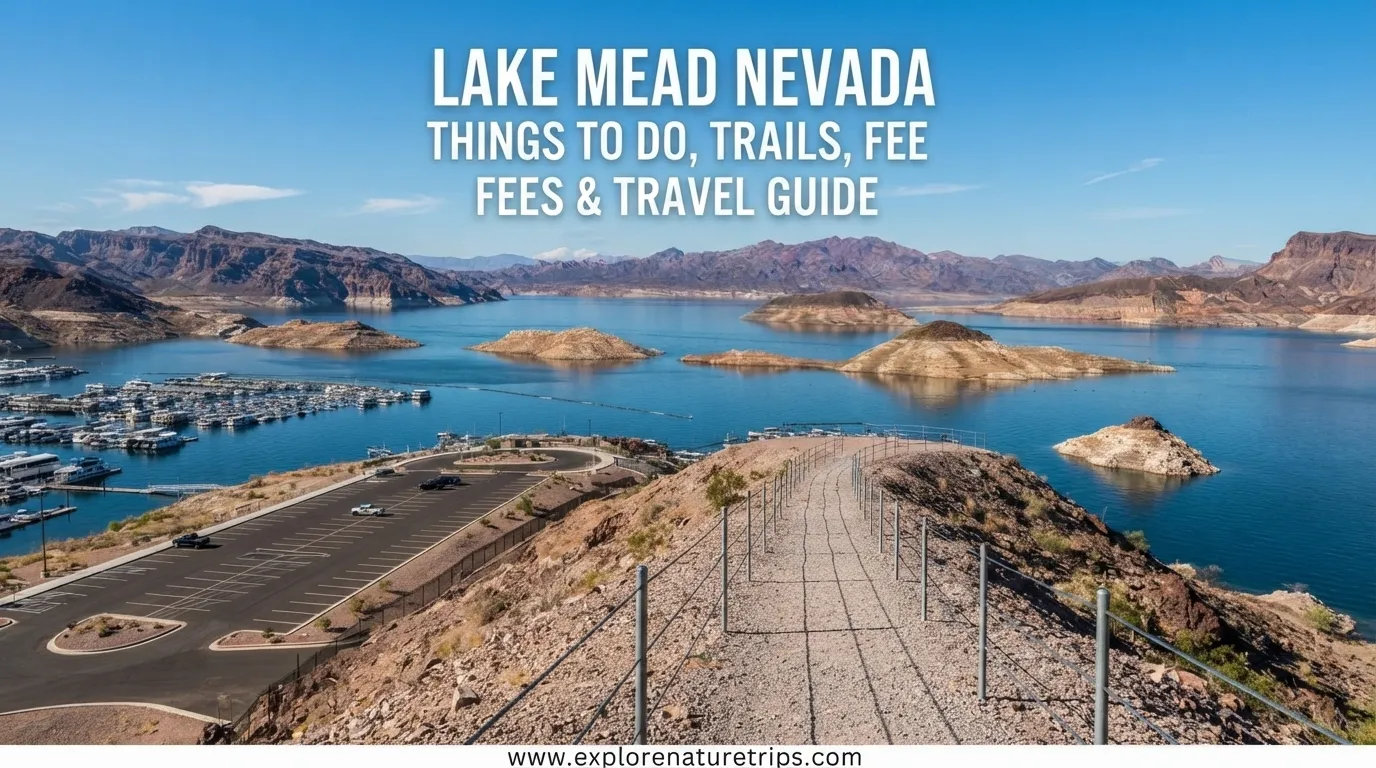
Lake Mead is one of the easiest desert escapes from Las Vegas, located roughly 20–25 miles southeast of the Las Vegas Strip. Depending on traffic and your route, the drive can take around 30–45 minutes, making it practical for a day trip or a longer outdoor getaway.
The landscape is unusual: bright blue water sits among the dry mountains and desert scenery of the Mojave. Instead of being only a sightseeing stop, Lake Mead offers hiking, boating, fishing, swimming, scenic drives, camping, wildlife viewing, and access to historic places such as Hoover Dam.
For a first visit, the biggest challenge is not finding something to do. It is deciding how much you can comfortably fit into one day.
Why Visit Lake Mead?
Lake Mead works particularly well for travelers who want several types of experiences in one destination.
You can spend the morning walking a historic trail, drive along a scenic desert road, visit Hoover Dam, and finish the day beside the water. Visitors who have more time can add camping, boating, fishing, Boulder City, or additional hiking.
The main appeal is the contrast between water and desert.
The recreation area covers a huge landscape, so Lake Mead is not simply one viewpoint beside a lake. Different roads, beaches, overlooks, trails, and recreation areas provide very different experiences.
Best Things to Do at Lake Mead
1. Visit Hoover Dam
Hoover Dam is one of the most important attractions associated with Lake Mead. The dam created the reservoir by controlling the Colorado River and remains an obvious companion stop when visiting the lake.
A Lake Mead trip without seeing Hoover Dam can feel incomplete, especially for a first-time visitor.
You can combine the dam with:
- Lake Mead overlooks
- Boulder City
- Historic Railroad Trail
- Scenic drives
- Boulder Beach
- Visitor Center stops
If your schedule is limited, combining Hoover Dam with Lake Mead is an efficient way to experience several major attractions in one outing.
2. Hike the Historic Railroad Trail
The Historic Railroad Trail is one of the standout hiking experiences around Lake Mead.
The trail follows the historic route associated with Hoover Dam construction and passes through old railroad tunnels.
The complete route is described as more than 7 miles, although visitors do not need to complete the entire trail. A shorter walk of about 1 mile through the first tunnels can provide a good introduction and may take around 1–2 hours depending on your pace and stops.
Another describes the accessible outing as roughly 3 miles return, with 5 tunnels along the trail and a short hike taking just over 30 minutes.
That makes this a flexible choice for both casual visitors and people wanting a longer walk.
Best for: history, photography, easy hiking, lake views, and first-time visitors.
3. Spend Time at Boulder Beach
Boulder Beach provides a completely different experience from viewing Lake Mead from above.
Instead of looking down at the water from a dam or overlook, you can reach the shoreline and enjoy the lake at ground level.
Depending on conditions and your plans, activities include:
- Swimming
- Kayaking
- Canoeing
- Paddleboarding
- Shoreline walks
- Boating
- Relaxing beside the water
Life jackets and restroom facilities are also mentioned in the material.
Because Lake Mead is surrounded by desert, a shoreline stop can be especially appealing after spending time on exposed hiking trails.
4. Drive Northshore Road
Northshore Road is one of the strongest scenic-driving recommendations across the content.
The road stretches for almost 50 miles, offering mountain scenery, desert landscapes, overlooks, and access to additional attractions.
If you drive toward the end, the trip can take approximately 1 hour, depending on where you stop.
The route can also connect with the area around Valley of Fire State Park, although exploring that destination requires additional time.
One important practical point: fill your vehicle with fuel before heading deep into the recreation area. The material specifically recommends stopping in Boulder City for fuel, water, food, and other supplies.
5. Stop at the Northshore Summit Trail
The Northshore Summit Trail is positioned approximately 15 miles along Northshore Road after turning onto it from Lakeshore Road.
It is useful as either a short sightseeing stop or a hiking opportunity.
The main reward is the elevated view across the surrounding landscape.
For travelers driving Northshore Road, this is a natural place to break up the drive rather than treating the road as one continuous journey.
6. Explore Lakeshore Road
Lakeshore Road provides another scenic-driving option.
Content highlights overlooks such as:
- Sunset View Scenic Overlook
- 33-Hole
The road also provides access to other hiking opportunities, including the route toward Owl Canyon.
Rather than trying to drive every road quickly, consider selecting a few overlooks and trails that match your available time.
7. Try Water Activities
Lake Mead is particularly attractive during the warmer months because the lake creates opportunities for activities that are difficult to associate with a desert environment.
Options mentioned across the include:
- Kayaking
- Canoeing
- Paddleboarding
- Swimming
- Fishing
- Boating
- Jet skiing
- Waterskiing
- Pontoon boating
- Houseboat trips
- Lake cruises
Summer heat can make strenuous land-based activities uncomfortable, so water activities can become a more practical part of the itinerary.
8. Take a Lake Mead Cruise
One highlights a 90-minute Desert Princess Cruise.
The cruise provides views of:
- Boulder Rocks
- Black Canyon
- Hoover Dam
A cruise can be useful for visitors who want to experience the lake without spending several hours hiking or operating their own boat.
It also gives you a different perspective of the surrounding desert landscape.
9. Explore Gold Strike, Hot Springs
Gold Strike is one of the more demanding hiking experiences mentioned.
The route involves approximately a 2.5-mile descent and around 600 feet of elevation loss.
The area contains 3 separate hot springs, with temperatures described as approximately 100–109°F.
This is not a casual stroll. The route involves elements such as:
- Scrambling
- Bouldering
- Ropes
- River crossings
Visitors should therefore consider their ability, weather conditions, water supply, and route conditions before attempting it.
For a first-time Lake Mead visitor looking for an easy experience, this should not be the default trail choice.
10. Try Redstone Hiking
Redstone provides a much shorter hiking option.
It describes it as a less-than-1-mile loop through distinctive red rock formations.
The formations are associated with dunes more than 200 million years old, with iron particles contributing to their red appearance.
This is a good example of why Lake Mead is more than a water destination: the surrounding geology is part of the experience.
11. Visit Owl Canyon
Owl Canyon is another smaller adventure mentioned in the material.
The trail is approximately 2.5 miles and leads toward a slot-canyon environment.
The beginning involves a scramble downhill, so even a relatively short distance should not automatically be treated as an easy walk.
12. Enjoy Fishing and Wildlife Viewing
Fishing is one of the recurring recreational activities in the content.
Wildlife viewing is another attraction, with the Lake Las Vegas source highlighting animals and birds such as:
- Desert bighorn sheep
- Coyotes
- Beavers
- Mountain lions
- Bats
- Gila monsters
- Desert tortoises
- Desert iguanas
More than 240 bird species are also mentioned, including owls, sandpipers, hummingbirds, and rock wrens.
For wildlife viewing, patience and quieter locations can be more rewarding than simply driving from one major attraction to another.
Best Time to Visit Lake Mead
Timing matters at Lake Mead because the desert climate can change the difficulty of outdoor activities dramatically.
Spring: April to June
Spring is one of the most favorable periods described by the.
Typical daytime temperatures are around 80–98°F, while nighttime temperatures can average approximately 50–66°F.
This period is suitable for:
- Hiking
- Camping
- Fishing
- Scenic driving
- Photography
Wildflowers may also add seasonal color to the desert landscape.
Summer: July to September
Summer can be extremely hot.
Daytime temperatures can exceed 100°F and may rise above 110°F.
Because of the heat, strenuous hiking is better avoided during the hottest part of the day. The material recommends carrying more water than you think you need and shifting outdoor exertion toward the early morning.
Water-based activities can be more comfortable during this period.
Some hiking trails may also have seasonal safety closures.
Fall: October to December
Fall brings more comfortable conditions.
Average daytime temperatures cited by the are around 59–83°F, while nighttime temperatures can fall to approximately 32–50°F.
This makes fall another strong period for hiking and scenic driving.
Campgrounds can become busy, so planning is useful.
Winter: January to March
Winter temperatures are considerably cooler but can still support outdoor activities.
The material gives daytime averages of approximately 57–69°F and nighttime lows around 30–40°F.
Winter can be appealing for:
- Hiking
- Photography
- Cycling
- Camping
- Scenic drives
The desert can feel comfortable during the day but surprisingly cold around sunrise, sunset, and overnight.
How Much Time Do You Need?
A Lake Mead visit can work as a 1-day trip, but the amount you can experience depends heavily on how many activities you choose.
One-Day Visit
A practical first-day combination could include:
| Approx. Part of Day | Suggested Experience |
| Morning | Hoover Dam |
| Late morning | Visitor Center |
| Midday | Historic Railroad Trail |
| Afternoon | Boulder Beach |
| Late afternoon | Scenic drive |
| Evening | Return toward Las Vegas |
Do not try to fit every trail and attraction into one day.
The area is large, and excessive driving can reduce the time you actually spend enjoying the destination.
Two to Three Days
The material suggests 2–3 days for a fuller experience.
That gives you enough time to combine:
- Hoover Dam
- Boulder City
- Hiking
- Scenic drives
- Water activities
- Camping
- Wildlife viewing
- Valley of Fire
- Additional overlooks
A longer stay is especially useful if you want to explore Northshore Road rather than simply driving through it.
Lake Mead Entrance Fees and Hours
One lists the standard entrance cost as $25 per vehicle, with the pass valid for 7 consecutive days.
An annual National Park Pass is also accepted.
Another lists entrance prices in the range of $15–$25, plus an annual pass price of $45, while also mentioning an $80 America the Beautiful Annual National Park Pass.
Because fees can change, visitors should verify the current rate before traveling.
Park Hours
Lake Mead National Recreation Area is described as open:
24 hours a day, 365 days a year.
However, some beaches and day-use areas operate from dawn until dusk.
The material also gives Visitor Center hours of approximately:
9:00 AM–4:30 PM daily.
Camping and Places to Stay
Camping is a major part of the Lake Mead experience.
The content mentions approximately 900+ campground and RV camping sites across 15 locations.
Options include areas around:
- Boulder Beach
- Echo Bay
- Las Vegas Bay
- Callville Bay
RV travelers can find sites with hookups, while tent campers have separate opportunities.
If you prefer a hotel, Boulder City is a practical base because it provides access to Lake Mead, Hoover Dam, restaurants, shops, and historic attractions.
Hotels mentioned by the guide include:
- Best Western Hoover Dam
- Boulder Dam Hotel
- The Hoover Dam Lodge
- Westin Lake Las Vegas Resort
- Hilton Lake Las Vegas Resort and Spa
Reservations are recommended when staying in popular accommodations.
What to Pack for Lake Mead
The desert environment means preparation is important.
Water
Carry plenty of water, particularly during warmer weather.
Do not assume that because the lake is nearby, drinking water or food will always be available exactly where you need it.
Sun Protection
Pack:
- Sunglasses
- Sunscreen
- Sun hat
- Lightweight clothing
Hiking Shoes
For rocky trails, shoes with good tread are more useful than ordinary casual footwear.
Food and Snacks
A cooler with:
- Water
- Lunch
- Snacks
can make a scenic-driving day much easier.
The material specifically warns that there may not be convenient food options inside the recreation area.
Navigation
Download maps before entering remote areas.
Cell service can be limited in parts of the desert, so do not rely entirely on a phone connection.
Emergency Planning
If hiking alone, let someone know:
- Where you are going
- Which trail you plan to use
- When you expect to return
A personal locator beacon is also suggested in the content for remote travel.
Lake Mead Safety Tips
Respect the Heat
The biggest mistake first-time visitors can make is underestimating desert temperatures.
A trail that appears short on a map can become much harder under intense sun.
Start Early
During summer, early morning is generally more suitable for demanding outdoor activities than the middle of the day.
Carry Extra Water
Water should be treated as essential equipment rather than an optional convenience.
Check Trail Conditions
Some trails can experience seasonal closures during periods of extreme heat.
Be Careful Near Water
Use appropriate safety equipment for boating and swimming, and consider a life jacket for water activities.
Fuel Before Long Drives
Fill the tank before committing to longer scenic routes.
The content specifically recommends stopping in Boulder City before driving deep into the recreation area.
Lake Mead Wildlife
Lake Mead’s desert environment supports wildlife that many visitors may not expect to encounter near a major city.
Potential sightings mentioned in the material include desert bighorn sheep, coyotes, beavers, bats, mountain lions, reptiles, and numerous bird species.
Hemenway Park in Boulder City is specifically highlighted as a place where bighorn sheep may sometimes come down from the surrounding mountains to graze.
Wildlife should always be observed from a safe distance rather than approached or fed.
Nearby Places to Add to Your Trip
Lake Mead can also be combined with several nearby attractions.
Boulder City
Boulder City provides restaurants, cafes, shops, historic streets, and access to Hoover Dam.
It is particularly useful as an overnight base.
Valley of Fire State Park
Northshore Road provides access toward Valley of Fire.
The content recommends allowing a couple of additional hours if you want to explore its red-rock scenery.
Red Rock Canyon
Red Rock Canyon is approximately 15 miles west of Las Vegas, according to the material.
Another source describes its scenic drive as approximately 13 miles.
It can therefore be combined with a Las Vegas-based itinerary if you have additional time.
Grand Canyon
They also compare Lake Mead with Grand Canyon access.
The West Rim is described as less than 2 hours away, while the North and South Rims require approximately 5.5 hours each way.
The West Rim Skywalk extends approximately 70 feet outward and provides views roughly 4,000 feet toward the canyon floor.
These distances make the West Rim considerably easier to combine with a Lake Mead visit than the North or South Rim.
A Simple Lake Mead First-Time Itinerary
If this is your first visit and you only have one day, keep the schedule realistic.
Morning
Start early and visit Hoover Dam.
Afterward, stop at the Visitor Center to collect maps and current information.
Late Morning
Walk part of the Historic Railroad Trail.
You do not need to complete the full route to enjoy the historic tunnels and lake views.
Afternoon
Continue toward Boulder Beach.
Use the shoreline for relaxing, swimming, or water activities if conditions are suitable.
Late Afternoon
Choose either:
- Lakeshore Road, or
- Northshore Road
for a scenic drive.
If you choose Northshore Road, consider stopping around the Northshore Summit Trail.
Evening
Return toward Boulder City or Las Vegas.
This approach gives you a balance of history, hiking, water, and scenery without trying to visit every attraction in one day.
FAQs
Is Lake Mead worth visiting?
Yes. The combination of desert scenery, blue water, hiking, boating, scenic roads, wildlife, and Hoover Dam makes it a versatile destination, especially for visitors based in Las Vegas.
How far is Lake Mead from Las Vegas?
The sources place Lake Mead roughly 20–25 miles from the Las Vegas Strip, with a typical drive of approximately 30–45 minutes.
Can you visit Lake Mead in one day?
Yes. A one-day trip can include Hoover Dam, the Visitor Center, Historic Railroad Trail, Boulder Beach, and a scenic drive. A 2–3 day stay allows considerably more exploration.
What is the best month to visit Lake Mead?
The content favors spring and fall because temperatures are generally more comfortable for hiking and outdoor activities.
Is Lake Mead open 24 hours?
The recreation area is described as open 24 hours a day, 365 days a year. Individual beaches and day-use areas may have different operating periods, including dawn-to-dusk access.
How hot does Lake Mead get?
Summer temperatures can exceed 100°F and may rise above 110°F. During extreme heat, strenuous hiking should be approached cautiously.
How long is the Historic Railroad Trail?
The complete route is described as more than 7 miles, while shorter visitor sections and return-trip descriptions vary. A short section through the first tunnels can be completed in around 1–2 hours.
How long is Northshore Road?
Northshore Road is approximately 50 miles according to the material. Driving the route toward its end can take around 1 hour, before allowing additional time for stops.
What should I bring to Lake Mead?
Bring plenty of water, sun protection, appropriate hiking footwear, food or snacks, navigation tools, and clothing suitable for changing desert temperatures.
Can you swim at Lake Mead?
Swimming and other water activities are among the recreational options described by the . Conditions can vary, so visitors should use appropriate water-safety practices.
Is Lake Mead good for families?
Yes. Families can choose relatively easy activities such as scenic viewpoints, Boulder Beach, short trail sections, wildlife viewing, and the Visitor Center instead of demanding hikes.
What is the easiest way to see Lake Mead?
For a first visit, combine Hoover Dam + Visitor Center + Historic Railroad Trail + Boulder Beach + a scenic drive. This provides several different experiences without requiring a difficult hike.
Final Thought
Lake Mead is best approached as a large recreation area rather than a single attraction. Its biggest strengths are the variety of experiences and its proximity to Las Vegas.
For a first visit, prioritize Hoover Dam, Boulder Beach, Historic Railroad Trail, and one scenic road. Add boating or a cruise if you want more time on the water, and choose Gold Strike Hot Springs or other challenging trails only if your group is prepared for the terrain and desert conditions.
Most importantly, plan around the weather. Spring and fall offer more comfortable conditions for exploring, while summer requires serious attention to heat, water, timing, and trail safety.
With the right plan, even a 1-day visit can combine history, hiking, desert scenery, and time beside the water—while a 2–3 day stay gives you room to explore the recreation area’s quieter corners.

Hi, I’m Marcus! I love exploring the outdoors and discovering incredible places. Through ExploreNatureTrips blog, I share my travel experiences, useful tips, and recommendations for the best sights, trails, and destinations to visit.